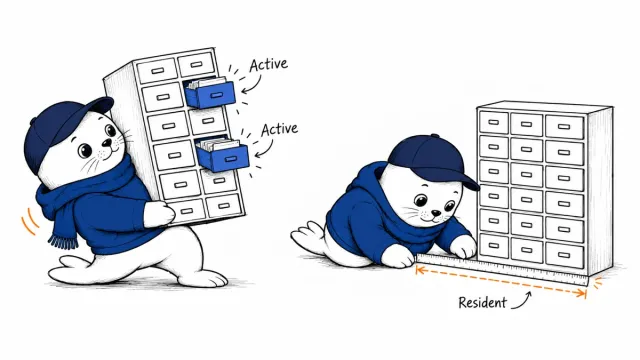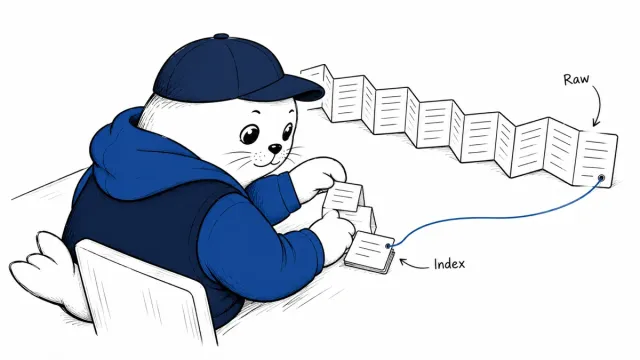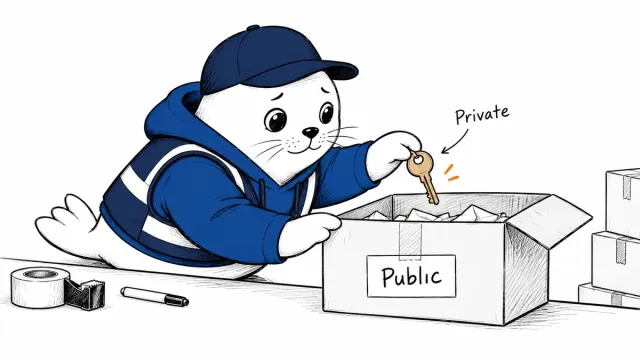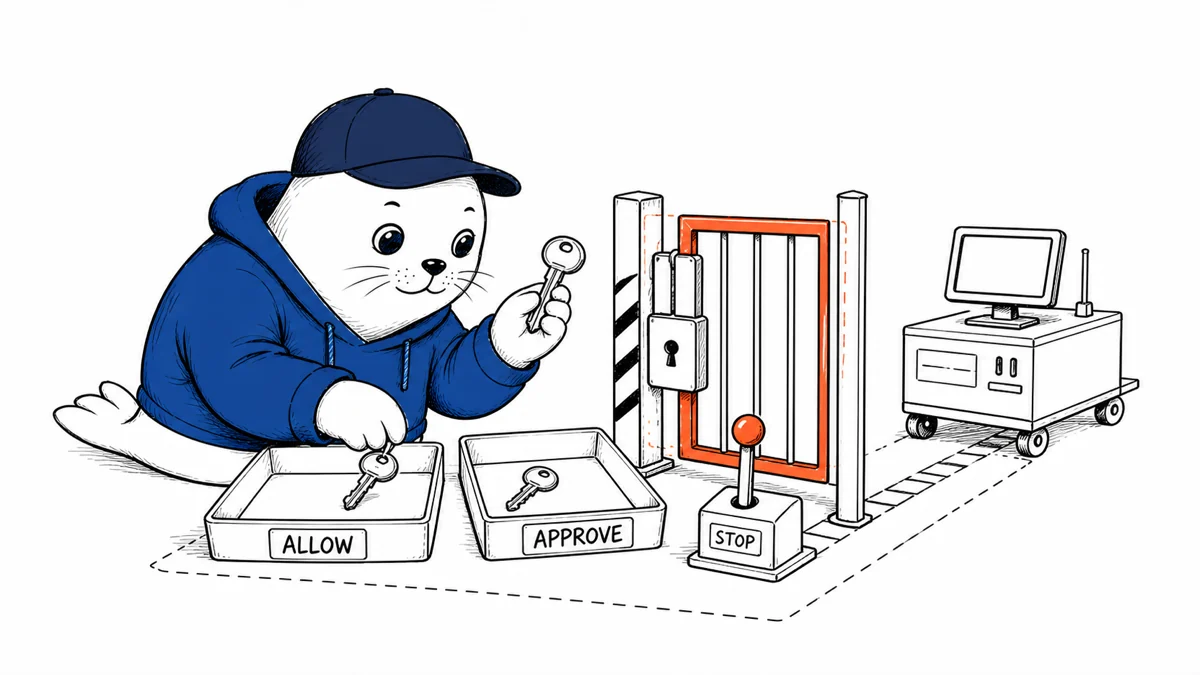
Grok Bot moves the agent out of the chat window. Each Bot gets a cloud computer, signs into tools, keeps working after the handoff, and can coordinate with other Bots. The first production decision is the login it receives.
September 16 update: Grok Bot Galaxy turns the demo into a measurable test
SpaceXAI is running Grok Bot Galaxy from September 15 through September 17 at The Howard in San Francisco and by livestream. The official schedule moves from engineering, product and founder work on day one to sales, SDR and customer-support workflows on day two, followed by marketing, post-sales and a final showcase on day three.
The company says three employees are attempting to build a company in three days with Grok Bot. That makes the event more useful than a polished launch clip, but it is still a vendor-run demonstration. Until the final artifact and replay are available, the safe claim is that SpaceXAI is showing its workflow in public, not that Grok Bot has proved it can autonomously create a durable business.
| What can be checked now | What remains unknown | Evidence to capture |
|---|---|---|
| The event dates, speakers and departmental sessions | How much of the company is usable after the livestream | Final product, public URL and handoff record |
| Which apps, sites and tools the Bots touch on screen | Whether access was preconfigured or granted during the run | Connector list, identities and permission scopes |
| Visible human corrections and takeovers | How many hidden retries or edits occurred off camera | Run trace, retry count and human repair time |
| Tasks assigned across research, product, sales and support | Whether parallel Bots duplicated or contradicted work | Task owners, conflicts and accepted outputs |
SpaceX shares rose 5.15%, but the event is not a proven cause
SpaceX Class A shares closed at $150.88 on September 16, up $7.39 or 5.15%, according to Nasdaq market data. SpaceX is a public company under the SPCX ticker, as its SEC filing confirms.
The price move happened while Grok Bot Galaxy was live, but timing does not establish causation. No filing or company statement attributes the move to the agent demonstration. Same-day financial reporting described no single disclosed catalyst and treated the next Starship flight as one possible driver. The event is therefore relevant context, not a verified explanation for the stock price.
SpaceX is targeting September 22 for Starship Flight 14, pending regulatory approval and operational readiness. The mission is planned as Starship’s first orbital attempt and would deploy 26 Starlink V3 satellites. A target date is not a completed launch, and a planned payload is not a deployed constellation.
Judge the three-day build by rework, not spectacle
The final showcase should be scored on accepted output per human hour, the number of approvals, failed runs, repeated work, cross-Bot conflicts and whether the finished system can be transferred to a fresh operator. A company assembled on camera can still hide configuration debt that appears only after the original builders leave.
Recent Grok Build release notes document narrower improvements that matter for long work: recovery when tokens expire during network trouble, a one-hour default ceiling for long task waits, faster handling of large sessions and automatic retries for transient inference failures. Those are concrete engineering changes. They do not establish that every Grok Bot workflow is reliable, and the livestream should not be used to fill that evidence gap.
Update checked September 16, 2026. Event capabilities and the three-day company build are SpaceXAI-reported. The stock close is Nasdaq market data. No public evidence reviewed by Musthave.ai establishes that Grok Bot Galaxy caused the share-price move. Flight 14 remains a target pending approval and readiness.
Update, August 29, 2026: Grok Bot can connect directly to X
xAI now lets a user connect an X account to Grok Bot. The company says it will create an X developer account when the user does not already have one, and paid Grok Bot users receive starter X API credits. A connected Bot can search X, read a timeline, check mentions and summarize activity.
This makes the article’s identity warning more concrete. The Bot is no longer only holding a browser session; it may also hold developer credentials, API credits and access to an account’s social data. Start with read-only scopes, record which X identity and developer project were created, cap API usage, and require a separate approval before any future feature can post, reply, follow or send messages. Read xAI’s Grok Bot and X announcement.
Grok Bot entered early beta on August 11. xAI describes it as a team of always-on agents that can work across apps and inboxes, remember conversations, learn a user’s preferences, and return when an approval is needed. The August launch described access for SuperGrok Heavy, Cursor Ultra, and Cursor Teams Premium subscribers on desktop and iOS, with an enterprise waitlist. The enterprise update below covers the later access changes.
The launch is useful because it combines several agent ideas in one consumer-facing product: persistent memory, a remote computer, authenticated apps, reusable routines, parallel workers, and agent-to-agent messages. The release page shows the convenience. It does not yet answer every control question that follows from that design.
Update: Grok Bot adds enterprise access, network, and audit controls
Grok Bot is now available to enterprises. xAI says Grok and Cursor Enterprise customers receive free usage for two weeks and can invite people across the organization, including users without an existing seat. The release adds access, network, and audit controls for organization-wide use.
xAI says each user’s work runs in an isolated environment and a Bot has no access by default beyond accounts the user signs into. Those are useful design claims, not a complete deployment audit. Admins should still verify connector scopes, shared Bot templates, cross-Bot messaging, network allowlists, approval events, log export, retention, and what changes when a person without a paid seat is invited.
The company reports thousands of adopting organizations and millions of Bots created in recent weeks, with heavy use outside engineering. Those counts are company-reported and do not establish active retention or successful task completion. Treat the free window as a controlled permission test, not an invitation to connect every production account.
What xAI actually launched
xAI says a Bot has its own computer and can sign into tools the user already uses. It can finish work across applications rather than stopping at a draft. Users can also demonstrate a workflow once, let the Bot save it as a routine, correct it, and run it again later.
The product also supports multiple Bots working at the same time. They can message one another, share context in threads, join a group chat, pass work, and assign ownership. xAI says teams inside SpaceXAI use a "chief of staff" Bot above specialists for work such as inbox management, expenses, recruiting, bug fixes, and operations. Those examples are company-reported use cases, not an independent measure of reliability.
| Official capability | Operational question before use |
|---|---|
| Each Bot has a computer and signs into apps | Which identity, permissions, secrets, and sessions can that Bot reach? |
| Bots continue working 24/7 | Which actions pause for review, and who receives the alert after hours? |
| Conversations and preferences persist | What is remembered, for how long, and how can it be inspected or deleted? |
| Observed workflows become routines | Does a corrected routine create a reviewable new version before it runs again? |
| Bots message and coordinate | Can one Bot delegate beyond the permissions and budget of the original task? |
A cloud computer turns a task into an access grant
A prompt can be wrong and still remain harmless if the system has nowhere consequential to act. A signed-in computer changes that. The same mistaken interpretation can become a sent message, edited customer record, submitted invoice, created account, or public change.
That is why the safest first deployment is not "give it the normal employee account." Create a separate identity for each Bot or role, grant only the applications and objects the routine needs, and make revocation immediate. Our review of Burp AT’s agent permissions reaches the same conclusion: scope has to live in the control plane outside the model.
A separate identity also makes the audit legible. If three Bots share one browser session, the activity log cannot reliably tell you which worker opened a file, changed a field, or sent a message. Convenience becomes attribution debt.
"Come back for approval" needs an action map
xAI says Bots return when something needs approval. The word "approval" is encouraging, but it is not a complete policy. A team needs to know which actions are blocked before execution and which are merely reported afterward.
- Always pause: sending external messages, publishing, spending money, changing permissions, creating accounts, deleting records, merging code, and exporting data.
- Allow with limits: reading specified folders, drafting inside a sandbox, updating low-risk fields, and running approved queries under a quota.
- Log even when allowed: every external destination, credential use, routine version, inter-Bot handoff, tool call, and human override.
The boundary should be enforced by the application or gateway, not by an instruction that asks the Bot to remember when to stop. Our signed-in browser agent guide explains why a convenient session can become the permission boundary for the entire workflow.
Parallel Bots multiply both throughput and ambiguity
Several Bots working in parallel can shorten a queue. They can also duplicate an action, overwrite one another, or pass incomplete context. A chief-of-staff pattern does not automatically solve that. It adds another decision-maker whose delegation rules need to be visible.
Give each job a single owner, a unique idempotency key for consequential actions, and an explicit completion record. When two Bots touch the same account or project, the system should either serialize the work or show the conflict before committing it. A conversation thread is useful context; it is not a transaction lock.
The same caution applies to long runs. Our analysis of Grok 4.6 and long-running agents argues for measuring the full trajectory: retries, tool failures, human repair, and the final accepted result. Grok Bot adds authenticated application actions to that ledger.
A saved routine is software, even when nobody wrote code
Showing a Bot how to do a job once sounds lighter than building an automation. Operationally, the saved routine is still a program. It has inputs, hidden assumptions, dependencies, side effects, and a version history, whether the interface calls it code or memory.
A useful routine record should include the demonstrated steps, applications and accounts used, allowed destinations, approval gates, correction history, last successful run, failure count, and rollback procedure. When a user corrects the Bot, that should create a new reviewable version rather than silently changing future behavior.
This is the practical lesson from DarwinX’s evolving agent harness: the machinery around a model can change the outcome even when the model stays fixed. A routine deserves its own change log.
A seven-step beta rollout
- Choose a reversible job. Start with drafting, reconciliation, or internal triage, not payments, publishing, or account administration.
- Issue a dedicated identity. Do not inherit a founder’s or administrator’s browser session.
- Constrain destinations. Allow only the applications, workspaces, folders, repositories, and contacts the job requires.
- Define pre-action approvals. Block consequential actions before they leave the cloud computer.
- Cap time and volume. Set maximum runtime, messages, records, spend, retries, and parallel workers.
- Export the trace. Keep tool calls, handoffs, routine versions, approvals, and final artifacts together.
- Test the stop path. Revoke the identity, stop the Bot, restore the previous state, and confirm that no queued action continues.
What the launch page leaves to verify
The announcement does not explain whether each Bot receives an isolated identity, how memory retention is controlled, which approval categories are configurable, whether full audit logs can be exported, or how a company stops every active Bot at once. That absence is not proof the controls do not exist. It is a list for the beta review and enterprise sales call.
Availability also needs precise language. This is an early beta on named subscription plans, not a general enterprise release. Teams that cannot answer the access, audit, and revocation questions should test in a disposable environment with synthetic data.
Grok Bot procurement: identified savings need an approval trail
In its September 4 procurement account, xAI says Haggle Bot found more than $100,000 in direct savings after reading vendor spending, contracts, and usage information. The company describes some cuts as immediately reducing spend, but the headline total is framed as identified savings. This is a vendor-reported internal example, not a controlled return-on-investment study.
The approval boundary is more useful than the headline number. xAI describes letting the Bot research and coordinate internally while requiring explicit approval for vendor communications, money, or terms. Its published example prompt is stricter about binding actions: signing, buying, subscribing, and approving charges are forbidden. When adapting the example, decide whether an action is approval-gated or entirely prohibited; do not leave both instructions competing.
| Savings stage | Evidence I would require |
|---|---|
| Identified | Invoice, usage record, renewal date, and a specific proposed change |
| Approved | Named business owner confirms the service can change without breaking work |
| Contracted | Accepted terms or a confirmed cancellation, with effective date |
| Realized | Lower paid invoices, net of switching, overlap, and implementation costs |
Keep all four amounts separate. An unused seat can still belong to a seasonal worker, a service identity, or an emergency administrator. A lower quote can require an annual commitment or a migration that consumes the apparent saving. My starting assignment would be a read-only renewal report for one vendor, with no external send permission and no purchasing credentials. Let the owner approve the finding before connecting any action channel.
A prompt is not the enforcement layer. Where the connected systems permit it, remove purchase permissions from the Bot’s identity and require a human-controlled send or procurement workflow. Preserve the source invoice and the before-and-after bill so the saving remains auditable after the conversation has moved on.
My verdict: test the identity before the intelligence
Grok Bot makes persistent agents easier to imagine because the interaction looks like handing work to a colleague. Its operational significance comes from combining a cloud computer, signed-in apps, memory, routines, and parallel coordination.
I would test it on a reversible internal workflow with a dedicated low-privilege identity and pre-action approval gates. If the Bot cannot be isolated, audited, capped, and stopped, it is not ready to hold a production login, however good the conversation feels.
Read the primary source
- Read xAI’s Grok Bot launch announcement.
Which account would you be comfortable revoking after the first failed run?
Original launch coverage checked August 14, 2026. The September 4 procurement update above uses xAI’s account and is not independently tested. Historical launch behavior and eligibility come from xAI’s August 11 post; dated update sections describe later changes. Internal examples and quotations are company-reported. Musthave.ai did not independently test the beta. Questions about isolation, retention, audit export, approvals, and global shutdown are presented as items to verify because the launch post does not document them.