
The European Commission proposed a common rating scheme for data centers on September 21, 2026, and opened a separate consultation on possible minimum performance standards.
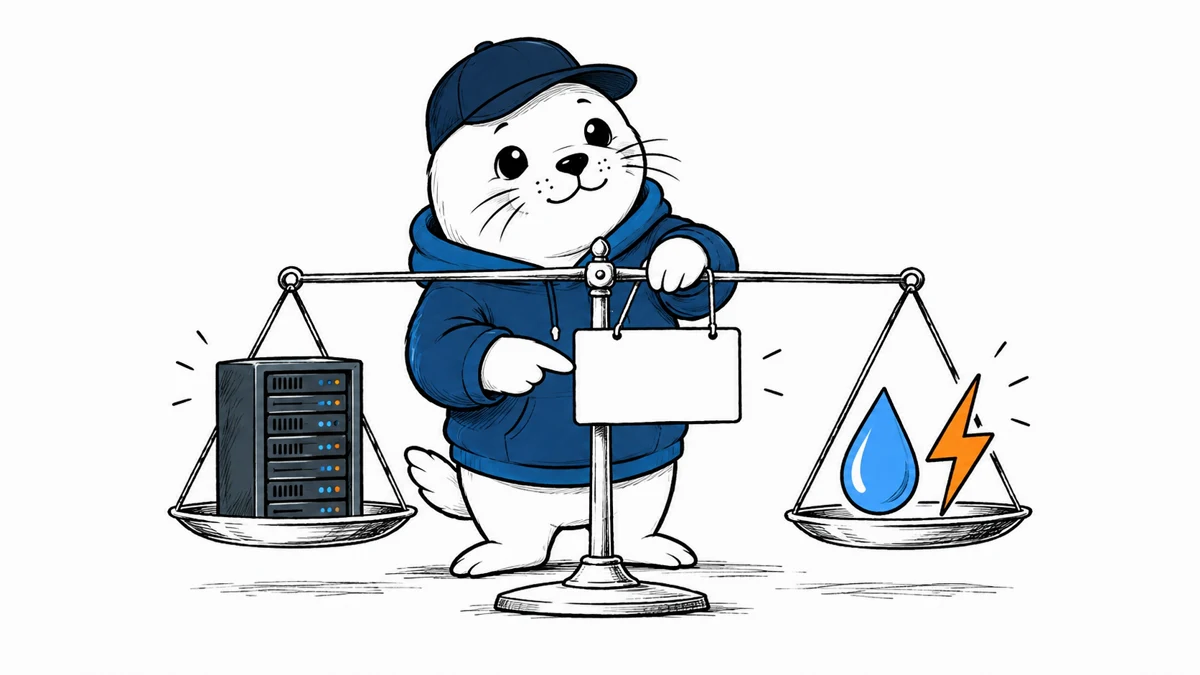
The EU data center energy ratings proposal arrives as policymakers try to expand AI computing capacity without hiding its electricity and water costs. The immediate change is transparency: a common method is intended to make facilities easier to compare. A binding minimum-efficiency rule has not been adopted. The Commission is collecting feedback until December 14 and plans a legislative proposal for the second quarter of 2027.
The legal timeline in plain language
| Step | Status on September 22 | Practical meaning |
|---|---|---|
| Energy reporting | Existing EU obligation | Large facilities already report specified indicators |
| Common rating scheme | Commission proposal | Comparison method is proposed, not yet a final universal label |
| Minimum standards | Consultation and call for evidence | No final threshold or compliance date exists |
| Legislative proposal | Planned for Q2 2027 | Future text may create binding requirements |
Why AI puts the rating debate under pressure
The Commission cites an International Energy Agency estimate that data centers consume about 415 terawatt-hours of electricity worldwide each year, roughly 1.5% of the global total. Consumption could reach about 945 TWh by 2030, primarily because of accelerated computing used for AI. Those are global projections, not a forecast for one European country or one model provider.
Europe also wants more capacity. The Commission says the EU aims to triple data-center capacity by 2035, or over roughly the next five to seven years. That creates a two-sided policy problem: capacity is treated as strategic infrastructure, while electricity demand, cooling water and grid congestion can impose local costs. Our report on Microsoft’s new AI-ready cloud region in India shows how quickly sovereign capacity has become part of national technology policy.
What a useful rating should reveal
- Total electricity use and power-usage effectiveness under stated operating conditions.
- Water consumption and whether the measurement covers direct cooling or the wider supply chain.
- Renewable and low-carbon energy claims with location and time matching made explicit.
- Waste-heat reuse rather than a promise that a connection may be built later.
- Grid flexibility, including whether workloads can shift when the system is constrained.
- Facility utilization so an efficient building is not confused with an efficiently used computing fleet.
A rating does not measure the usefulness of the computation
Two facilities can consume the same amount of energy while producing very different outcomes. Infrastructure efficiency measures do not tell a buyer whether a training run was necessary, whether an inference endpoint is overprovisioned, or whether a smaller model would complete the task. Model and workload governance therefore remain separate from building-level ratings.
That distinction matters for public procurement. Buyers should combine facility indicators with cost per completed task, service-level targets and evidence that lower-compute options were evaluated. The operational controls in our AI agent spending guide are one way to connect infrastructure policy to application-level decisions.
Questions operators should answer before the consultation closes
- Which facilities and power thresholds fall inside the future regime?
- Will ratings compare climate zones fairly?
- How will water stress change the weight of water-efficiency indicators?
- How often must data be refreshed, and will historic ratings remain accessible?
- Which claims will be independently verified?
- How will colocation operators divide facility data among customers?
- Will minimum standards apply to existing sites, new sites or both?
- How will confidential capacity and utilization data be protected?
What businesses should do now
Operators should map the proposed indicators to the data they already submit under the Energy Efficiency Directive. Cloud customers should ask providers which metrics are available by region and whether water and carbon numbers use measured or estimated inputs. Procurement teams should avoid treating the proposal as a current certification mandate, but contract language written now should anticipate more standardized disclosure.
One useful preparation is to build a facility evidence table now. Record each provider region, the reporting period, electricity source, water methodology, utilization assumption and whether a number is audited. Keep planned efficiency improvements separate from operating results. If a provider supplies only a global average, ask for the reason a regional figure is unavailable. That process will make future ratings easier to evaluate and reduce the risk of comparing a measured European facility with a modeled global portfolio. It also gives finance, sustainability and infrastructure teams one version of the evidence before new disclosure language enters contracts.
Primary sources
- European Commission data-center energy overview
- Commission announcement of the package
- Delegated Regulation EU 2024/1364
Checked September 22, 2026. The rating scheme is proposed, and minimum performance standards remain under consultation.