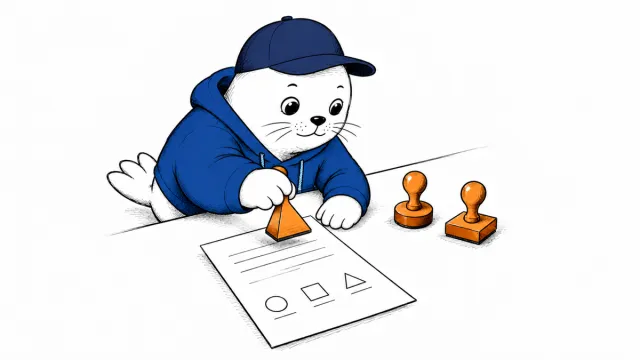

A security scan that runs without being asked is useful. A security scan that checks only the files an agent changed is also easy to overread.
Replit added an automatic Replit Agent security scan on August 7. During Agent’s code-review step, Semgrep checks the files Agent changed for issues such as injection, cross-site scripting, and hardcoded secrets.
This is a good default. It puts a lightweight static check next to generated code before the user publishes. It is not a full application audit, and Replit’s own documentation says so.
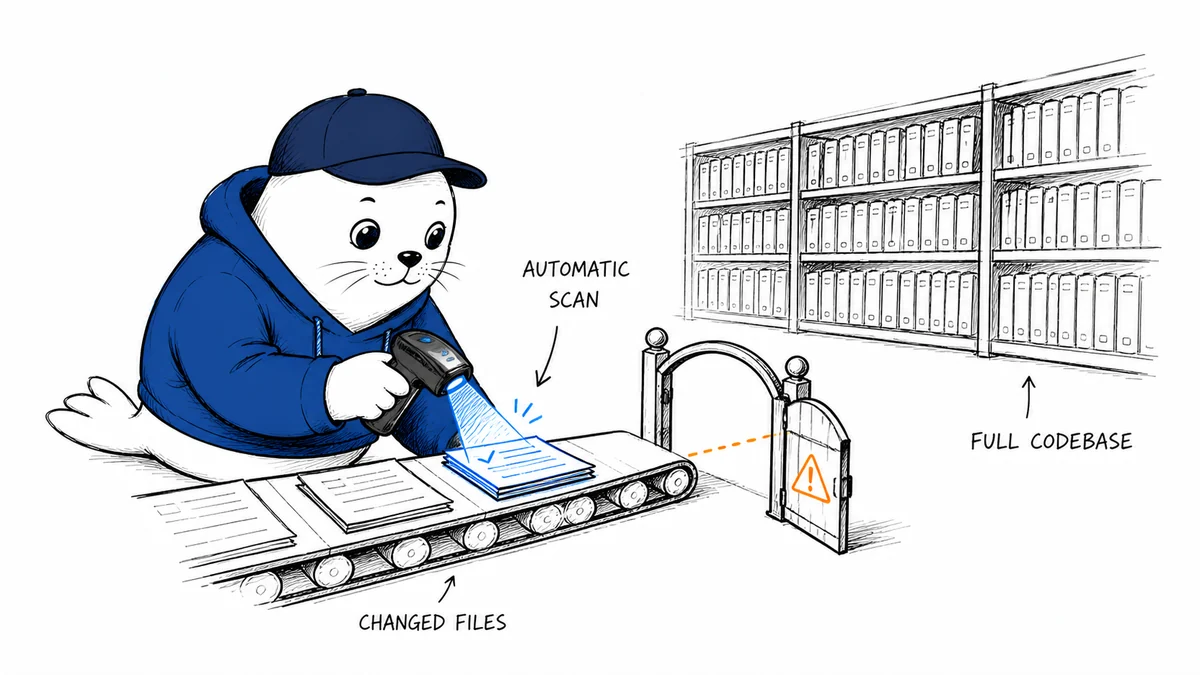
The automatic pass follows the agent’s diff
The scope is the important part. The automatic scan runs over files changed by Agent, not the entire repository. That catches obvious mistakes introduced in the current work while keeping the review fast.
It may miss a vulnerability that appears only when a changed route interacts with an old authorization helper, a shared template, an unchanged dependency, or a deployment setting. The scanner can understand the edited file and still miss the system.
The result does not become a separate Security pane report
Replit says the lightweight code-review scan does not appear as a separate report in the Security pane. That matters for auditability. A team should preserve the Agent review result in its pull request, task record, or release log instead of assuming the Security pane contains every check that ran.
Automatic means the check runs by default. It does not mean the whole codebase was examined.
Replit has three different security layers
| Layer | Scope | Use it for |
|---|---|---|
| Automatic Agent code-review scan | Files Agent changed; Semgrep-based. | Fast feedback on newly generated code. |
| Full Agent security scan | Broader project review using model analysis, Semgrep, and HoundDog. | Deeper review before a consequential release. |
| Dependency scan | Supported package ecosystems and known dependency issues. | Library risk and update work. |
Replit says a full Agent security scan is a paid feature and may take around 15 minutes. Dependency scans are free, though automated fixes focus on Node.js projects using npm. A publish check always scans; the project setting decides whether a finding blocks the release or merely warns.
A clean diff can still ship an unsafe system
- Authorization: a new handler may call an old helper that trusts user-controlled identifiers.
- Configuration: secrets, CORS, redirects, storage rules, and runtime permissions may live outside the edited files.
- Dependencies: the diff may use a vulnerable package without modifying its source.
- Business logic: scanners are weaker at deciding whether a valid user should be allowed to perform a valid action.
- Deployment: an application can be secure in code and exposed by an unsafe publish setting.
Our AI agent security checklist adds permissions, secrets, network access, monitoring, and rollback. The Copilot code-review effort analysis makes the same distinction from another direction: more automated review is a policy choice, not approval.
A practical release policy for Agent-built apps
- Keep the automatic scan enabled on every Agent change.
- Run the full scan when the diff touches identity, payment, data access, uploads, external calls, or administrative actions.
- Review the unchanged files that form the trust boundary around the edit.
- Run dependency and secret checks separately.
- Require a human to test one misuse case, not only the happy path.
My verdict: treat it as a seat belt
Replit made the right default. Generated code should not reach publish without a basic static check. The danger is the label users attach to a clean result.
Call it what it is: a fast scan of Agent’s changed files. Keep it on. Escalate to the full project, dependency, configuration, and human review layers when the application can move money, expose data, or change another person’s account.
Read Replit’s documentation
- Read the August 7 Replit changelog.
- Review the Project Security Center documentation.
Which unchanged file would worry you most after an agent produces a clean diff?
Checked August 9, 2026. Scan scope, tools, report behavior, paid feature boundaries, dependency coverage, and publish-check behavior come from Replit’s current documentation.