It’s easy to file “publisher lawsuits against AI companies” under boring legal news you can ignore. Don’t. The outcome of these fights quietly shapes what your AI tools are allowed to do, what they cost, and (as we’ve already seen) even what they keep about your conversations. Here’s the plain-English version and why it touches you.
What the fight is actually about
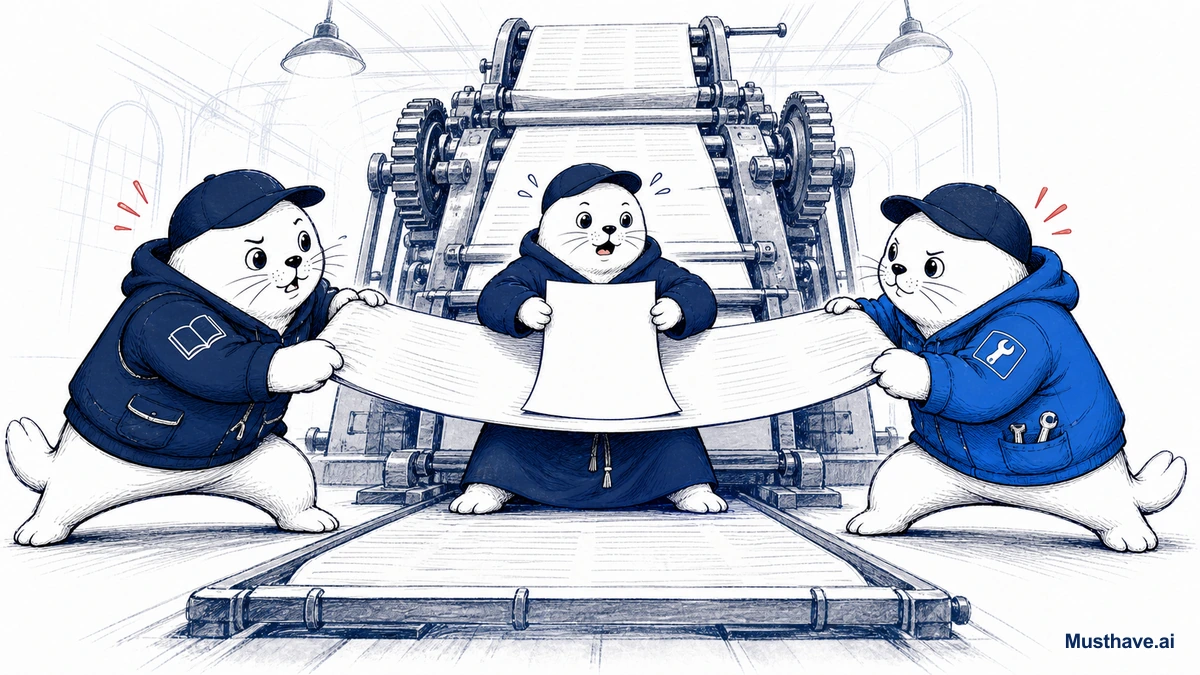
At the center is The New York Times’ lawsuit against OpenAI and Microsoft, filed back in 2023 and still very much active in 2026. Stripped of legalese, the core question is simple and enormous: was it legal for AI companies to train their models on publishers’ copyrighted articles without permission or payment?
The Times and other newspapers say their journalism was used without authorization to build the chatbots now competing with them. OpenAI argues its use is fair. A federal judge dismissed some claims but allowed the bulk of the case to move forward, and as of 2026 it’s grinding through discovery with no trial date set. This isn’t a settled question, it’s being decided in real time.
The part that already touched users
Here’s the detail that should make every AI user pay attention. During the litigation, a court preservation order at one point briefly required OpenAI to retain billions of user conversations as potential evidence. Sit with that: a copyright dispute between a newspaper and an AI company reached all the way down to whether your chats get held onto.
That’s the thing about these cases, they feel abstract until a ruling changes what happens to your data. The lesson is concrete: never assume your AI conversations are private and ephemeral. Litigation, policy, and preservation orders can change the rules under you.
Why it shapes your tools
Even if you never read a court filing, the ripple effects reach your daily tools in several ways.
- Training data: if courts require licensed data, models get built differently, and licensing costs can flow into subscription prices.
- Content deals: partly because of this pressure, AI companies are signing licensing deals with publishers, which changes what models can cite and surface.
- Model behavior: legal risk pushes companies to add guardrails around reproducing copyrighted text, you may notice tools getting more cautious.
- The competitive field: the outcome could advantage some labs over others, reshaping which tools thrive.
In short, the terms of this fight help decide what your future AI tools can do and what you’ll pay for them.
What it means for how you use AI
You don’t need to follow every motion, but two practical habits follow directly from all this.
First, treat AI output as a draft, not a source. Models can reproduce or closely paraphrase copyrighted material, and the legal lines are still being drawn. If you’re publishing commercially, add your own work and verify anything that looks lifted, don’t assume the tool cleared the rights for you.
Second, keep sensitive data out of chats. As the preservation order showed, you don’t fully control what happens to your conversations once litigation and policy get involved. Anonymize, or keep genuinely private material offline.
The bottom line
The publisher-versus-OpenAI fight isn’t background noise, it’s one of the forces quietly deciding how AI tools are built, priced, and governed, and it has already reached down to user data. You don’t have to take a side to be affected by the outcome. Just build the sensible habits now: verify what you publish, protect what’s private, and remember that the rules of this industry are still being written in courtrooms.
How to protect your own content
If you publish anything online, this fight is also about you, so here’s what you can actually do now. Decide your stance and enforce it: your site’s robots.txt and terms can signal whether AI crawlers may train on your work, and several bots respect those directives. Watch the licensing deals emerging from cases like this, they’re creating a real market where publishers get paid for AI access, and you’ll want to know the going terms. And keep proof of authorship, like dated drafts, for anything valuable. You may not control how the courts rule, but you can control what you make easy to take.
Does the copyright question change how you use AI for your own content, or is it just background noise to you? Tell me in the comments.
Verification sources and related guides
Primary reference: US Copyright Office report on generative AI training. This is the controlling platform or government guidance. Recheck it before publishing, deploying, or selling because rules and eligibility can change.