There’s a whole crowd online selling “prompt packs” and wondering why the money dries up. Here’s the reframe that actually builds a business: nobody wants your prompt. They want the finished thing your prompt would make. Kittl is how you turn AI output into that finished, sellable file, and files are what people actually buy.
Prompts aren’t a product. Files are.
Let’s start with the mistake, because avoiding it is half the battle. A prompt is an instruction. To use it, a buyer needs the same tools, the same skill, and the willingness to fiddle, which means most won’t, and the ones who do don’t need you. The value evaporates.
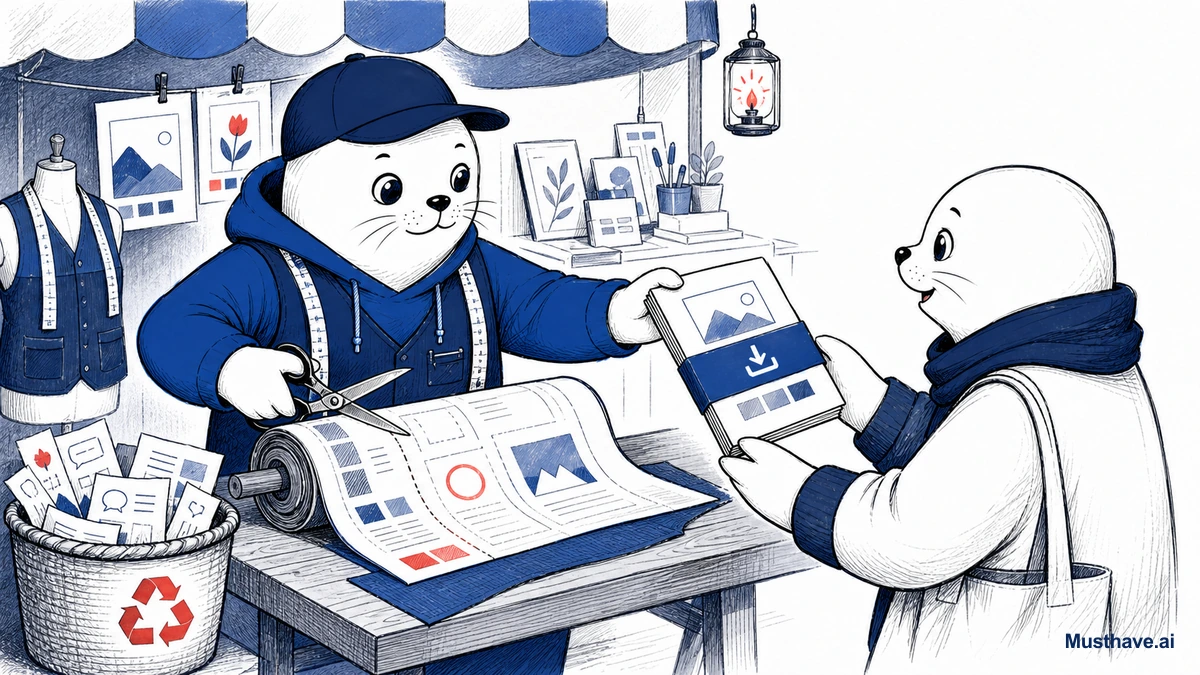
A finished file is different. A ready-to-print t-shirt design, an editable logo template, a set of social-media graphics, a bundle of vector illustrations, those are things a buyer can download and use immediately. That’s a product. And the beauty of digital products is leverage: you make it once and sell it a hundred times, while you sleep.
Why Kittl is the right tool for this hustle
Here’s where Kittl specifically earns its place. Raw AI image output usually isn’t sellable as-is, it’s a flat raster, often with wonky text, not something a customer can edit or print cleanly. Kittl bridges that gap.
- Editable vectors: it produces and converts artwork into clean, editable SVGs, exactly what buyers of templates and print files expect.
- Professional typography: the text actually looks designed, not AI-mangled, which matters enormously for anything with words.
- Multiple AI models on one canvas: generate, refine, vectorize, and finish in one place instead of five.
- Print-ready exports: high-resolution output that holds up on a physical product.
In other words, Kittl is where you turn “an AI made a picture” into “a file a stranger will pay for.”
What actually sells
The winning products are specific and useful, not generic art. A few lanes that work:
- Print-on-demand design files, sold to other sellers who need artwork for their shops.
- Editable templates (social posts, flyers, logos, planners) that buyers customize with their own text.
- Themed bundles, a coherent pack of illustrations, icons, or backgrounds for a specific niche.
- Sublimation and craft files, a hungry market that buys clean, ready-to-use designs constantly.
Sell them on marketplaces like Etsy or Creative Market where buyers are already searching, or on your own store once you have an audience.
Niche down or get ignored
The single biggest lever is specificity. “50 clipart images” competes with a million listings. “50 hand-drawn botanical illustrations for wedding stationery” speaks directly to a buyer who’s searching for exactly that, and will pay more for it. Pick a niche with real, identifiable demand, and design the whole bundle to serve it. AI lets you produce the volume; your niche choice is what makes it sell.
Stay legal and original
Two guardrails keep this a real business rather than a liability. First, know your tools’ commercial licenses, Kittl’s paid plans include commercial rights (with generous reproduction limits), but always confirm the terms for anything you resell. Second, keep your designs genuinely original: no trademarked characters, brands, or lookalikes baked into files you’re selling. Marketplaces remove infringing listings fast, and your shop’s reputation is the asset.
Do it this way (finished files, made usable in Kittl, sold to a specific niche, kept legal) and you’ve got a scalable digital-product business. Sell the file, not the prompt. That’s the whole difference between a hustle that pays and a screenshot for LinkedIn.
The first bundle to make this week
Stuck on what to sell? Make your first product the one you can picture a specific person buying. A proven starter: a themed set of 10–20 editable elements for one narrow niche, hand-drawn icons for a particular hobby, or quote templates for a specific profession. Design it in Kittl, export clean editable files plus a few preview mockups, write a title that names the exact buyer and use, and list it where that buyer already searches. One tightly-focused bundle that sells beats a hundred generic assets that don’t, and it teaches you the whole pipeline end to end.
What kind of design files would your ideal buyer download in a heartbeat? Tell me the niche in the comments and I’ll suggest how I’d package the first bundle.
Verification sources and related guides
Primary reference: Kittl AI official product page. This is an official provider source. Treat performance, adoption, and product claims as company-reported unless the article identifies an independent check.