
Higgsfield has named the winners of its $100,000 App Contest: CatCut took the $25,000 first prize, SKINZ2000 won $15,000 and AEROLINE 3.0 received $10,000. The more revealing result is the scoring model, which gave product usage 40% of the total and creativity 30%, showing what Higgsfield wants its no-code creator marketplace to optimize.
The Higgsfield App Contest winners
| Place | App | Prize |
|---|---|---|
| 1 | CatCut | $25,000 |
| 2 | SKINZ2000 | $15,000 |
| 3 | AEROLINE 3.0 | $10,000 |
The official winners page also lists ten honorable mentions receiving $5,000 each: LayerLab, AdForge AI, Creator Pilot AI, WRECKAGE.SYS, Director Idea Board, Storyboard Builder, LogoMotion AI, Viral Trend Presets, PropViz Studio and DDOP STUDIO.
Higgsfield said in an official company post that the contest received more than 1,900 entries. That total is company-reported, and the public results page does not provide an independent audit of entry eligibility or scoring.
Usage carried the largest judging weight
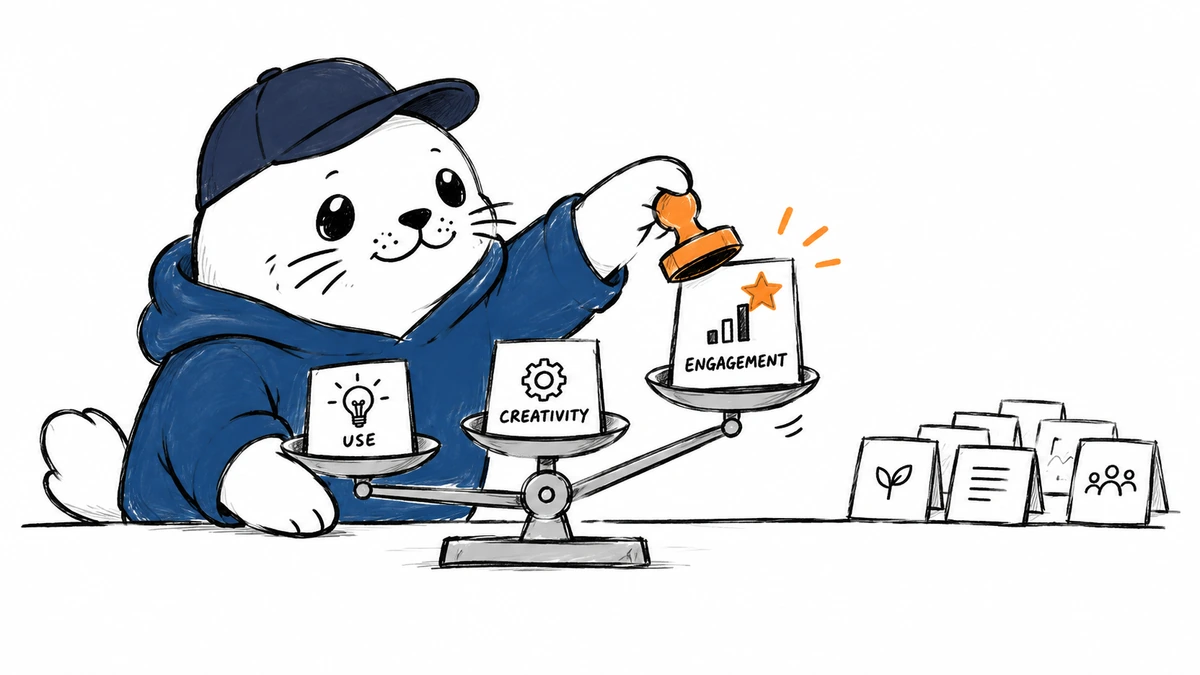
The contest rules divided the score into four parts:
- Usage generated: 40%
- Creativity and originality: 30%
- Social engagement: 15%
- Higgsfield gallery engagement: 15%
This weighting favored products that people actually ran, not only clever concepts or polished launch videos. It also gave distribution a combined 30% through social and gallery engagement. A technically strong app with weak discovery could therefore lose to a simpler tool that attracted repeat use and public attention.
The rules turned creators into both builders and distributors
Higgsfield allowed a creator’s own use of an app to count toward usage. The company also reserved the right to discount artificial pumping. That combination reveals the challenge of marketplace contests: early creators need permission to test and demonstrate their own product, but raw activity is easy to inflate if the platform does not distinguish genuine sessions from repetitive self-generated traffic.
A stronger public scorecard would separate unique users, repeat users, completed generations, retention and creator-owned activity. The contest did not publish that breakdown. Readers should therefore interpret the rankings as the outcome of Higgsfield’s judging system, not a universal list of the best AI apps.
Why a no-code app marketplace matters to Higgsfield
Higgsfield Apps lets creators package prompts, models and generation steps into reusable experiences. The launch announcement framed Apps as a way to turn repeatable creative workflows into tools that other users can run without rebuilding the process themselves.
For Higgsfield, successful apps can increase model usage and make the platform more useful without requiring the company to design every niche workflow. For creators, the opportunity is distribution: a reusable tool can reach users who would never copy a complex prompt chain or configure multiple generation steps manually.
The same shift is visible across creative AI. Adobe, Canva and other platforms are turning generators into connected workspaces. Our report on the Adobe Firefly unified workspace shows how image, video and timeline tools are converging around repeatable project flows.
What the winning mix suggests creators should build
The names of the winners and honorable mentions point toward focused production utilities: cutting, skins, advertising, storyboards, logo motion, trend presets and prop visualization. These are narrower than a generic “make anything” generator. They begin with a recognizable task and reduce the number of decisions a user must make.
- Choose a repeated job. A storyboard builder or ad variation tool has a clearer promise than a general creative assistant.
- Reduce setup. Hide model selection and parameter tuning when the app can make a sensible default choice.
- Show the output before asking for commitment. Templates and examples help a user understand what the app is for.
- Measure accepted results. A run is not valuable merely because a generation completed.
- Design for sharing. Social distribution mattered in the contest, but sharing should follow a useful output rather than replace it.
The contest is also a marketplace incentive experiment
Prize money can seed a marketplace quickly, but the long-term test begins after the contest. Do winning apps continue to attract users when promotional traffic fades? Can creators update workflows when underlying models change? Does the platform provide analytics, discovery and monetization that justify ongoing maintenance?
Those questions matter because a no-code AI app is often a thin layer over a changing model catalog. If the underlying generator is repriced or removed, the creator may need to retune the workflow immediately. Developers who need more control can compare that marketplace approach with the separate AI video generator cost landscape before choosing a platform.
What is confirmed and what remains unknown
The winners, prize amounts, honorable mentions and published judging weights are confirmed by Higgsfield’s official contest pages. The 1,900-plus entry total comes from the company’s social account. Higgsfield has not published the full score for each finalist, a detailed usage audit, unique-user counts or post-contest retention.
The result is still useful. It shows that Higgsfield is rewarding builders who combine a focused creative concept with measurable use and distribution. It does not yet prove that the winning apps have durable demand or that the marketplace can support creator businesses after the prizes are paid.
Sources and methodology
- Higgsfield App Contest winners
- Higgsfield App Contest rules and judging criteria
- Higgsfield: Introducing Higgsfield Apps
- Higgsfield official LinkedIn page
Checked September 17, 2026. MustHave.ai used Higgsfield’s official results, contest rules, product announcement and company social account. Entry totals and judging outcomes are company-reported.