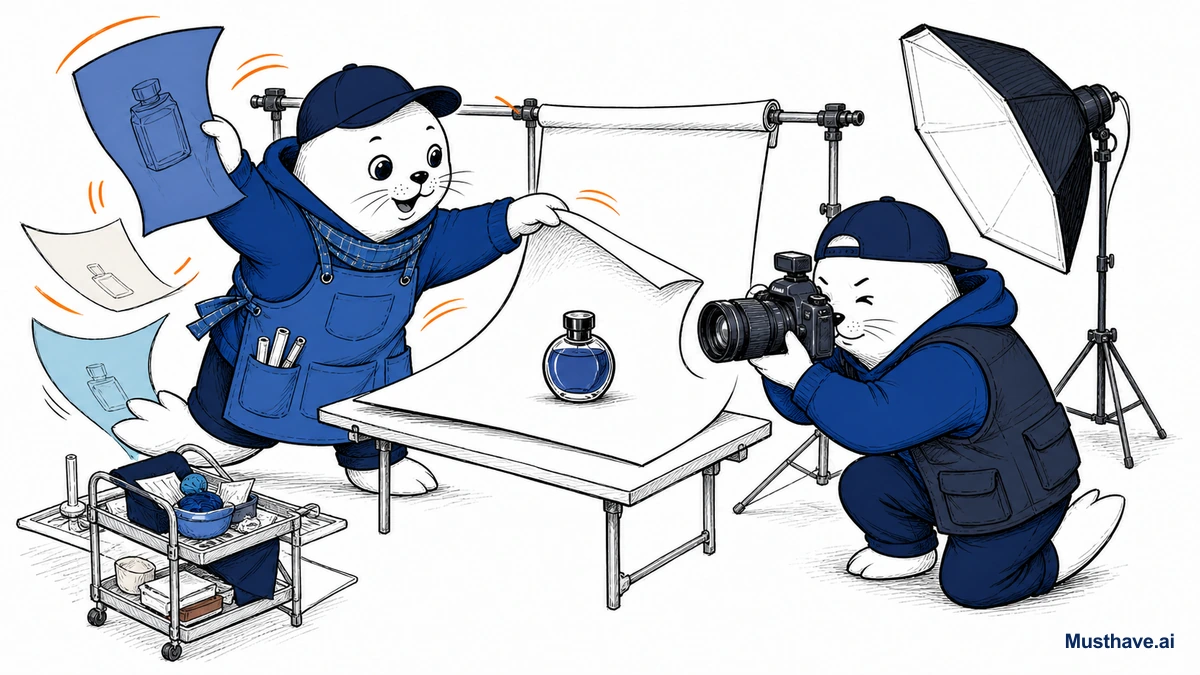
Last month a seller messaged me after burning ad spend on a “beautiful” AI lifestyle shot. The product in the ad had a metal clasp. The one that shipped was plastic. Refunds followed. That’s the line: generative mockups are a testing tool, not a license to invent a different product.
I still use AI images every week for merch concepts, listing tests, and ad angles. I also kill concepts that look better than the real thing. If you sell online in 2026, you need both skills: speed with tools like Midjourney or Ideogram, and honesty when it’s time to photograph what customers actually receive.
What AI mockups are actually good for
Here’s the thing. A studio day costs money and time. When you’re still validating a niche (“do dog groomers buy this joke tee?”) you don’t need an $800 shoot. You need five clear visuals fast enough to run a small traffic test.
In my stack, AI earns its keep for:
- Concept exploration, colorways, angles, “does this design read at phone size?”
- Ad creative variants, same product story, different backgrounds and hooks
- Seasonal mood, holiday scenes while the physical sample is still in transit
- POD / Merch drafts, before I clean type in Kittl and upload
What it does not replace: proof that the product exists as advertised, texture you can feel in a close-up, and trust for higher-ticket gear.
The practical stack I use (and why each tool is there)
I don’t open twelve apps. I keep a short lane:
- Midjourney (or your best style model), mood, lifestyle framing, product-in-scene concepts when photorealism matters
- Ideogram, when the image needs readable text (price callouts, “new drop,” slogan on a mock shirt)
- Kittl or a design tool, rebuild anything print-bound so edges and type stay clean
- Your POD or mockup engine, place the design on the actual blank you’ll sell
- Phone photos of the real unit, once inventory or a sample is in hand
If budget is tight, skip Midjourney and start with Ideogram + Kittl for text-heavy merch. If you’re selling unbranded physical goods, prioritize a real white-background shot earlier, marketplaces punish fantasy more than Instagram does.
A workflow that doesn’t get you banned (or hated)
- Write the truth first. One sentence: material, size, color, what’s included. That sentence is the guardrail for every prompt.
- Generate 6–10 concepts with tight constraints (“matte black bottle, same proportions as reference, soft daylight, no extra logos”).
- Kill anything prettier than reality. Extra shine, wrong lid, invented features, gone.
- Polish one hero + two supporting crops for mobile. Thumbnail readability beats cinematic blur.
- Run a small test (organic post, tiny ad budget, or listing A/B). Watch CTR and comments, not your own excitement.
- Upgrade to real photos when demand shows up or before you scale spend past “learning money.”
Now you might be thinking: “Everyone else fakes it.” Some do, until a chargeback or a policy strike. Building a brand that lasts is boringly honest.
Prompt rules that save hours of junk
Vague prompts create pretty garbage. I write like an art director briefing a shooter:
- Subject + exact angle (“3/4 view, label facing camera”)
- Lighting (“soft window light, no harsh specular on plastic”)
- Background (“light oak desk, uncluttered”)
- What to avoid (“no extra buttons, no watermark text, no celebrity hands”)
- Aspect ratio for the channel (1:1 square for many feeds, 4:5 for ads)
Keep a swipe file of prompts that worked for your catalog. Remix winners. Don’t start from zero every Monday.
Marketplace and ad reality checks
Amazon, Etsy, Shopify, Meta ads, different risk levels, same principle: the creative should not contradict the listing.
- Main image: prefer real product when you can; a pure AI “hero” on regulated or high-AOV items is how trust dies
- Lifestyle secondary images: AI can help if the product match is faithful
- Claims in the image: if you put “stainless steel” on the graphic, the SKU better be stainless steel
- Trademarks: no logos, characters, or celebrity lookalikes in generated merch
When in doubt, disclose lifestyle images as illustrative and lead with a clean real photo. Transparency is cheaper than a legal email.
When I stop using AI and pick up the phone
Three triggers:
- I’m about to spend serious ad budget
- Customers ask “is this what it really looks like?”
- The product has texture, fabric drape, or finish AI keeps getting wrong
A phone on a cloudy afternoon, white foam board, and consistent angles beats another hour of prompt roulette. In my experience, sellers who win long-term treat AI as the sketchbook and photography as the receipt.
Your challenge this week
Pick one live product (or one POD design). Generate three AI concepts. Then shoot or order a real mockup of the same SKU. Put them side by side on your phone. If a stranger can’t tell which one is real, good. If the AI one looks like a luxury upgrade of what you ship, delete it.
Speed without integrity is just faster refunds. Build the stack. Keep the standards.
How enforcement actually differs by platform
One thing worth knowing before you lean on AI imagery: platforms police it very differently, and matching your creative to the strictest one keeps you safe everywhere. Marketplaces like Amazon and Etsy are the harshest, a main image that misrepresents the product invites returns and policy strikes, so lead with real photos there. Ad platforms like Meta care most about deception and prohibited claims. Your own store gives you the most freedom and the most responsibility. The safe habit across all three: the creative may set a mood, but it must never contradict what actually shows up in the box.
Where do you draw your own line between an AI mockup and a real photo? Tell me the product you’re stuck on in the comments and I’ll tell you which way I’d go.
Verification sources and related guides
Primary reference: Adobe Firefly official product page. This is an official provider source. Treat performance, adoption, and product claims as company-reported unless the article identifies an independent check.