YouTube is moving Gemini from idea generation into the editing room. The September 23 creator announcements combine conversational editing, archive-level thumbnail help, channel-specific moderation experiments and new likeness protections, but they do not all ship at the same time.
The editor can change the cut through conversation
The YouTube Gemini AI editor is being integrated into the conversational editor for Shorts and YouTube Create. A creator can ask it to reorder frames, trim clips, synchronize music and make other structural changes without manually rebuilding every edit.
YouTube is not removing the timeline. Creators can alternate between chat instructions and direct editing. That hybrid matters because conversational systems are fast at broad revisions, while precise timing, continuity and intent still benefit from manual control.
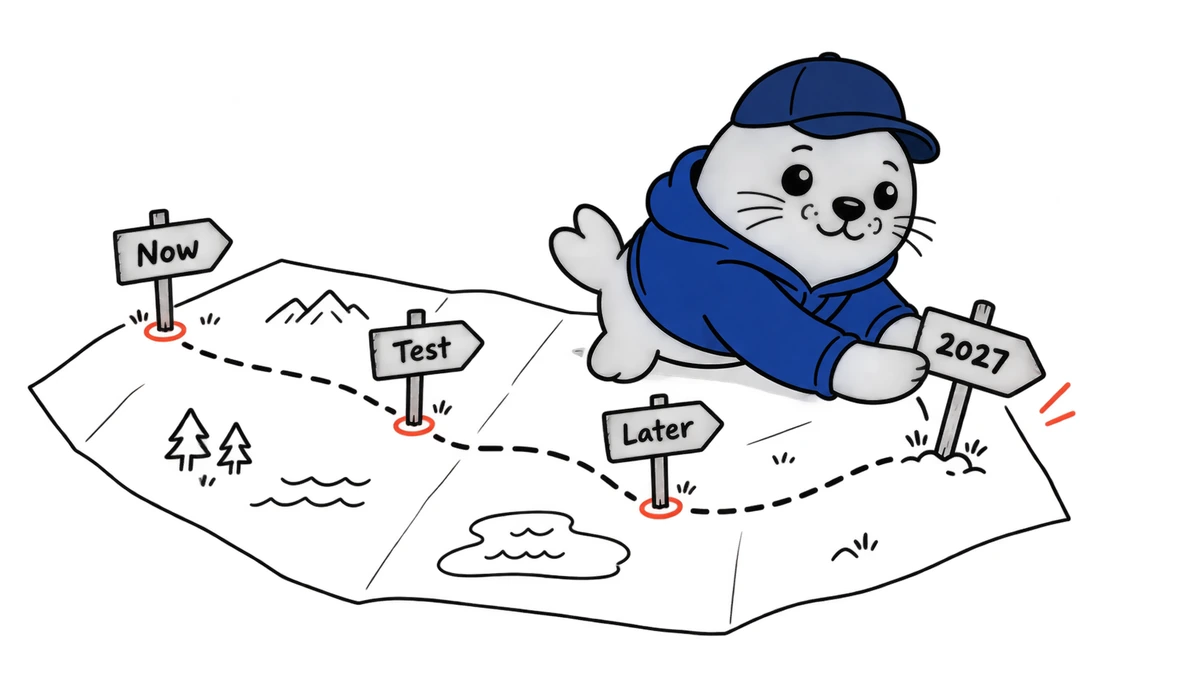
One announcement, four different rollout states
| Capability | Published status | Do not claim |
|---|---|---|
| Conversational editing for Shorts and YouTube Create | Part of the new creator-tool rollout | That every creator or country has it immediately |
| Ask Studio archive review and thumbnail suggestions | New capability for older-video optimization | That a suggestion guarantees higher click-through rate |
| Channel-style comment moderation | Opt-in test | That YouTube fully automates enforcement for all channels |
| Speaking-voice detection | Planned to complement facial detection | That it is already broadly available |
| Automatic dubbing for Live | Pilot planned for early 2027 | That live streams can use it today |
Ask Studio is looking backward as well as forward
Most creator AI products focus on the next upload. YouTube says Ask Studio can review older videos, identify opportunities and help creators propose or test refreshed thumbnails. For established channels, that archive can be more valuable than generating one more clip because it already has search history, audience behavior and proven subjects.
The result still needs an experiment. A suggested thumbnail is a hypothesis, not a performance fact. Creators should compare click-through rate, watch time after the click, returning-viewer behavior and whether the new packaging accurately represents the video.
Moderation learns a channel, which raises a governance question
YouTube is testing an opt-in AI moderation assistant designed to learn a channel’s moderation style. That can reduce repetitive review, but a channel’s historical decisions may contain inconsistent rules, temporary reactions or unfair patterns. Learning the style is not the same as defining a good policy.
- Publish the categories the system may act on.
- Keep appeals and human override available.
- Review false positives by language and community context.
- Separate spam filtering from viewpoint-sensitive decisions.
- Record whether the system suggested, hid or removed each comment.
Voice likeness expands the identity boundary
YouTube already discusses facial-likeness detection and says speaking-voice detection will be combined with it later. Voice adds a difficult dimension because identity can be conveyed without a face. A synthetic clip may copy cadence, accent or vocal texture while showing unrelated visuals.
The useful product test is not only whether the system finds a match. Creators need understandable evidence, control over claims, protection against malicious reporting and a path for licensed parody, dubbing and collaboration. Our report on a YouTube AI detector false positive shows why appeal design matters as much as detection accuracy.
Company metrics need attribution
YouTube says hundreds of thousands of channels used Gemini Omni daily in August 2026. It also cites a survey in which 72 percent of US video posters aged 14 to 44 said they used AI during the prior year. Those figures describe company-reported use and survey responses, not independently measured creator outcomes.
For Live, YouTube says 40 percent of watch time comes from outside a creator’s home country. That supports the dubbing opportunity, but it does not show that automatic dubbing will preserve timing, tone or factual meaning across languages.
A creator test plan that protects the audience
- Choose one existing Short with clear source files and a known baseline.
- Ask the editor for one structural change at a time.
- Review cuts, music timing, captions and implied meaning manually.
- Save the original and record which changes were generated.
- Run thumbnail tests without changing the underlying video at the same time.
- Keep moderation suggestions in review mode until false-positive behavior is understood.
- Treat voice and likeness alerts as claims requiring evidence and appeal.
Creators working with long video should also compare the workflow with Gemini agentic video processing, where traceability and watched segments matter as much as token savings.
The practical verdict
YouTube is assembling a creator operating layer rather than releasing one isolated generator. Editing, packaging, moderation, identity protection and localization now share a Gemini-centered roadmap. The opportunity is substantial, but the rollout is fragmented by product, account, test group and date.
The best article and buying decision should therefore separate what a creator can use now from what is experimental, promised later or planned for 2027. That distinction is more useful than repeating a single launch headline.
Primary sources
- Google: Made on YouTube 2026 overview
- YouTube: new tools across the creation journey
- YouTube: Live tools, funding and dubbing
Checked September 23, 2026. YouTube-reported adoption and survey figures remain company-reported. Availability varies across released features, tests, future plans and a 2027 pilot.