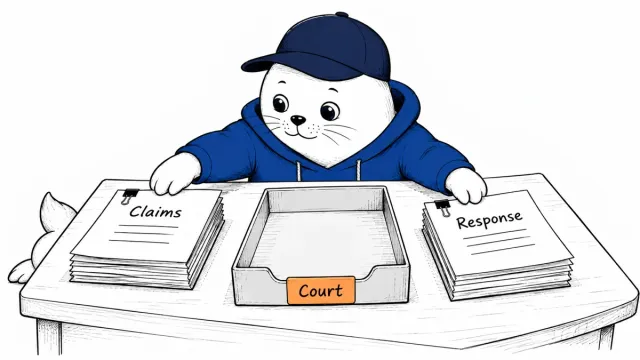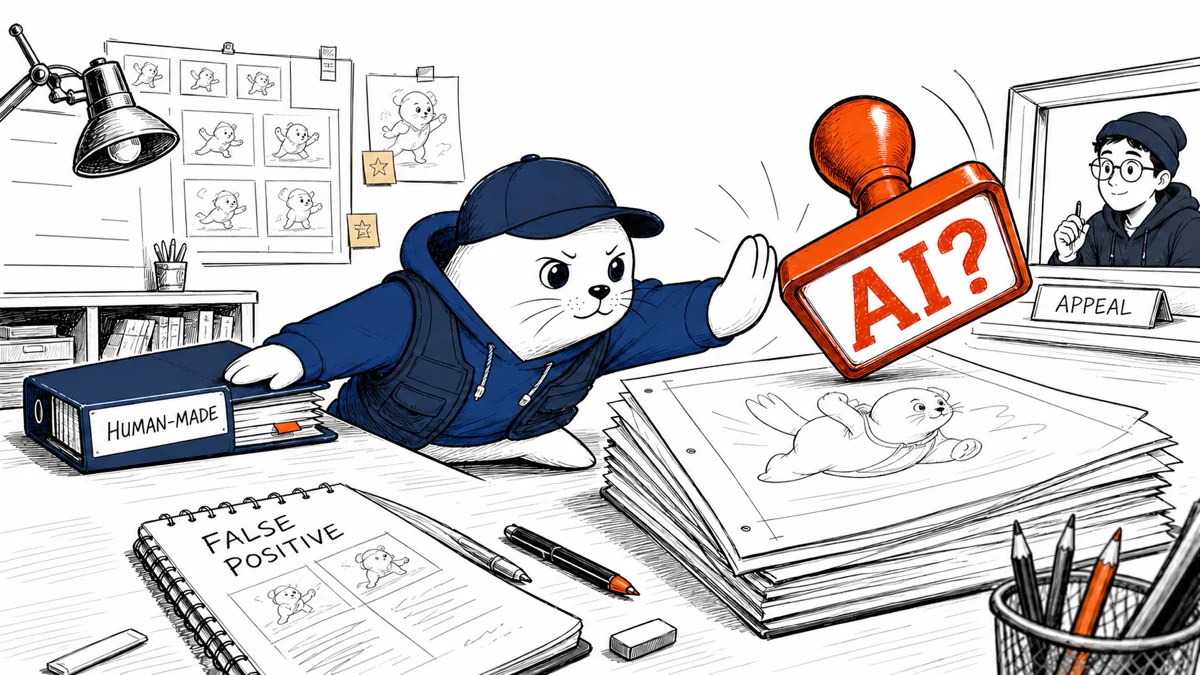
A channel can document every human hour behind a video and still be judged by an opaque automated system. Kurzgesagt says that happened to its latest upload, turning a distribution problem into a warning about evidence and appeals.
What Kurzgesagt says happened
On August 14, 2026, Kurzgesagt’s official Reddit account described an unusually poor launch for its "Superpredators" video. The studio said clicks, watch time, and likes were above its usual benchmarks, yet the upload became its worst performer since 2013.
The post says the team contacted YouTube and was privately told that automatic AI detection had wrongly classified its human-made videos as low-quality AI content, restricting the channel. Kurzgesagt removed the upload and said it planned to rework and publish it again.
This account is important, but its evidentiary status needs precision. The claim comes from the creator’s report of a private support conversation. YouTube has not published an incident report naming Kurzgesagt, explaining the detector, or confirming the exact distribution effect.
This is a creator-reported false positive, not a proven diagnosis
The public evidence supports three facts: Kurzgesagt made the statement, the original upload was removed, and the studio planned a revised reupload. It does not let an outside observer inspect YouTube’s model score, ranking systems, or internal support notes.
That distinction matters because a weak launch can have multiple causes. Recommendation traffic, topic demand, audience timing, packaging, and automated quality controls can interact. The creator’s account makes the detector explanation credible enough to investigate, not complete enough to treat every reach decline as proof of an AI penalty.
YouTube’s public rules do not explain this detector
YouTube’s published altered-content policy asks creators to disclose realistic synthetic or meaningfully altered media. Its monetization rules also distinguish original, authentic work from mass-produced or repetitive material. In its 2026 priorities, YouTube said it would reduce the spread of low-quality AI content by building on systems used against spam and clickbait.
Those pages establish the policy direction. They do not publish a universal "AI detector," a threshold, or an appeal procedure for an original animation studio that believes its style was misclassified. A disclosure label and a quality classifier are also different questions: one asks how content was made; the other may influence how a platform evaluates or distributes it.
Why distinctive animation can collide with automated heuristics
We do not know which features YouTube used in this case. Still, the incident exposes a general risk. AI generators learn from polished visual conventions, while established studios often have consistent palettes, motion patterns, narration cadence, and reusable production systems. A classifier that treats consistency or certain visual signatures as evidence of automation can confuse a mature style with synthetic sameness.
The problem resembles the disclosure gap we examined in AI watermark and detector limitations: detection is probabilistic evidence, not authorship proof. The policy consequences become more serious when a score changes distribution before a human can examine the production record.
Build an appeal packet before reach disappears
Creators should not wait for a support ticket to assemble provenance. Keep a compact evidence packet for every consequential release.
- Project history: source files, version history, storyboards, drafts, and dated exports.
- Production record: contributor credits, invoices, review notes, and a timeline showing how the work changed.
- Release data: video ID, publication time, impressions, traffic sources, click-through rate, retention, likes, and comparable uploads.
- AI disclosure log: which tools were used, what they changed, and why the public disclosure choice matched YouTube’s policy.
- Support chronology: exact ticket numbers, responses, screenshots, and the remedy requested.
- Human-review request: a short explanation connecting the evidence to the alleged false positive.
This packet does not guarantee recovery. It gives a reviewer something stronger than "we promise a person made it." It also helps separate a detector dispute from ordinary packaging or audience problems.
Do not treat a reupload as a clean experiment
If the revised video performs better, that result will be useful but not conclusive. The reupload may have a different title, thumbnail, edit, timing, support status, or audience awareness. Each change weakens a simple before-and-after comparison.
Creators testing a recovery should log every change and compare more than view counts. Watch impressions by source, initial audience composition, click-through rate, retention curves, and subscriber versus non-subscriber reach. Our guide to human-led AI content workflows makes the same point from the production side: a transparent process is more defensible than a vague claim that something is "mostly human."
What YouTube should publish
Platforms do not need to reveal a detector in enough detail to invite evasion. They can still publish the decision category, the affected surface, the duration of any restriction, and a route to human review. A creator should be able to distinguish a monetization decision from recommendation suppression or a disclosure issue.
False-positive reporting would also improve accountability. Aggregate reversal rates, review times, and common failure modes could show whether an automated safeguard works across animation, education, music, and other formats without exposing individual channels.
My verdict: provenance has to travel with the work
Kurzgesagt’s account is not enough to map YouTube’s internal system, but it is enough to expose a governance gap. A creator can be asked to disclose synthetic media while receiving little usable disclosure about an automated judgment applied to the creator.
Keep the production trail, preserve release analytics, and ask for the precise decision under appeal. For platforms, a detector should open a review path, not silently become the final word on who made the work.
Read the source material
- Read Kurzgesagt’s creator statement.
- Review YouTube’s altered or synthetic content disclosure policy.
- Compare the YouTube monetization policies and the company’s 2026 priorities.
Detection systems can misclassify original work, while likeness systems address unauthorized identity use. See the new YouTube likeness safeguards and their separate rollout stages.
Source note: YouTube’s role in the specific incident is attributed to Kurzgesagt’s report of a private conversation. No public YouTube postmortem was available when this article was prepared.