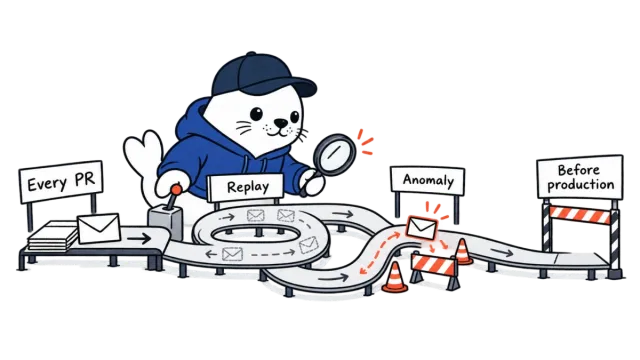
OpenAI has created a legal edition of its newest reasoning model, but the important product is not a lawyer-shaped chatbot. It is a controlled research system with a dedicated source index.
OpenAI Astra Law combines GPT-6 Astra with a U.S. Legal Search Index that OpenAI says is updated daily. The index covers cases, statutes, regulations, court rules and administrative decisions. Selected U.S. law firms can access the product in early access through eligible lawyers and staff working under their supervision.
The distinction matters. A general model can explain a doctrine from learned patterns. A legal research product must also retrieve the current authority, identify the jurisdiction and give the reader a path back to the text that controls the answer. Astra Law is OpenAI’s attempt to bind those jobs together.
What OpenAI Astra Law actually adds
| Layer | What OpenAI describes | What the lawyer must confirm |
|---|---|---|
| Reasoning | GPT-6 Astra is the underlying model. | The reasoning matches the matter, jurisdiction and procedural posture. |
| Legal retrieval | A dedicated U.S. index is updated daily. | The cited authority is current, controlling and quoted accurately. |
| Firm knowledge | Connectors can bring approved internal material into context. | The user is entitled to access the file and the version is authoritative. |
| Delivery | A model-picker entry labeled GPT-6 Astra Law. | The workspace, matter and confidentiality settings are correct. |
The search index is the core differentiator
Daily updating is useful because law changes through more than headline decisions. Amended rules, agency decisions, new regulations and later treatment can alter the value of a source. OpenAI does not say that a daily index guarantees complete coverage or instant treatment analysis, so firms should test freshness with known changes before relying on it.
A good pilot should include easy matters and adversarial ones: a recently amended rule, a split of authority, a superseded regulation and a query where the most famous case is no longer the best citation. Ask the product to show its sources, then compare the answer with the firm’s established research service.
Who can use the early-access release
OpenAI says the release is for selected U.S. law firms. Eligible users are lawyers and supervised staff, not an unrestricted public audience. The product is available through Trusted Access and Codex, while API access is planned rather than generally available today.
That scope should appear in a firm’s internal policy. Define who may use the legal mode, which matters are excluded, whether outputs can enter a client file and who signs off before a citation reaches a brief or advice letter. Access to a specialist model is not the same as authorization to use it on every matter.
Firm connectors increase value and risk together
OpenAI names iManage and DeepJudge as examples of systems that can supply firm knowledge. This can join public law with precedents, memos and work product. It also makes permission design more important: a useful answer can still be an incident if it reveals a restricted matter or a draft beyond its ethical wall.
Test connectors with a permission matrix. A user outside a matter should receive neither the document nor a revealing title, snippet or citation. Record which repository supplied each passage so reviewers can distinguish public authority from internal interpretation.
A five-step verification workflow
- State the jurisdiction and date. Force the request to expose the legal frame before research begins.
- Open every important citation. Check the proposition, page, court and later history in the source itself.
- Separate authority from analysis. Label what the source says and what the model infers.
- Check access provenance. Confirm that every internal document came from a repository the user may search.
- Preserve a review record. Save the prompt, answer, sources and human corrections when the work affects a client.
What this means for legal AI buyers
The useful comparison is not Astra Law against a blank page. Compare it with the full existing workflow: research platform, document system, junior review, citation checking and partner approval. Measure time saved only after correction time and missed-authority risk are included.
OpenAI’s broader Astra comparison explains the model family, while our report on GPT-6 Astra in production systems shows why tool access needs separate controls. Legal research raises the stakes because fluent text can look finished before the authority has been checked.
The bottom line
OpenAI Astra Law is a meaningful product boundary: a general reasoning model connected to a regularly refreshed legal corpus and optional firm knowledge. The early-access limits and explicit instruction to review answers are just as important as the feature list. Firms should pilot it as a cited research assistant, not as an autonomous legal decision maker.
Read the primary record
Checked September 18, 2026. Product details and reported results come from the linked first-party sources. Interpretation, limitations and implementation advice are MustHave.ai analysis.