OpenAI has put the harness behind Codex into a public API. The new Agents API can manage long sessions, tool discovery, sandboxes and subagents, but it does not remove the developer’s responsibility for permissions, budgets, evaluation or recovery.
OpenAI announced the Agents API public beta on September 10, 2026. It is available to all developers. OpenAI says there is no additional fee for the API itself; customers pay for the model tokens and tools their agents consume.
What the Agents API manages
| Layer | Managed capability | Builder decision |
|---|---|---|
| Harness | Context handling, tool use and agent coordination | Choose the model, instructions, tools and stop conditions |
| Session | Durable work across long tasks and automatic compaction | Define retention, evidence and resume behavior |
| Tools | MCP, functions, built-in tools, tool search and programmatic calls | Expose only required permissions and validate results |
| Environment | OpenAI-hosted, self-hosted or partner sandbox options | Select isolation, network, files, secrets and compute |
| Subagents | Parallel delegated work with separate contexts | Set concurrency, budget and reconciliation rules |
The harness and sandbox are different boundaries
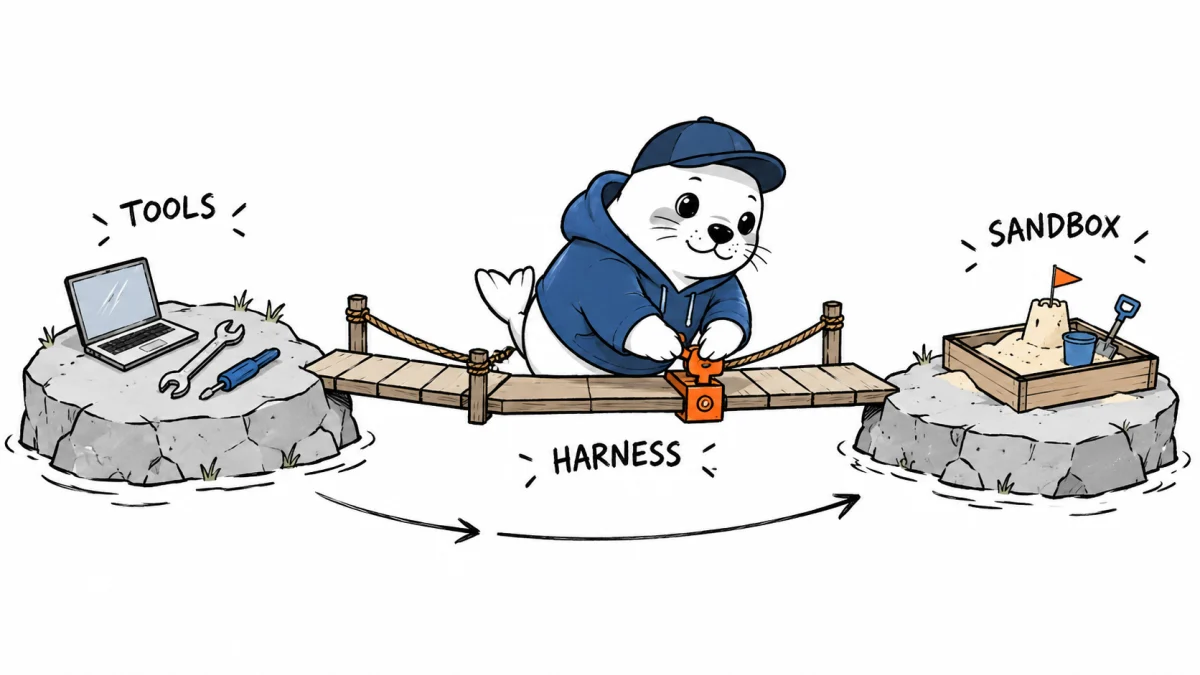
The harness decides how the model receives context, selects tools and coordinates work. The sandbox decides where code runs, which files are present, what network access exists and how secrets are injected. OpenAI lets builders choose an OpenAI-hosted sandbox, their own infrastructure or a supported partner environment.
That separation is the most useful architectural fact in the launch. A managed harness can reduce orchestration work without forcing every workload into the same execution environment. It also creates two contracts to inspect: the harness behavior and the sandbox policy.
Durable sessions reduce plumbing, not risk
Automatic context compaction can keep a task moving across multiple context windows. Durable sessions can also preserve intermediate work. Neither feature guarantees that the right evidence survives or that a resumed agent still has valid credentials and assumptions.
- Save source links, command outputs and decision records as explicit artifacts.
- Set an expiry for credentials and recheck authorization after a long pause.
- Record which model, harness version, tools and sandbox image produced the result.
- Require an explicit checkpoint before destructive or externally visible actions.
Tool search changes the cost profile
Tool search loads relevant definitions when needed instead of placing every tool schema in the initial context. That can reduce repeated prompt overhead. Programmatic tool calling can also run calls in parallel and filter results before returning them to the model.
The saving is workload-dependent. The complete cost still includes model input and output, tool charges, sandbox compute, retries and any downstream service calls. Our AI agent cost-control guide shows how to set per-task ceilings and escalation rules.
A production-readiness test
- Start with one read-only workflow that already has a known human process.
- Run it 50 times with a fixed evaluation set and save every tool trace.
- Force a tool timeout, malformed result, expired credential and sandbox restart.
- Measure success, unsupported claims, total token use, tool cost and elapsed time.
- Enable one approval-gated write action only after read-only reliability is stable.
- Keep the old workflow available until rollback has been exercised.
What public beta does not promise
OpenAI describes the API as production-ready in its launch material while also labeling it public beta. Builders should treat the beta label as the controlling lifecycle signal. The announcement does not publish a general-availability date or a universal service guarantee for every environment and tool combination.
Information gain: the key procurement question is not whether the API can call tools. It is which runtime state OpenAI manages, which execution boundary you manage, and how quickly you can reproduce or exit the workflow.
My take: buy the harness, keep the policy
The Agents API can remove a substantial amount of orchestration code for long-running agents. Its strongest design choice is allowing the harness and execution environment to remain separate.
The safe adoption pattern is to let OpenAI manage context mechanics while keeping authorization, evidence requirements, spend ceilings and deployment rollback in your application. That is also the distinction we use in our Codex versus Claude Code guide.
Primary sources
Checked September 11, 2026. Product availability, features and pricing statements come from OpenAI. Architecture tests and risk interpretation are MustHave.ai analysis.