

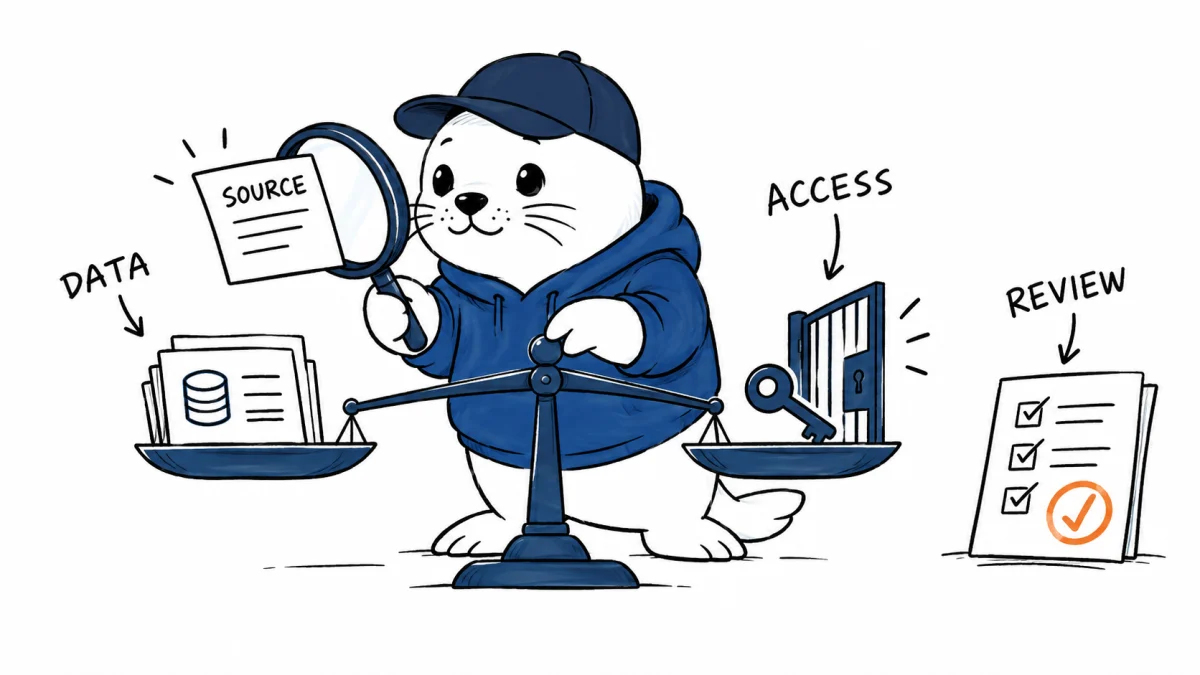
ChatGPT for Financial Services is not simply a new model tier. OpenAI is packaging GPT-6 Astra with licensed datasets, entitlement-aware access and financial workflow templates. The value will depend on whether every figure retains a source, permission and review trail.
OpenAI introduced ChatGPT for Financial Services on September 10, 2026. The company says Morgan Stanley and Evercore helped shape the initial investment-banking and equity-research workflows.
What is included
| Component | OpenAI description | What a firm should verify |
|---|---|---|
| Model | GPT-6 Astra and future frontier models | Approved model list, retention and change control |
| Built-in data | Daloopa, PitchBook, LSEG News and Crunchbase | Coverage, timestamps, licenses and citation depth |
| Entitled data | Shared sign-in work with S&P Capital IQ, LSEG, MSCI, Factiva and Moody’s | User-level rights and provider contract scope |
| Connectors | More than 50, including Datasite, Box, Preqin, FactSet and Intapp | Read, write and export permissions |
| Artifacts | Research, models, presentations and client materials | Formula lineage, approvals and disclosure controls |
Built-in data changes the setup burden
OpenAI says selected premium datasets are indexed and hosted on its infrastructure. That can remove separate connector setup for participating sources and support granular citations to tables and passages.
A built-in dataset still needs a data dictionary. Teams should record coverage, update frequency, correction policy and which fields are authoritative. A cited number can be traceable and still be stale, transformed incorrectly or outside the user’s permitted purpose.
Entitlement is the real product boundary
Many banks already license the same information directly. OpenAI says it is working on shared sign-in and entitlement integrations so providers can recognize access through ChatGPT. That is operationally important because a model should not make a restricted dataset available to a user who lacks the underlying right.
- Test a user with full access, limited access and no provider access.
- Check whether summaries, exports and generated slides preserve the same restriction.
- Revoke a provider entitlement and measure how quickly ChatGPT reflects the change.
- Inspect logs for the user, source, field, timestamp and generated artifact.
Do not confuse citations with validated analysis
OpenAI highlights granular citations. That is useful, but citation presence is only the first gate. An analyst must still verify that the cited passage supports the nearby claim and that calculations reconcile to the source period and accounting definition.
Our GPT-6 Astra pricing analysis also shows why long research contexts need explicit cost controls even when a model is capable of processing them.
A 20-case pilot for a financial team
- Choose 20 completed analyses with known sources, formulas and approved outputs.
- Recreate them with built-in data, entitled sources and one internal connector.
- Score source coverage, numerical accuracy, formula lineage and disclosure quality.
- Include restatements, amended filings, conflicting providers and missing fields.
- Require a second analyst to reproduce five cases from the saved evidence.
- Measure total analyst time, correction time and provider-access failures.
Security and governance questions
OpenAI describes central administration and enterprise security controls. Financial institutions should translate those claims into configuration evidence: retention, residency, training use, encryption, support access, audit exports, connector scopes and incident notification.
Client materials create a separate risk. A correct internal analysis can become misleading when a generated chart drops a footnote or a presentation combines figures with different dates. Artifact review should remain a named approval step.
What is not public yet
OpenAI says the product is available to eligible financial institutions through sales. It does not publish list pricing, a country-by-country availability table or a complete provider entitlement matrix. Design-partner participation is not evidence that every announced workflow is deployed broadly.
Information gain: evaluate the product as a permissioned data system with model reasoning, not as a chatbot with finance prompts.
My take: source rights will decide adoption
GPT-6 Astra may improve retrieval and artifact generation, but the defensible advantage is the combination of licensed content, reliable entitlement checks and reviewable provenance. Those are also the hardest parts to standardize across institutions.
The best pilot is one where incorrect access would be visible. Start with a small group, mixed entitlements and completed work that can be independently reconciled. For a broader comparison, see our current model guide.
Primary sources
Checked September 11, 2026. Dataset, connector, partner and availability statements come from OpenAI. The pilot design and governance tests are MustHave.ai analysis.