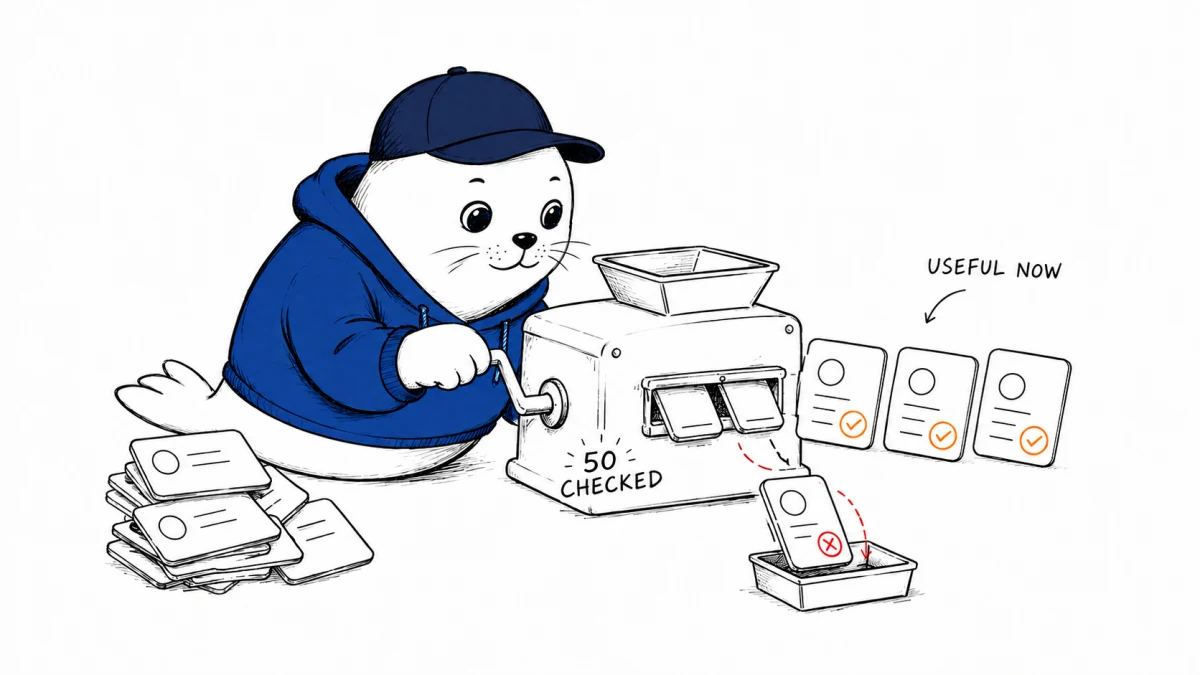
Last verified: September 6, 2026. We checked the canonical GitHub record and default-branch activity for every project in this 50-repository set, then rechecked popular names that did not pass. Every included repository had a default-branch commit within the previous 90 days. Archived projects, obvious wrappers, list-only repositories, and tools without a concrete job were excluded.
The result is a current decision guide, not a popularity chart. The 50 entries cover coding agents, agent frameworks, local inference, RAG, evaluation, observability, and AI workflow tools. Stars are recorded as an attention signal, but maintenance, practical fit, documentation, licensing, and operational risk determine the recommendation.
Editorial disclosure: no repository paid for placement. Repository status, star counts, license signals, and commit dates are confirmed GitHub facts from the verification date. The decision to include a project and the advice about when to use it are Musthave.ai editorial analysis, not a GitHub endorsement or a universal ranking.
If your main decision is between coding agents, start with our Codex vs Claude Code guide. If your workflow ends in pull-request repair, pair it with the VS Code Agent Merge guide.
September 20 addition: Unity official agent plugin
Unity has published an official game-development plugin for Claude Code and Codex. The repository includes agent manifests and Unity 6+ skills for in-app purchases, user interfaces, pixel art, rewarded ads, tile palettes, TextMeshPro and Render Graph review. It qualifies as an official, maintained source-visible toolkit, but its license is the Unity Companion License, not MIT or Apache 2.0. It is a guidance plugin, not proof of live Unity Editor control. Our Unity agent plugin guide covers install commands, the 0.1.6-beta verification example, version pinning and a disposable-project test.
What the September 6 check found
- All 50 were active: every default branch had a commit within 90 days; 46 had one within seven days.
- Public does not mean open source: 35 repositories showed MIT or Apache-2.0, while 13 used custom, unclassified, or undetected license signals.
- Choose a stack, not a pile: one coding agent, one runtime, one retrieval layer, and one evaluation path is usually enough to start.
- Hosted and local are separate decisions: a local interface can still call remote providers or load third-party extensions.
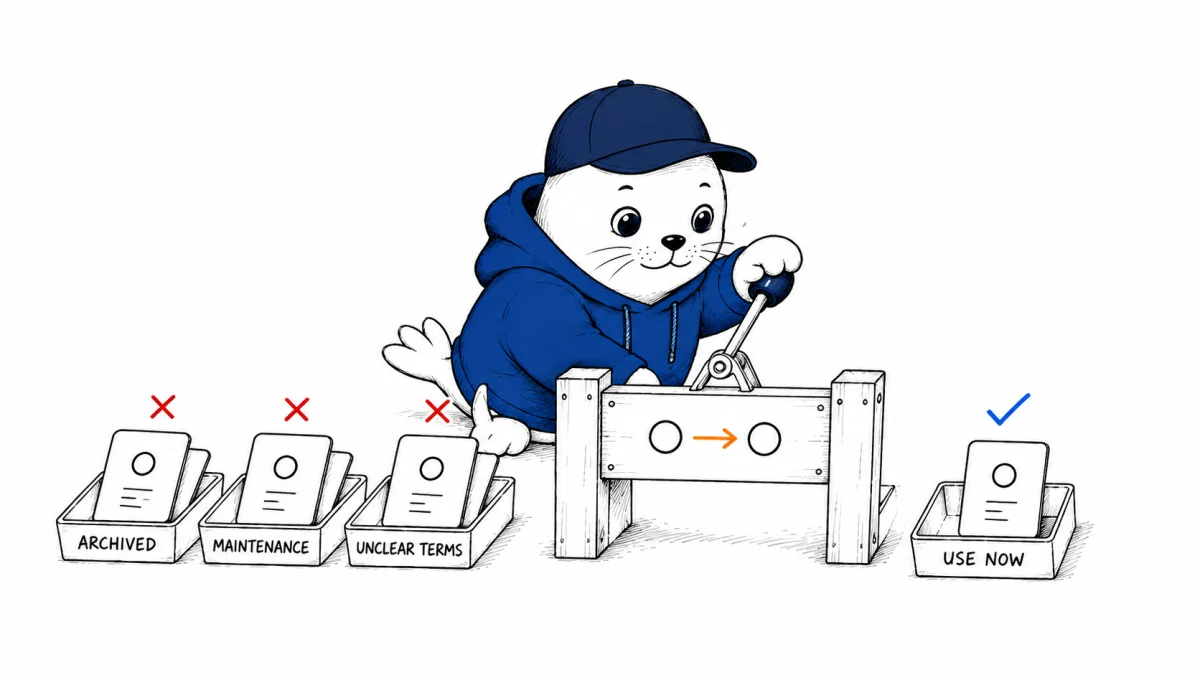
- Archive status matters: Roo Code, Flowise, VS Code Copilot Chat, and other popular names were removed from the main list after current repository checks.
The 12 fastest starting points
| Your job | Start with | Why |
|---|---|---|
| Terminal coding | Codex CLI or Claude Code | Strong repository-scale agent loops |
| Multi-provider coding | OpenCode | Avoids one-provider lock-in |
| Self-hosted code help | Tabby | Completion and chat under your control |
| Durable agents | LangGraph | Explicit state, retries, and checkpoints |
| Microsoft agent stack | Microsoft Agent Framework | Current Microsoft starting point |
| Local model testing | Ollama | Lowest-friction local API |
| GPU model serving | vLLM or SGLang | Throughput-focused serving |
| Existing PostgreSQL RAG | pgvector | Avoids another database |
| Dedicated vector search | Qdrant | Useful filtering without Milvus-scale operations |
| Evaluation in CI | Promptfoo | Repeatable tests and red-team cases |
| Production tracing | Phoenix, Langfuse, or Opik | Inspect traces before choosing a platform |
| Creative media graphs | ComfyUI | Reusable node-based generation workflows |
Do not install all 12. A beginner should choose one outcome first. Start with Ollama for a local model, compare Codex CLI, Claude Code, Gemini CLI, and OpenCode on one small coding task, or connect one human-approved automation in n8n. Pick one row, run a bounded trial, and keep the evidence. The selection worksheet near the end gives you a practical scorecard.
All 50 AI repositories at a glance
Use this index to jump to the detailed evaluation. The license column records GitHub’s repository-level signal, not every model, dataset, hosted service, extension, or dependency used by the project.
| # | Repository | Category | License signal | Latest checked commit |
|---|---|---|---|---|
| 1 | Codex CLI | Coding agents | Apache-2.0 | Sep 6, 2026 |
| 2 | Claude Code | Coding agents | No license detected | Sep 6, 2026 |
| 3 | Gemini CLI | Coding agents | Apache-2.0 | Sep 4, 2026 |
| 4 | GitHub Copilot CLI | Coding agents | Custom or unclassified | Sep 4, 2026 |
| 5 | OpenCode | Coding agents | MIT | Sep 6, 2026 |
| 6 | Cline | Coding agents | Apache-2.0 | Sep 4, 2026 |
| 7 | Tabby | Coding agents | Custom or unclassified | Jun 30, 2026 |
| 8 | OpenHands | Coding agents | MIT | Sep 5, 2026 |
| 9 | Goose | Coding agents | Apache-2.0 | Sep 5, 2026 |
| 10 | Continue | Coding agents | Apache-2.0 | Jul 21, 2026 |
| 11 | LangGraph | Agent frameworks | MIT | Sep 3, 2026 |
| 12 | Microsoft Agent Framework | Agent frameworks | MIT | Sep 4, 2026 |
| 13 | Semantic Kernel | Agent frameworks | MIT | Sep 4, 2026 |
| 14 | CrewAI | Agent frameworks | MIT | Sep 4, 2026 |
| 15 | smolagents | Agent frameworks | Apache-2.0 | Aug 22, 2026 |
| 16 | Google ADK | Agent frameworks | Apache-2.0 | Sep 6, 2026 |
| 17 | LlamaIndex | Agent frameworks | MIT | Sep 3, 2026 |
| 18 | Haystack | Agent frameworks | Apache-2.0 | Sep 4, 2026 |
| 19 | Browser Use | Agent frameworks | MIT | Sep 5, 2026 |
| 20 | MCP Servers | Agent frameworks | Custom or unclassified | Sep 3, 2026 |
| 21 | Ollama | Local inference and serving | MIT | Sep 5, 2026 |
| 22 | llama.cpp | Local inference and serving | MIT | Sep 6, 2026 |
| 23 | vLLM | Local inference and serving | Apache-2.0 | Sep 6, 2026 |
| 24 | SGLang | Local inference and serving | Apache-2.0 | Sep 6, 2026 |
| 25 | LocalAI | Local inference and serving | MIT | Sep 6, 2026 |
| 26 | LiteLLM | Local inference and serving | Custom or unclassified | Sep 6, 2026 |
| 27 | Transformers | Local inference and serving | Apache-2.0 | Sep 5, 2026 |
| 28 | Open WebUI | Local inference and serving | Custom or unclassified | Sep 4, 2026 |
| 29 | Jan | Local inference and serving | Custom or unclassified | Sep 4, 2026 |
| 30 | whisper.cpp | Local inference and serving | MIT | Sep 4, 2026 |
| 31 | Qdrant | RAG, memory, and data | Apache-2.0 | Sep 3, 2026 |
| 32 | Milvus | RAG, memory, and data | Apache-2.0 | Sep 6, 2026 |
| 33 | Weaviate | RAG, memory, and data | BSD-3-Clause | Sep 4, 2026 |
| 34 | Chroma | RAG, memory, and data | Apache-2.0 | Sep 3, 2026 |
| 35 | pgvector | RAG, memory, and data | Custom or unclassified | Aug 20, 2026 |
| 36 | txtai | RAG, memory, and data | Apache-2.0 | Sep 4, 2026 |
| 37 | RAGFlow | RAG, memory, and data | Apache-2.0 | Sep 5, 2026 |
| 38 | Mem0 | RAG, memory, and data | Apache-2.0 | Sep 4, 2026 |
| 39 | Promptfoo | Evaluation and observability | MIT | Sep 6, 2026 |
| 40 | Phoenix | Evaluation and observability | Custom or unclassified | Sep 5, 2026 |
| 41 | Langfuse | Evaluation and observability | Custom or unclassified | Sep 4, 2026 |
| 42 | LM Evaluation Harness | Evaluation and observability | MIT | Sep 1, 2026 |
| 43 | DeepEval | Evaluation and observability | Apache-2.0 | Sep 6, 2026 |
| 44 | Inspect AI | Evaluation and observability | MIT | Sep 5, 2026 |
| 45 | Opik | Evaluation and observability | Apache-2.0 | Sep 4, 2026 |
| 46 | n8n | Apps and workflows | Custom or unclassified | Sep 6, 2026 |
| 47 | Dify | Apps and workflows | Custom or unclassified | Sep 5, 2026 |
| 48 | Sim | Apps and workflows | Apache-2.0 | Sep 6, 2026 |
| 49 | LobeChat | Apps and workflows | Custom or unclassified | Sep 6, 2026 |
| 50 | ComfyUI | Apps and workflows | GPL-3.0 | Sep 6, 2026 |
How the 50 repositories were selected
- Primary record: the canonical GitHub repository page and default-branch commit feed were checked directly.
- Maintenance gate: no archived repository and no default branch inactive for more than 90 days made the list.
- Utility gate: each project needed a specific job a builder could run, not just papers, prompts, bookmarks, or demo code.
- License gate: GitHub license signals were recorded, but custom terms and model licenses still require a full review.
- Editorial gate: entries had to add a distinct choice, not duplicate a better-maintained tool in the same category.
This is not a list of the 50 most-starred AI repositories. Star counts below are a September 6 snapshot and only an attention signal. The median was about 47.5K stars, but the list includes Inspect AI at roughly 2.7K because a transparent evaluation framework can be more useful than a fashionable interface. Choose with documentation, maintenance, licensing, security boundaries, failure recovery, and your exact workload.
How to rerun the maintenance check
A static list becomes stale. The command below uses the official GitHub GraphQL API through GitHub CLI to return archive status, repository push time, license signal, and the latest commit on the default branch. Replace OWNER and REPO, then save the result with the date you checked it.
gh api graphql \
  -F owner='OWNER' \
  -F name='REPO' \
  -f query='query($owner: String!, $name: String!) {
    repository(owner: $owner, name: $name) {
      nameWithOwner url isArchived pushedAt
      licenseInfo { spdxId name }
      defaultBranchRef {
        name
        target { ... on Commit { committedDate oid } }
      }
    }
  }' \
  --jq '.data.repository'
Treat pushedAt as a broad activity signal. The default branch commit date is the narrower maintenance check used for this guide. Neither proves release quality, security, documentation quality, or maintainer capacity. Recheck the set quarterly and whenever a project is archived, enters maintenance mode, changes license, or moves to a successor repository. To report a change, send the canonical repository link and supporting evidence to hello@musthave.ai.
License warning: a visible repository is not permission
The 50 entries are public GitHub repositories, but they are not all open source under a standard license. GitHub detected MIT or Apache-2.0 on 35 of them. One used BSD-3-Clause and one used GPL-3.0. Twelve returned a custom or unclassified signal, and Claude Code showed no license identifier on the repository page. That does not make those projects bad. It means you must read the full license, product terms, trademark rules, extension terms, and model licenses before redistribution or commercial deployment.
This distinction matters most for gateways, self-hosted interfaces, workflow platforms, and public product forks. A repository can be source-visible while the hosted service, trademarks, enterprise features, or redistribution rights follow different rules.

Coding agents: 10 repositories
Use these tools on the same small repository task before choosing. Record files changed, commands run, test results, human review time, and the actual model bill.
1. Codex CLI
Repository: openai/codex
Snapshot: 122K stars; Apache-2.0; latest default-branch commit Sep 6, 2026.
Use it when: Use it for terminal-first coding, repository changes, tests, and reviewable patches.
Why it earns a place: Its clean CLI workflow and active Apache-licensed repository make it a strong default for OpenAI users.
Watch: Model access, approval settings, sandboxing, and token cost still determine the real operating risk.
2. Claude Code
Repository: anthropics/claude-code
Snapshot: 144K stars; No license detected; latest default-branch commit Sep 6, 2026.
Use it when: Use it when you want Claude to inspect a repository, edit files, run commands, and handle Git workflows from a terminal.
Why it earns a place: The public repository is the canonical place to follow releases, issues, hooks, and installation changes.
Watch: GitHub did not expose a license identifier on the repository page. Treat the product terms and permissions as controlling, not the fact that the code is visible.
3. Gemini CLI
Repository: google-gemini/gemini-cli
Snapshot: 107K stars; Apache-2.0; latest default-branch commit Sep 4, 2026.
Use it when: Use it for an open terminal agent tied closely to Gemini and Google developer services.
Why it earns a place: The Apache-licensed codebase is active and gives teams a transparent place to inspect extensions and issue history.
Watch: Account quotas, model availability, sandbox configuration, and tool permissions can change the experience.
4. GitHub Copilot CLI
Repository: github/copilot-cli
Snapshot: 11.1K stars; Custom or unclassified; latest default-branch commit Sep 4, 2026.
Use it when: Use it when your work already lives in GitHub and you want Copilot agent behavior in the terminal.
Why it earns a place: It offers a direct path from local work to GitHub-native context without requiring an editor extension.
Watch: GitHub reports no standard SPDX license identifier. Confirm Copilot access, billing, preview status, and repository terms before standardizing on it.
5. OpenCode
Repository: anomalyco/opencode
Snapshot: 205K stars; MIT; latest default-branch commit Sep 6, 2026.
Use it when: Use it when you want a multi-provider terminal coding agent and do not want one model vendor to define the whole workflow.
Why it earns a place: The MIT-licensed repository combines unusually high adoption with very recent development activity.
Watch: Provider behavior, context limits, and tool safety still vary. Test the same repository task on the exact provider you plan to use.
6. Cline
Repository: cline/cline
Snapshot: 67.6K stars; Apache-2.0; latest default-branch commit Sep 4, 2026.
Use it when: Use it when you want visible, approval-oriented agent actions inside an editor, SDK, or CLI surface.
Why it earns a place: It exposes the action loop clearly enough to make permissions and intervention part of the workflow.
Watch: High autonomy can turn a vague prompt into a large diff or expensive tool loop. Keep commands, secrets, and write scopes bounded.
7. Tabby
Repository: TabbyML/tabby
Snapshot: 33.9K stars; Custom or unclassified; latest default-branch commit Jun 30, 2026.
Use it when: Use it when self-hosted code completion and chat matter more than a fully autonomous agent.
Why it earns a place: It is one of the more established options for keeping the code-assistant service under your control.
Watch: Its default branch was less active than most entries in this snapshot, and GitHub reported no standard SPDX identifier. Validate model support and license terms.
8. OpenHands
Repository: All-Hands-AI/OpenHands
Snapshot: 86.4K stars; MIT; latest default-branch commit Sep 5, 2026.
Use it when: Use it for software-agent experiments that need an isolated workspace and an explicit runtime around the agent.
Why it earns a place: It is useful when the environment, tools, and reproducibility matter as much as the chat interface.
Watch: The stack is heavier than a terminal assistant. Isolation, network access, secrets, and cleanup need deliberate operations.
9. Goose
Repository: block/goose
Snapshot: 54K stars; Apache-2.0; latest default-branch commit Sep 5, 2026.
Use it when: Use it when you want a local, extensible agent that can install, execute, edit, and test through different models.
Why it earns a place: Its extension model makes it a practical base for teams that want to shape their own agent workflow.
Watch: Every extension expands the permission boundary. Review what it can execute and which data reaches each provider.
10. Continue
Repository: continuedev/continue
Snapshot: 35.8K stars; Apache-2.0; latest default-branch commit Jul 21, 2026.
Use it when: Use it to build a customizable IDE assistant with your choice of models, rules, and context sources.
Why it earns a place: It is valuable for organizations that need routing and policy control instead of one fixed assistant.
Watch: Configuration flexibility can become configuration debt. Pin versions and keep one tested default path for the team.
Agent frameworks: 10 repositories
Framework choice is mostly a control-flow decision. Decide whether you need durable state, role-based collaboration, data retrieval, browser actions, or enterprise language support before comparing syntax.
11. LangGraph
Repository: langchain-ai/langgraph
Snapshot: 41.1K stars; MIT; latest default-branch commit Sep 3, 2026.
Use it when: Use it for stateful agents that must pause, resume, branch, retry, and preserve durable execution state.
Why it earns a place: Its graph model makes control flow and human checkpoints more explicit than a loose chain of prompts.
Watch: You pay for that control with more application design. Start with a small graph and test failure recovery before adding nodes.
12. Microsoft Agent Framework
Repository: microsoft/agent-framework
Snapshot: 13.4K stars; MIT; latest default-branch commit Sep 4, 2026.
Use it when: Use it for new Microsoft-oriented agent projects in Python or .NET.
Why it earns a place: Microsoft now points new AutoGen users here, making it the better long-term starting point for supported orchestration.
Watch: It is newer than AutoGen and Semantic Kernel. Expect API movement, read migration notes, and pin versions during adoption.
13. Semantic Kernel
Repository: microsoft/semantic-kernel
Snapshot: 28.5K stars; MIT; latest default-branch commit Sep 4, 2026.
Use it when: Use it when enterprise integration, typed languages, and .NET, Python, or Java support are central.
Why it earns a place: It provides mature orchestration primitives and a Microsoft-supported path into model and tool integration.
Watch: The abstraction layer is substantial. Confirm that its planners, connectors, and memory choices match your actual deployment.
14. CrewAI
Repository: crewAIInc/crewAI
Snapshot: 58.2K stars; MIT; latest default-branch commit Sep 4, 2026.
Use it when: Use it for role-based multi-agent workflows where responsibilities are easy to explain to non-specialists.
Why it earns a place: It can turn a team-shaped process into a quick prototype with relatively little code.
Watch: Role labels do not guarantee reliable coordination. Measure handoffs, retries, duplicated work, and final acceptance separately.
15. smolagents
Repository: huggingface/smolagents
Snapshot: 29.2K stars; Apache-2.0; latest default-branch commit Aug 22, 2026.
Use it when: Use it for compact code-agent experiments and educational prototypes around Hugging Face models.
Why it earns a place: The small API surface makes it easier to understand what the agent loop is actually doing.
Watch: It is intentionally barebones. Production scheduling, policy, persistence, and observability remain your responsibility.
16. Google ADK
Repository: google/adk-python
Snapshot: 21.4K stars; Apache-2.0; latest default-branch commit Sep 6, 2026.
Use it when: Use it for code-first agent development with Gemini or other supported models in Python.
Why it earns a place: It covers building, evaluation, and deployment without forcing a visual builder or one rigid architecture.
Watch: Cloud integrations do not remove application risk. Verify authentication, regional behavior, tool scopes, and deployment costs.
17. LlamaIndex
Repository: run-llama/llama_index
Snapshot: 52K stars; MIT; latest default-branch commit Sep 3, 2026.
Use it when: Use it when documents, retrieval, OCR, and data-aware agents are the center of the application.
Why it earns a place: Its broad connector and indexing ecosystem can shorten the path from raw data to a working retrieval agent.
Watch: The surface area is large. Pin the packages you need and evaluate extraction and retrieval before blaming the model.
18. Haystack
Repository: deepset-ai/haystack
Snapshot: 26.4K stars; Apache-2.0; latest default-branch commit Sep 4, 2026.
Use it when: Use it for modular retrieval, routing, generation, and agent pipelines that need explicit components.
Why it earns a place: Haystack is a strong fit when teams want inspectable pipeline structure and production-oriented controls.
Watch: A modular system can still hide weak retrieval. Keep a labeled query set and score each pipeline change.
19. Browser Use
Repository: browser-use/browser-use
Snapshot: 113K stars; MIT; latest default-branch commit Sep 5, 2026.
Use it when: Use it for browser automation where a language model must navigate real web interfaces.
Why it earns a place: It makes the browser loop accessible enough for prototypes and controlled operational tasks.
Watch: Web pages change and sessions contain sensitive data. Use narrow accounts, domain restrictions, timeouts, and human confirmation.
20. MCP Servers
Repository: modelcontextprotocol/servers
Snapshot: 90.1K stars; Custom or unclassified; latest default-branch commit Sep 3, 2026.
Use it when: Use it as a reference catalog for understanding and testing MCP server patterns.
Why it earns a place: It is useful for examples and protocol learning because the repositories sit close to the MCP project itself.
Watch: A reference server is not an audited app marketplace. Review each server, its dependencies, credentials, and tool scopes independently.
Local inference and serving: 10 repositories
Separate desktop convenience from production serving. A tool that loads a model on one laptop is not automatically the right multi-user inference layer.
21. Ollama
Repository: ollama/ollama
Snapshot: 180K stars; MIT; latest default-branch commit Sep 5, 2026.
Use it when: Use it for the fastest route to running supported models locally behind a simple API.
Why it earns a place: Its model workflow and large community make local experiments easier to reproduce across machines.
Watch: Ease of installation is not production readiness. Measure memory, latency, context limits, concurrency, and model license terms.
22. llama.cpp
Repository: ggml-org/llama.cpp
Snapshot: 127K stars; MIT; latest default-branch commit Sep 6, 2026.
Use it when: Use it for portable inference, quantized models, CPU-heavy setups, and edge deployments.
Why it earns a place: It remains a foundational runtime when hardware efficiency and deployment flexibility matter.
Watch: Build flags, quantization formats, context size, and hardware backends change results. Publish the exact command and model file in tests.
23. vLLM
Repository: vllm-project/vllm
Snapshot: 91.1K stars; Apache-2.0; latest default-branch commit Sep 6, 2026.
Use it when: Use it for high-throughput GPU serving and OpenAI-compatible model endpoints.
Why it earns a place: It is a leading choice when batching and serving efficiency matter more than desktop convenience.
Watch: It needs real capacity planning. Test the exact model, tensor parallel setup, concurrency, and latency target on your hardware.
24. SGLang
Repository: sgl-project/sglang
Snapshot: 35.5K stars; Apache-2.0; latest default-branch commit Sep 6, 2026.
Use it when: Use it for high-performance serving and structured generation workloads.
Why it earns a place: Its fast-moving work on model and multimodal serving makes it valuable for demanding inference systems.
Watch: Rapid development raises upgrade risk. Pin versions, keep benchmark scripts, and recheck output behavior after changes.
25. LocalAI
Repository: mudler/LocalAI
Snapshot: 48.9K stars; MIT; latest default-branch commit Sep 6, 2026.
Use it when: Use it when you want one local API layer across language, vision, speech, image, and other model backends.
Why it earns a place: Its OpenAI-compatible approach can reduce application changes while you test different local engines.
Watch: Breadth is not uniform capability. Confirm which backend implements each endpoint and what your hardware can sustain.
26. LiteLLM
Repository: BerriAI/litellm
Snapshot: 58.2K stars; Custom or unclassified; latest default-branch commit Sep 6, 2026.
Use it when: Use it as a gateway when applications must call many model providers through one interface.
Why it earns a place: Routing, tracking, guardrails, and compatibility can remove a large amount of provider-specific glue.
Watch: A gateway becomes a central data and failure boundary. GitHub reports no standard SPDX identifier, so review licensing and deployment terms.
27. Transformers
Repository: huggingface/transformers
Snapshot: 165K stars; Apache-2.0; latest default-branch commit Sep 5, 2026.
Use it when: Use it when you need model definitions, tokenizers, training, and inference primitives across modalities.
Why it earns a place: It is the core library behind a huge part of the open model ecosystem and remains essential for lower-level work.
Watch: It is not a turnkey application or serving platform. Every model also has its own license, memory profile, and trust boundary.
28. Open WebUI
Repository: open-webui/open-webui
Snapshot: 151K stars; Custom or unclassified; latest default-branch commit Sep 4, 2026.
Use it when: Use it when you need a self-hosted chat interface across Ollama and compatible hosted APIs.
Why it earns a place: It can give a team a usable front end without building conversation, model, and admin screens from scratch.
Watch: GitHub reports no standard SPDX identifier. Review current branding, redistribution, authentication, and multi-user security terms.
29. Jan
Repository: janhq/jan
Snapshot: 44.4K stars; Custom or unclassified; latest default-branch commit Sep 4, 2026.
Use it when: Use it when a desktop, offline-first ChatGPT alternative is more important than a server stack.
Why it earns a place: It packages local-model discovery and conversation into an approachable desktop workflow.
Watch: Local does not automatically mean private if you add remote providers or extensions. GitHub reports no standard SPDX identifier.
30. whisper.cpp
Repository: ggml-org/whisper.cpp
Snapshot: 53.5K stars; MIT; latest default-branch commit Sep 4, 2026.
Use it when: Use it for portable, local speech recognition on desktops, servers, mobile devices, and edge hardware.
Why it earns a place: Its C and C++ runtime makes Whisper-style transcription practical where Python is not ideal.
Watch: Accuracy, language, quantization, and real-time speed vary by model and hardware. Test with your own noisy audio.
RAG, memory, and data: 8 repositories
Retrieval quality comes from documents, parsing, chunks, embeddings, filters, and evaluation. The database is only one part of that chain.
31. Qdrant
Repository: qdrant/qdrant
Snapshot: 34.4K stars; Apache-2.0; latest default-branch commit Sep 3, 2026.
Use it when: Use it for dedicated vector search with filters and production-oriented retrieval controls.
Why it earns a place: It is a practical middle ground between a prototype store and very large distributed infrastructure.
Watch: A vector database cannot fix weak chunks or embeddings. Benchmark recall, filters, latency, backups, and reindexing.
32. Milvus
Repository: milvus-io/milvus
Snapshot: 46K stars; Apache-2.0; latest default-branch commit Sep 6, 2026.
Use it when: Use it when vector search must scale across a large, distributed workload.
Why it earns a place: Milvus earns its place for teams that need cloud-native architecture and high-volume approximate-nearest-neighbor search.
Watch: It can be excessive for a small application. Count operational components before choosing it over pgvector or Qdrant.
33. Weaviate
Repository: weaviate/weaviate
Snapshot: 16.8K stars; BSD-3-Clause; latest default-branch commit Sep 4, 2026.
Use it when: Use it when objects, vectors, structured filters, and hybrid retrieval belong in one dedicated system.
Why it earns a place: Its data model and hybrid features can reduce the amount of retrieval glue an application maintains.
Watch: Running another database has a cost. Test tenant isolation, backups, schema evolution, and hybrid weighting.
34. Chroma
Repository: chroma-core/chroma
Snapshot: 29.2K stars; Apache-2.0; latest default-branch commit Sep 3, 2026.
Use it when: Use it for fast embedding and retrieval prototypes, especially in Python-heavy projects.
Why it earns a place: Its approachable developer experience helps teams validate whether retrieval adds value before building a larger stack.
Watch: Do not assume prototype defaults meet production durability, authorization, or scale requirements.
35. pgvector
Repository: pgvector/pgvector
Snapshot: 22.9K stars; Custom or unclassified; latest default-branch commit Aug 20, 2026.
Use it when: Use it when your data already lives in PostgreSQL and a separate vector database would add more burden than value.
Why it earns a place: It keeps transactions, permissions, backups, and vector search inside a system many teams already operate.
Watch: Index choice, filtering, table growth, and query plans matter. GitHub reports a nonstandard license identifier, so read the PostgreSQL license file.
36. txtai
Repository: neuml/txtai
Snapshot: 12.9K stars; Apache-2.0; latest default-branch commit Sep 4, 2026.
Use it when: Use it for a compact Python framework that combines semantic search, embeddings, and language-model workflows.
Why it earns a place: It is especially useful when you want more than a vector store but less than a large distributed platform.
Watch: Its smaller ecosystem may mean more custom work for uncommon connectors and enterprise controls.
37. RAGFlow
Repository: infiniflow/ragflow
Snapshot: 90.1K stars; Apache-2.0; latest default-branch commit Sep 5, 2026.
Use it when: Use it for document-heavy RAG projects that benefit from a visual workflow and integrated parsing pipeline.
Why it earns a place: It brings ingestion, chunking, retrieval, and agent features into one system that teams can inspect together.
Watch: The stack is heavier than a library. Test OCR, tables, citations, chunk boundaries, and upgrade behavior on your documents.
38. Mem0
Repository: mem0ai/mem0
Snapshot: 64.8K stars; Apache-2.0; latest default-branch commit Sep 4, 2026.
Use it when: Use it when an application needs a dedicated memory layer across sessions and agents.
Why it earns a place: It gives teams a concrete place to manage persisted user and agent context instead of growing prompts indefinitely.
Watch: Memory requires deletion, consent, tenancy, and usefulness tests. Track whether a stored memory improves the next task.
Evaluation and observability: 7 repositories
Keep model evaluation, application evaluation, traces, and security tests distinct. One score cannot represent all four.
39. Promptfoo
Repository: promptfoo/promptfoo
Snapshot: 24.9K stars; MIT; latest default-branch commit Sep 6, 2026.
Use it when: Use it to run prompt, agent, RAG, and red-team checks in CI with declarative test cases.
Why it earns a place: It is one of the quickest ways to turn model changes into repeatable pass and fail evidence.
Watch: An evaluation is only as strong as its assertions, data, and judges. Keep human-reviewed cases and avoid one aggregate score.
40. Phoenix
Repository: Arize-ai/phoenix
Snapshot: 11.3K stars; Custom or unclassified; latest default-branch commit Sep 5, 2026.
Use it when: Use it to trace, inspect, and evaluate AI application behavior with an observability-first workflow.
Why it earns a place: It helps connect outputs to spans, retrieval context, latency, and evaluations instead of debugging from screenshots.
Watch: Instrumentation can capture sensitive prompts and documents. Define retention, redaction, access, and sampling before production.
41. Langfuse
Repository: langfuse/langfuse
Snapshot: 34.3K stars; Custom or unclassified; latest default-branch commit Sep 4, 2026.
Use it when: Use it for self-hosted traces, prompt management, datasets, metrics, and evaluation workflows.
Why it earns a place: It is a broad control plane for teams that want one place to inspect model application behavior.
Watch: GitHub reports no standard SPDX identifier. Review current license terms and decide how prompt data and user identifiers are retained.
42. LM Evaluation Harness
Repository: EleutherAI/lm-evaluation-harness
Snapshot: 13.9K stars; MIT; latest default-branch commit Sep 1, 2026.
Use it when: Use it for reproducible few-shot and benchmark evaluation of language models.
Why it earns a place: It remains a useful common harness when the question is model capability on defined tasks.
Watch: It does not evaluate your whole application. Prompts, tools, retrieval, latency, cost, and user acceptance need separate tests.
43. DeepEval
Repository: confident-ai/deepeval
Snapshot: 18.1K stars; Apache-2.0; latest default-branch commit Sep 6, 2026.
Use it when: Use it when developers want evaluation cases to feel like unit tests for LLM pipelines.
Why it earns a place: Its test-oriented structure can make quality gates easier to add to normal engineering workflows.
Watch: LLM judges can be inconsistent and correlated with the model under test. Calibrate them against human labels.
44. Inspect AI
Repository: UKGovernmentBEIS/inspect_ai
Snapshot: 2.7K stars; MIT; latest default-branch commit Sep 5, 2026.
Use it when: Use it for structured model evaluations that need inspectable tasks, solvers, scorers, and logs.
Why it earns a place: It is a strong reference for teams that value evaluation records over dashboard-only scores.
Watch: The framework does not choose the right threat model or dataset for you. Secure sandboxes and preserve exact task versions.
45. Opik
Repository: comet-ml/opik
Snapshot: 21.8K stars; Apache-2.0; latest default-branch commit Sep 4, 2026.
Use it when: Use it for tracing, debugging, and evaluating agents and RAG systems in one active project.
Why it earns a place: It combines production traces with automated and dataset-based evaluation workflows.
Watch: Choose it after comparing data retention, self-hosting, integrations, and team access with Phoenix and Langfuse.
Apps and workflows: 5 repositories
Visual builders are useful when they expose handoffs and approvals. They become risky when credentials, retries, and hidden model calls are harder to inspect than code.
46. n8n
Repository: n8n-io/n8n
Snapshot: 204K stars; Custom or unclassified; latest default-branch commit Sep 6, 2026.
Use it when: Use it when AI steps must connect to a mature visual automation system with hundreds of integrations.
Why it earns a place: It is often the fastest way to add human approvals, schedules, and business-system actions around a model call.
Watch: It describes itself as fair-code, not conventional open source. Review its Sustainable Use terms and secure every credential.
47. Dify
Repository: langgenius/dify
Snapshot: 155K stars; Custom or unclassified; latest default-branch commit Sep 5, 2026.
Use it when: Use it to build agent workflows, RAG pipelines, and deployable LLM applications from one collaborative workspace.
Why it earns a place: It can help a mixed technical team move from prototype to an operated application without rebuilding every surface.
Watch: GitHub reports no standard SPDX identifier. Review its additional license conditions, model costs, upgrades, and tenant controls.
48. Sim
Repository: simstudioai/sim
Snapshot: 29.6K stars; Apache-2.0; latest default-branch commit Sep 6, 2026.
Use it when: Use it for collaborative, visual agent workflows that need deployment and monitoring in the same workspace.
Why it earns a place: It is an active Apache-licensed alternative now that Flowise is archived.
Watch: It is a younger platform than n8n. Pin versions and test export, secrets, retries, and rollback before relying on it.
49. LobeChat
Repository: lobehub/lobe-chat
Snapshot: 82.3K stars; Custom or unclassified; latest default-branch commit Sep 6, 2026.
Use it when: Use it for a polished, deployable workspace that organizes multiple providers and agent experiences.
Why it earns a place: It is useful when the interface and day-to-day operator experience matter more than building a custom front end.
Watch: GitHub reports no standard SPDX identifier. It is not a substitute for backend policy, evaluation, billing, or data governance.
50. ComfyUI
Repository: Comfy-Org/ComfyUI
Snapshot: 132K stars; GPL-3.0; latest default-branch commit Sep 6, 2026.
Use it when: Use it for node-based image and media generation workflows that need reusable graphs and fine control.
Why it earns a place: Its graph approach makes complex creative pipelines inspectable, shareable, and repeatable.
Watch: The application is GPL-licensed, but models and custom nodes have separate terms and security risks. Audit extensions before loading workflows.
Popular repositories I did not include
A reference list becomes more useful when it explains rejections. These exclusions are not claims that the code has no value. They are reasons not to make it a default recommendation for a new project today.
- Roo Code: the official repository is archived and its README says the extension shut down on May 15, 2026.
- Flowise: the repository is archived, so Sim takes the active visual-agent slot in this guide.
- VS Code Copilot Chat: the repository is archived. Use current VS Code and GitHub Copilot product repositories and documentation instead.
- AutoGen: the README places it in maintenance mode and directs new projects to Microsoft Agent Framework.
- Aider: the repository remains public, but its default-branch activity and unanswered maintenance questions did not clear this list’s current-maintenance bar.
A practical repository selection worksheet
| Question | What to record | Reject when |
|---|---|---|
| What exact job should it do? | One task, input, output, and acceptance test | The answer is only “use AI” |
| Can you reproduce the setup? | Pinned version, model, hardware, config, and command | The demo depends on undocumented state |
| What can it access? | Files, shell, browser, network, secrets, and external tools | Permissions are broader than the job |
| How is quality measured? | Human-reviewed cases, failures, latency, and cost | Only screenshots or star counts are available |
| What happens on failure? | Retries, rollback, logs, and manual handoff | The only recovery is rerunning the agent |
| Can you legally deploy it? | Code license, model license, terms, trademarks, and plugins | Rights or obligations are unclear |
| Can you leave? | Export format, provider portability, data deletion, and replacement path | Your prompts, traces, or workflows are trapped |
For MCP-based tools, add the transport, authentication, tool list, and server trust boundary to the record. Our MCP migration guide explains why transport and session behavior must be tested separately from the model.
Five small stacks that make sense
- Solo coding: Codex CLI or Claude Code, plus Promptfoo for repeatable acceptance cases.
- Multi-provider coding: OpenCode or Continue, with LiteLLM only if a gateway is genuinely needed.
- Local private prototype: Ollama or llama.cpp, Open WebUI or Jan, then a small labeled test set.
- Production agent with RAG: LangGraph or Microsoft Agent Framework, pgvector or Qdrant, and Phoenix, Langfuse, or Opik.
- Creative automation: ComfyUI for the media graph, n8n for business-system handoffs, and explicit human approval before publishing.
Bottom line
The best AI repository is the smallest maintained tool that solves your next concrete job and leaves evidence behind. Start with one choice from the quick table, run the worksheet, and add infrastructure only when the first test proves you need it.
If you are specifically building Claude-centered design workflows, the Claude Design plugins and GitHub repositories guide goes deeper on that narrower stack.
Our Qwen Code 0.24.1 review covers the new browser, voice, container and checkpoint controls for teams evaluating coding-agent repositories.
SGLang 0.5.20 adds eight model families and changes Responses API state storage to an explicit opt-in, a migration detail for inference-stack evaluations.