Congress ChatGPT spending is small enough to disappear inside a federal rounding error. It is still revealing. When House offices paid directly for a named AI assistant, about nine dollars out of ten went to ChatGPT.
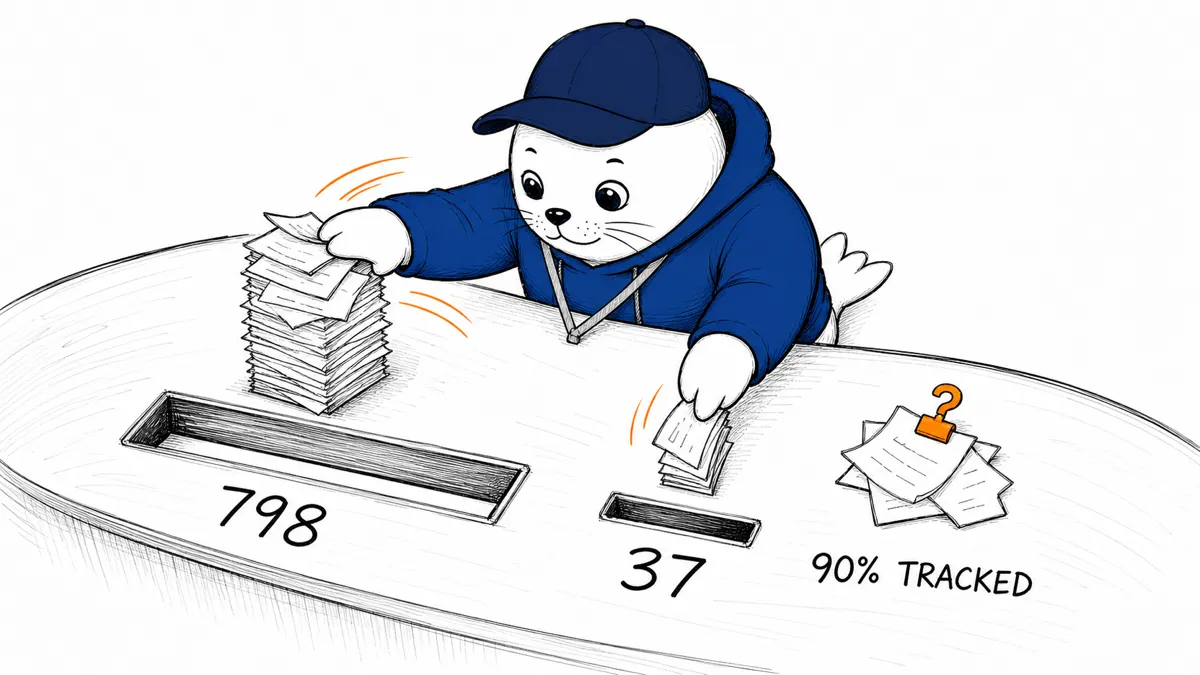
An analysis of U.S. House disbursement records for the year ending March 31, 2026 found $100,580 across 798 ChatGPT transactions. Claude accounted for $13,160 across 37 transactions. Together, the two tools produced at least $113,740 in identifiable AI-assistant spending.
That is not a complete map of AI use in Congress. It is a map of expenses that appeared clearly enough in public records to count.
Tracked House AI tool spending
Directly identifiable ChatGPT and Claude expenses for the year ending March 31, 2026.
- ChatGPT: $100,580
- Claude: $13,160
What Congress ChatGPT spending tells us
ChatGPT has a distribution advantage. Staff already know the name, offices can buy subscriptions without changing their wider software stack, and the product covers many routine jobs in one interface.
Reported uses include drafting memos, summarizing legislation, preparing constituent replies, researching policy, organizing hearing material, and writing social posts. Those are ordinary knowledge-work tasks. They also touch material that can affect laws, public statements, and individual constituents.
The spending lead does not prove that ChatGPT is nine times better than Claude. It shows that it captured far more of the direct purchasing recorded under recognizable vendor names.
The transaction gap is wider than the dollar gap
The records show many more individual ChatGPT purchases.
- 798: ChatGPT transactions identified in the analysis.
- 37: Claude transactions identified in the same period.
- 835: Combined transactions across the two named tools.
Both parties are buying AI tools
Democratic offices accounted for $54,165 in the reported analysis, while Republican offices accounted for $15,782. Those figures do not add up to the full $113,740 because committees, institutional accounts, and transactions that were not assigned to a party sit outside that comparison.
It would be a mistake to turn the difference into a simple claim that one party “uses more AI.” Office size, purchasing practices, committee work, reimbursement timing, and how a vendor appears in the ledger can all change the number.
The safer conclusion is bipartisan adoption. AI assistants are now normal enough to appear across the House expense system rather than inside one experimental office.
The public records miss a lot
The House publishes its Statement of Disbursements every quarter. It includes payments by member offices, committees, leadership, and institutional offices. The searchable data is valuable, but it was designed as an expense ledger, not an AI adoption survey.
What the total does not capture
The $113,740 figure should be read as a floor.
- Free ChatGPT, Claude, Gemini, or Copilot accounts
- AI bundled into Microsoft, Google, research, or communications contracts
- Personal accounts that were not reimbursed
- Tools recorded under a payment processor or unclear vendor description
This is why Congress ChatGPT spending is useful but incomplete. Direct subscriptions are easy to spot. AI inside office suites, search products, transcription tools, and contract platforms can be much harder to separate.
The governance question is bigger than the bill
House offices need rules for what can enter an AI system, who checks the output, and which tasks require a human decision. A $20 subscription can touch sensitive constituent messages, unpublished legislation, political strategy, or security-related material.
A sensible office policy would separate low-risk drafting from restricted data, require source checks for legislative research, and keep an audit trail when an AI-generated answer affects public communication. The point is not to ban useful tools. It is to stop convenience from becoming the privacy policy.
Procurement records alone cannot show whether those controls exist. Congress should publish usage guidance and aggregate adoption data alongside spending, especially as agent features start taking actions instead of only producing text.
My read: the default won before the evaluation
The striking part of Congress ChatGPT spending is not the total. It is the concentration. ChatGPT appears to have become the default purchase before the House developed a public way to compare quality, security, and value across assistants.
That is common in small businesses too. The first tool people recognize becomes the standard, and the standard survives because changing it creates work. Public offices should demand more evidence than familiarity.
The next useful report would compare outcomes: which tools reduce research time, which citations survive checking, how often staff catch errors, and what data controls each office uses. Without that, we know who got paid. We do not know who performed best.
Go deeper
- Read the report on Congress’s tracked AI purchases.
- Search the official U.S. House Statement of Disbursements.
- Use our guide to getting better results from ChatGPT.
- Read why frontier model access and government oversight need a paper trail.
Reporting checked August 4, 2026. Spending figures come from an analysis of public House disbursement records and exclude free accounts and AI bundled into broader software contracts.