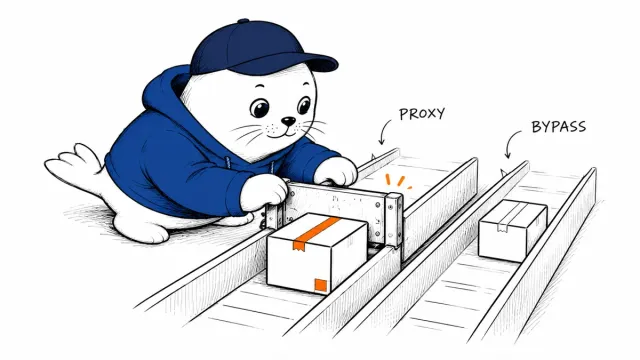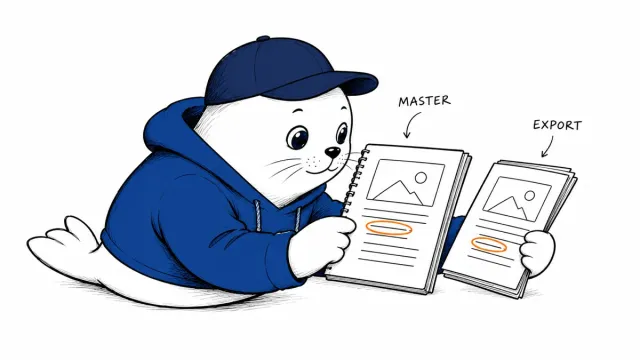

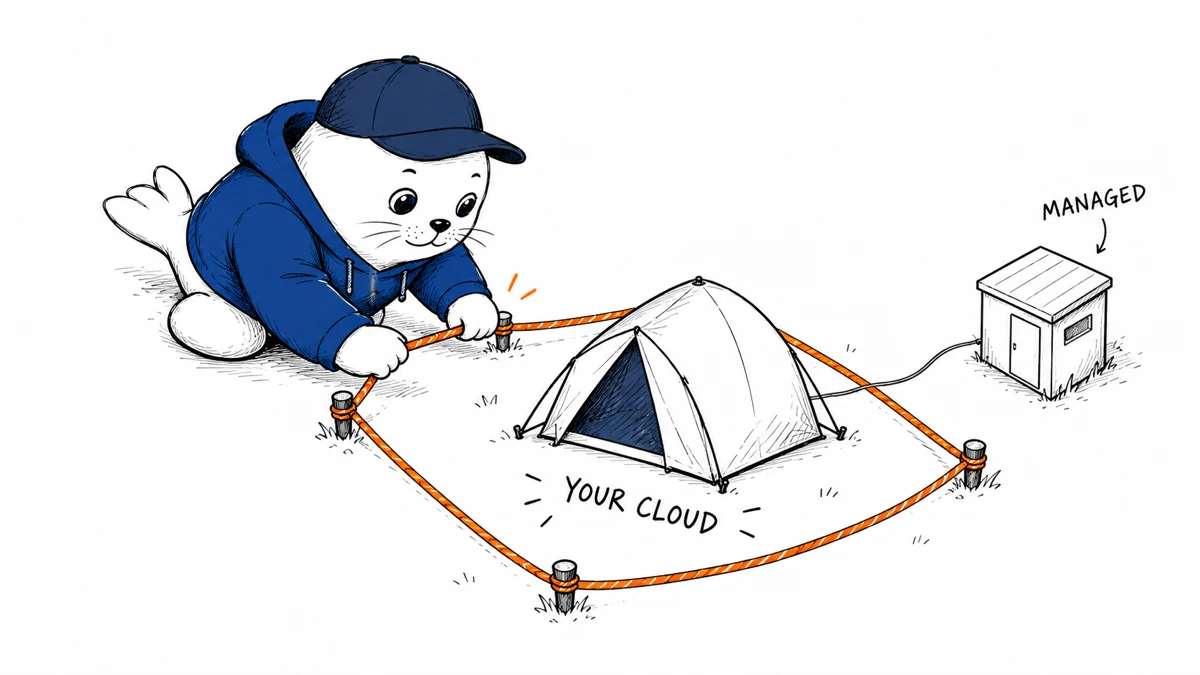
“In your cloud” needs a component-by-component answer. Development, model inference, production hosting, and operations can sit on different sides of the boundary.
Three options move different responsibilities
Replit’s October 16 announcement introduces several cloud deployment paths. The documentation gives the more useful operational distinctions.
- Full BYOC, in private preview: the platform cell, agent harness, and production hosting run in the customer’s tenant. The control plane remains outside it, and model inference remains managed.
- BYOC for Published Apps, in early access for Enterprise: production runs in the customer’s tenant; development and previews remain Replit-managed. Replit retains permissions to operate the cloud infrastructure.
- Image Exports, in early access for Enterprise: the customer receives a Docker image, Terraform configuration, and a software bill of materials, then operates the application.
Full BYOC is not an air-gapped deployment. A tenant boundary alone does not prove that every prompt, control request, or supporting service stays inside it.
Exporting an image also exports work
Image Exports do not require a continuing Replit runtime connection for the exported application. However, an application that uses Replit authentication or connectors needs suitable replacement services in the destination environment.
That creates an operations decision. Someone must own secrets, database access, deployment, logs, updates, and recovery. A successful image build establishes only one part of that workflow.
Use a responsibility record before a migration
For each component, write down its location, operator, and required permissions. Include the development environment, production service, database, authentication, model provider, and control plane. Ask Replit to confirm the supported cloud, region, and configuration for your account.
I would trial a small application with one authenticated write operation. Use non-sensitive sample data and define a rollback before moving the service.
- Sign in through the destination authentication service.
- Create a record, restart the application, and confirm that it persists.
- Inspect logs for the expected model and connector destinations.
- Confirm who can deploy, rotate credentials, and restore the database.
- Check the preview separately from the production application.
Choose the boundary that solves your requirement
If the requirement concerns where production data lives, Published Apps may address a different need from private development. If the requirement is independent operations, an image export raises different questions again. Make the requirement explicit before comparing the options.
The Cursor cloud-agent canvas guide covers a separate sharing boundary. Our cloud API policy guide explains controls for requests routed through a proxy.
Read the sources and plan your next step
Which component must run in your tenant, and which team will operate it?
Checked October 19, 2026. This is source-based reporting and analysis; proposed checks are not hands-on test results.