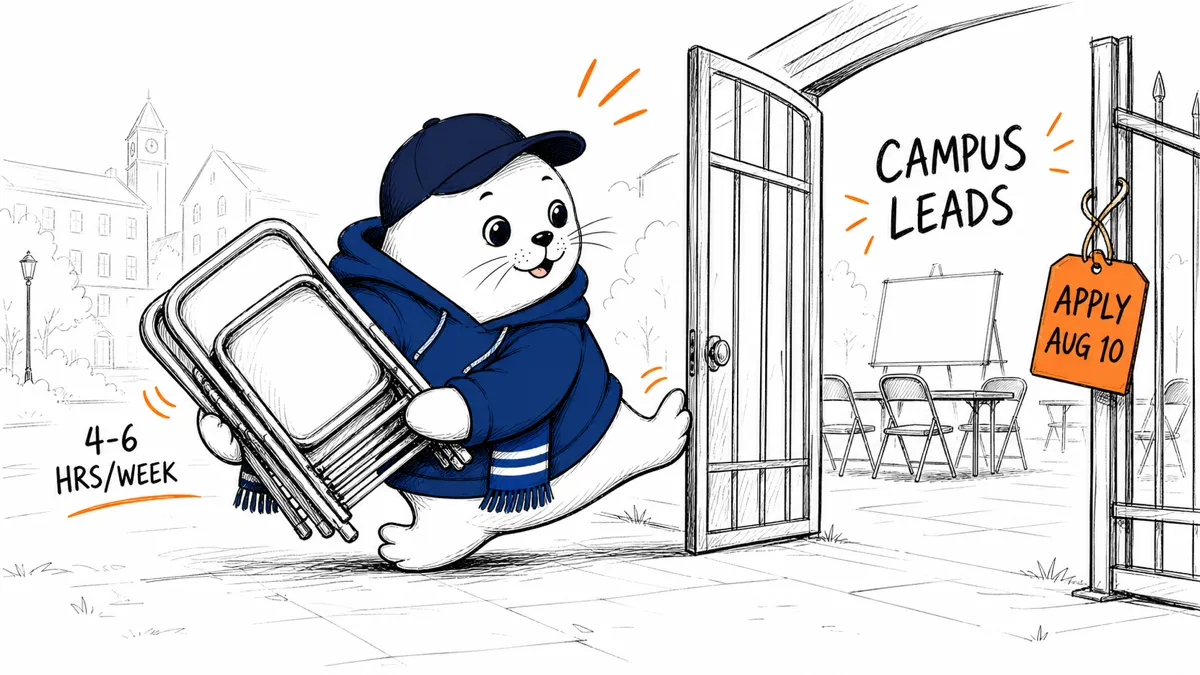
The OpenAI Student Collective is not asking students to post cheerful launch photos in matching T-shirts. Campus Leads are expected to run workshops, host weekly build sessions, and help other students finish projects. That is a real job, even if it sits beside a course load.
Applications for the OpenAI Student Collective close August 10, 2026 at 11:59 p.m. Pacific Time. Selected undergraduates will work in pairs from late August 2026 through June 2027.
OpenAI supplies training, event resources, a ChatGPT subscription, Codex credits, funding, merch, and a cash stipend each semester. The stipend amount is not published. That missing number matters, but the program is still worth a close look if you already organize people on campus.
The OpenAI Student Collective commitment
This is a school-year program, not a one-week promotion.
- 4-6 hours: Expected work each week from August 2026 through June 2027.
- 4 workshops: Each semester, plus weekly Studio Hours.
- 1 showcase: A campus-wide project event each semester.
Who can apply to the OpenAI Student Collective
The Campus Lead role is open to undergraduate students who are at least 18, enrolled as of August 2026, and expect to graduate after December 2027. Applicants need work authorization in the country where they study.
The first cohort covers the United States, Canada, United Kingdom, France, Germany, India, Japan, and South Korea. Students elsewhere can still submit an application to register interest, but OpenAI does not promise a role outside those countries.
Quick eligibility check
OpenAI encourages every major, but the formal conditions are specific.
- Undergraduate and graduating after December 2027
- Able to commit 4-6 hours most weeks
- Age 18 or older with local work authorization
- Not simultaneously representing another AI company or competing program
You do not need prior Codex experience or a portfolio of AI projects. OpenAI says it cares more about curiosity and the ability to bring people together. Postgraduate students cannot become Campus Leads in this round, though they can attend campus events.
What Campus Leads actually do
Campus Leads work in pairs. They run four workshops per semester, hold Studio Hours every week, and organize one showcase per semester. Workshops usually last one or two hours. Studio Hours are the recurring coworking sessions where students keep building instead of leaving with a folder of slides.
A normal semester rhythm
The strongest application will show that you can sustain this pattern.
- Workshops: Four practical sessions
- Studio Hours: Weekly project time
- Community: Ongoing questions and coordination
- Showcase: One public build event
OpenAI provides workshop guides, templates, training, and resources. Leads can adapt them to their campus. You do not have to create an official club, although recognition may make rooms and promotion easier.
What the application is testing
The form asks for two short videos. One explains an AI use that more students should know about. The other describes something you helped make happen on campus. Each must be 60 seconds or less and viewable through a public link.
There are also short written questions about a problem facing young people and something you recently changed your mind about. Those questions tell me the OpenAI Student Collective is screening for judgment and initiative, not prompt tricks.
I would not spend the video reciting product features. Show one useful workflow and explain who it helped. For the campus story, be specific about the obstacle, what you personally did, and what changed. A small event you actually organized beats a large idea that never left a document.
What you get, and what remains unclear
OpenAI lists a ChatGPT subscription, Codex credits, event funding, merch, training, access to its team, a global network of Campus Leads, and a stipend paid at the end of each semester after required activities are complete. It also mentions possible headquarters visits in June 2027.
The company does not state the stipend amount, event budget, subscription tier, credit volume, or how many Campus Leads it will select. Applicants should not build a financial plan around benefits that have no published value.
The restriction on other ambassador or representative roles also deserves attention. Ordinary clubs, research, internships, and leadership roles are allowed if they do not create a conflict or block the time commitment. If you already represent another AI program, disclose it rather than hoping nobody notices.
My read: apply if you already like doing the work
The OpenAI Student Collective makes sense for a student who already hosts study groups, hack nights, workshops, or community events. The program gives that work a budget, tools, and a wider network.
It is a weaker fit if you mainly want the company name on a profile. Weekly Studio Hours arrive even when attendance is awkward, coursework is heavy, and the first workshop did not go well.
If that still sounds fun, apply before August 10. Use the videos to show how you teach and organize. The product knowledge can be trained. Reliability is harder to fake.
Go deeper
- Read the official OpenAI Student Collective requirements and application.
- Build a stronger demonstration with our guide to using ChatGPT effectively.
- See how to test AI claims in our OpenAI Astra math review.
- Use our research-to-publishing workflow if your campus project involves content.
Requirements checked August 4, 2026. Applications close August 10, 2026 at 11:59 p.m. PT. OpenAI may update program details, so verify the official page before submitting.