Most “AI in healthcare” headlines are vapor. This one isn’t. Two of the biggest labs just put their models inside real US public health agencies, and the details tell you more about where this is heading than any keynote could.
What actually got announced
Here’s the news stripped of the press-release gloss. Public health departments across the United States are going to start testing generative AI under a new program called PULSE, the Public Health Use Case and Learning Scaling Engine. It’s run by the Coalition for Health AI (CHAI), with OpenAI and Anthropic supplying the models and Accenture handling the rollout.
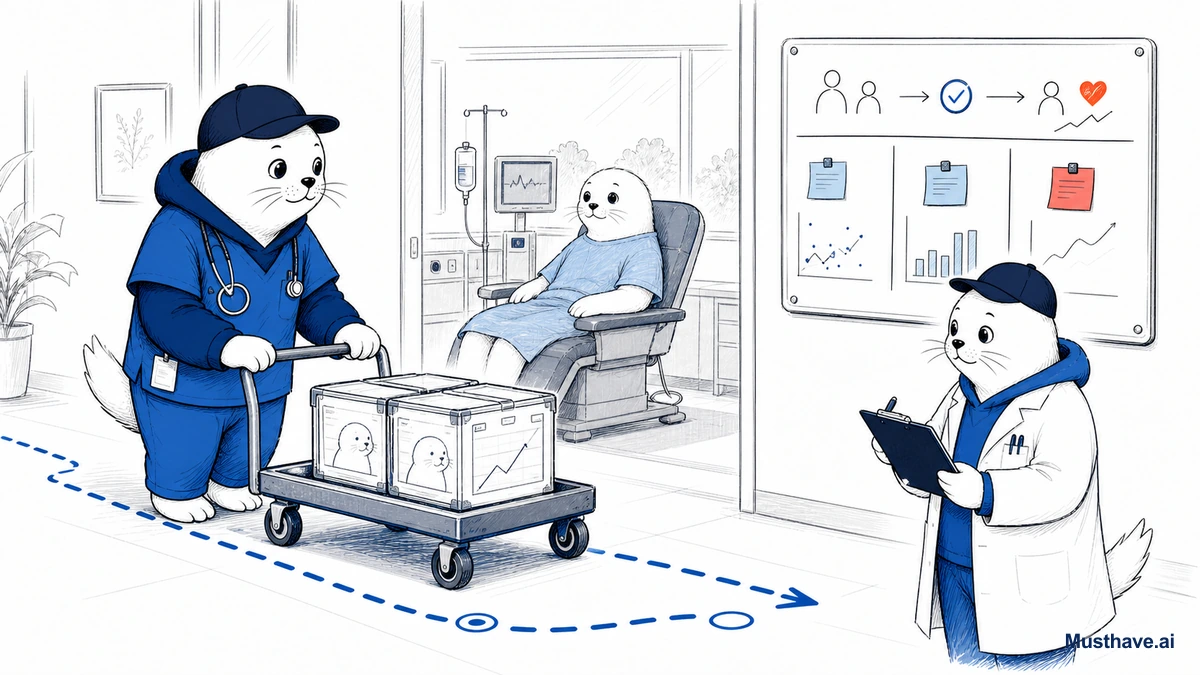
The structure is refreshingly concrete. Ten enterprise licenses are being donated, with capacity for up to 2,000 public health practitioners across ten state, local, tribal, or territorial jurisdictions. Practitioners get onboarding support through Accenture, plus peer communities and shared implementation playbooks. The pilots are scheduled to begin in autumn 2026, with those playbooks expected to land in 2027.
Notice what that is: not a demo, not a “partnership to explore synergies.” It’s donated production access, a fixed cohort, and a plan to write down what works so other agencies can copy it.
The five things they’re actually testing
What makes this worth your attention is the use cases. These aren’t chatbot novelties, they’re the unglamorous, high-leverage jobs public health teams are drowning in.
- Biosurveillance and drug-wave prediction, spotting outbreaks and overdose trends earlier.
- Social determinants of health (SDoH) mapping, connecting outcomes to housing, income, and access.
- Operations, efficiency, and community-feedback analysis, the back-office grind that eats staff time.
- Public communications and multilingual translation, reaching people in the language they actually speak.
- Automated clinical-data retrieval and a FHIR query engine, pulling structured records without a human digging through systems.
Read that list again. Every one of them is a “do more with less” problem, which is exactly how Anthropic’s Elizabeth Kelly framed it, AI as help for stretched teams, as long as it’s brought in carefully.
My builder’s read on why this matters
I read lab news with a simple filter: distribution, price, failure modes, and whether real workflows get simpler. On distribution, this is a big deal, when frontier labs donate access to government health agencies, they’re not chasing this quarter’s revenue. They’re planting the standard that future procurement gets measured against.
And that ripples outward. If you sell services, “the CDC-adjacent world is piloting this” becomes the benchmark a client points to when they ask why your team isn’t using AI yet. As Dr. David Lakey put it, transformations like this “succeed or fail based on trust, governance and execution.” That’s true in a health department and it’s true in your business.
The gap worth watching
Now for the honest part, because I won’t pretend this is flawless. The announcement is loud about use cases and quiet about guardrails. It does not spell out data retention periods, access controls, audit arrangements, storage requirements, or the rules for handling protected health information.
In public health, that last one isn’t a footnote, it’s the whole ballgame. A pilot that nails multilingual translation but fumbles PHI handling isn’t a win; it’s a headline waiting to happen. I’d want those answers in writing before scaling anything past the pilot, and you should apply the same standard to your own client data.
What to take from it this week
You don’t run a health agency, but the lesson transfers cleanly. Pick the version of these use cases that maps to your work (outbreak prediction becomes trend-spotting in your niche, multilingual comms becomes reaching a wider audience) and pilot it on non-critical work first. Write down the before and after. Keep the privacy question front and center.
The labs just told you where they think the durable value is: boring, essential, high-volume tasks done with care. That’s a better roadmap than any launch-day feature list.
Map the five use cases to your own work
You don’t run a health department, but PULSE’s five use cases are a surprisingly good template for where AI pays off in any business. Biosurveillance becomes trend-spotting in your niche. Social-determinants mapping becomes understanding what really drives your customers’ decisions. Operations analysis becomes killing the admin that eats your week. Multilingual communication becomes reaching an audience you’re currently ignoring. And clinical-data retrieval becomes pulling answers out of your own scattered documents instead of re-reading them. Notice the pattern: every high-value use is a boring, high-volume task done with care, not a flashy demo.
Would you trust an AI system with public health data at this stage, or is the missing privacy detail a dealbreaker for you? Tell me where you land in the comments.
Verification sources and related guides
Primary reference: US Department of Health and Human Services AI Strategy. This is the controlling platform or government guidance. Recheck it before publishing, deploying, or selling because rules and eligibility can change.