
Start with one document you need to understand. A useful AI study tool should help you find the answer and make it easy to check the passage behind it.
September 2026 update: live study, exam practice and short videos
Google began an extended rollout of new Gemini Notebook learning tools on September 15. The update applies to Workspace customers, Workspace Individual subscribers and personal Google accounts, although Google says visibility can take more than 15 days. The product still grounds its responses in sources added to the notebook.
| Tool | What Google says it does | How to use it carefully |
|---|---|---|
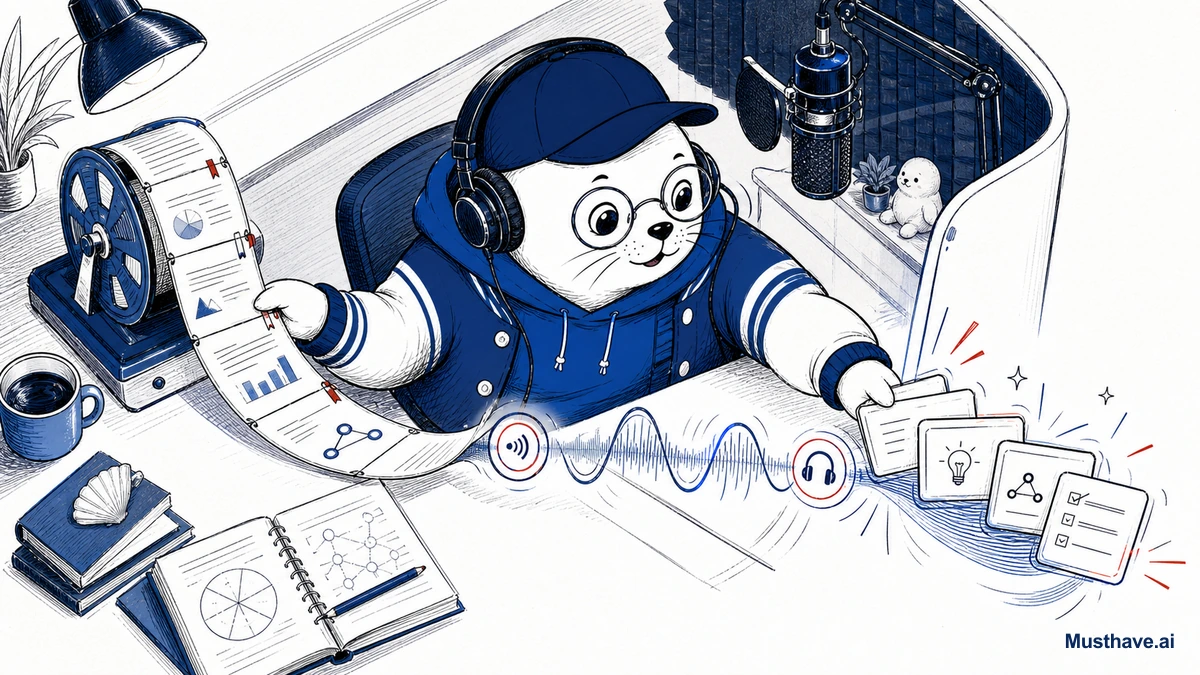
| Mobile audio recording | Record audio in the mobile app and add it to a notebook as a source. | Confirm consent, speaker names and transcription accuracy before studying from it. |
| Real-time conversation | Discuss notebook sources in an interruptible, source-grounded conversation. | Open the cited material when a date, definition or exception matters. |
| Interactive learning overview | Explore notebook material through a guided learning experience. | Use it to find weak areas, then return to the original source. |
| Exam prep | Create short-answer, multiple-choice and fill-in-the-blank practice. | Edit weak questions and check that the expected answer is supported. |
| Short Video Overview | Generate a shareable video of about 60 seconds in more than 80 languages. | Review names, numbers and visuals before sharing it outside the notebook. |
Real-time notebook conversations are documented for users 18 and older and support nearly 100 languages. Interruption is useful because a learner can stop the explanation at the exact point of confusion. It does not remove the need to inspect the source. Ask the assistant to identify the passage behind an answer, then read the surrounding context rather than treating the spoken response as the record.
The exam-prep tool can generate a practice set and discuss performance, and users can edit or add questions. That editing step matters. A generated quiz may overemphasize easy facts or encode an ambiguous answer. Build one small set, correct it against the source and only then generate a longer practice session.
Short Video Overviews are designed for a fast recap, not comprehensive coverage. A roughly one-minute format necessarily omits detail. Use it as a map before reading or as a recall prompt after study, not as the only version of a policy, lecture or research paper.
Recommended first test: record or upload five minutes of material you already understand, generate three exam questions and a short video, then count every claim that needs correction. This gives you a personal quality baseline before you rely on the tools for unfamiliar material. See Google’s official Gemini Notebook rollout notice for the current availability details.
What NotebookLM helps you do
Google’s current Gemini Notebook help page describes a research assistant that accepts sources including PDFs, websites, YouTube videos, audio, Google Docs and Slides. It offers source-grounded chat with inline citations and outputs such as study guides, briefings, Audio Overviews and mind maps. This updated guide keeps the familiar NotebookLM name so readers can find it.
Source grounding is useful because it gives you something concrete to inspect. It does not guarantee accuracy. Google explicitly warns that the assistant can make mistakes. A citation can point to a relevant paragraph while the generated conclusion still overstates what that paragraph supports.
Check an answer before generating more formats
I would start by asking a question whose answer is somewhere in a short source I already understand. Open the citation, read the surrounding paragraph and compare it with the generated sentence. Check dates, exceptions and whether the answer has merged two different claims.
If two documents disagree, ask for the disagreement with a citation to each position. Do not ask the tool to smooth the conflict into one confident summary. Keep the source names and dates in your notes so you can return to the original wording.
September 6 update: five-hour refreshes still have a weekly ceiling
Google now uses the Gemini Notebook name in its current help pages. This guide retains NotebookLM in its title and URL for readers looking for the earlier name. The usage-limit rollout began September 2, 2026.
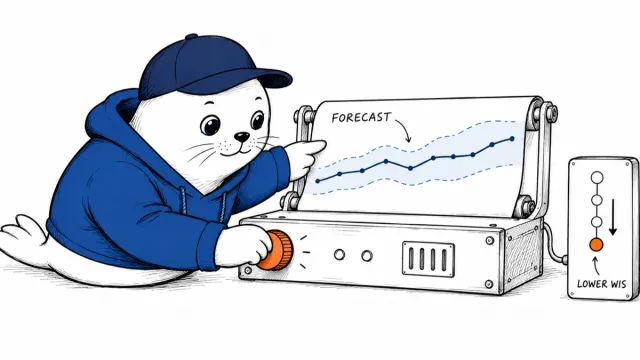
According to Google’s usage-limit documentation, allowances now depend on compute consumption, including prompt complexity, models, features and chat length. Quota refreshes every five hours until the weekly limit is reached. This is not unlimited use or a fixed number of questions.
The documented tiers are standard without a plan, twice standard for AI Plus, four times standard for AI Pro, and either five or twenty times AI Pro for AI Ultra, depending on the subscription. These are relative allowances, not published absolute prompt counts. Check your account under Settings → Usage. Google says limits can change.
On the web, Studio shows expected usage and offers Generate later when allowance is exhausted. Deferred generation may take hours. Do not assume that the web control is available on mobile.
Plan the output before spending the allowance
My suggested workflow: start with the sources needed for one question, verify the answer, then choose the final format. A focused briefing may be enough; generating audio, slides and video together is not automatically more useful. Keep the original source available when reviewing any generated version.
For a deadline, check the actual account meter before starting a large output and leave room for corrections. If you reach the weekly ceiling, another five-hour refresh is not a promise of renewed access. Compare your needs with our Gemini productivity pricing guide before changing plans.
Update scope: current usage controls and source-verification language checked September 6. The workflow advice is Musthave.ai analysis, not a measured quota-saving test.
A ten-minute first session
Choose one document you have permission to upload. Ask: “What question does this document answer?” Then ask for the evidence behind one important claim. Finally, ask what the document does not establish. Treat these as prompts to inspect the source, not as a guarantee that the assistant found every limitation.
Write a short note in your own words after checking the answer. If you cannot explain the result without replaying the generated summary, narrow the question and try again. The goal is understanding the material, not collecting more artifacts.
Choose a format for the job
For study, I would make a short guide from one topic and compare it with the original notes. For work, I would use a briefing that separates findings from unanswered questions. Audio can be useful when listening fits the day better than reading, but important details still need a return to the source.
Do not publish a generated overview merely because it sounds polished. Check factual statements and whether you have the rights to reuse the underlying material. Keep confidential documents out of a first experiment until the account and organizational rules have been checked.
Know which account you are using
Google’s product guidance distinguishes personal use from qualifying work and education accounts. Access can depend on country, age and administrator settings. Mobile availability can differ from browser availability. Follow the linked account-specific guidance rather than assuming every colleague sees the same controls.
For a team, nominate an owner for shared source collections. Remove obsolete copies and label superseded material. Otherwise a well-cited answer may still be based on yesterday’s policy.
My take: citations are the useful feature
The feature I would judge first is how quickly I can move from an answer to the evidence behind it. If that shortens checking without hiding uncertainty, the tool earns a place in the workflow. If the session produces more summaries than understanding, use fewer sources and a smaller question.
For related reading, see our guides to AI education tools and teacher judgment and the ChatGPT critical-thinking classroom study. What document would you use for a first, checkable experiment?
Update: Gemini Notebook adds eligible purchased Play Books
Updated September 18, 2026. Google’s Expert Intelligence program lets users add select English-language ebooks purchased from Google Play Books as grounded sources in Gemini Notebook. Google reports a publisher-enabled catalog of more than 100,000 books. That catalog size is company-reported and changes over time.
- An eligible title shows a Tools badge or a Use with Gemini Notebook button.
- The Gemini Notebook account must match the Google account that owns the book.
- Books a user uploaded manually to a Play Books library are not available as Play Books sources.
- Publisher, language and formatting choices determine eligibility; purchase alone does not guarantee support.
- A collaborator must own an eligible copy before interacting with that book in a shared notebook.
For a mixed-source notebook, inspect each inline citation before relying on a claim. A citation to an owned book can support the reader who has the entitlement while remaining unavailable to a collaborator who does not. Sharing the notebook does not transfer the ebook license.
Primary update sources: Google Workspace Expert Intelligence announcement and Google Play Help eligibility and account rules.