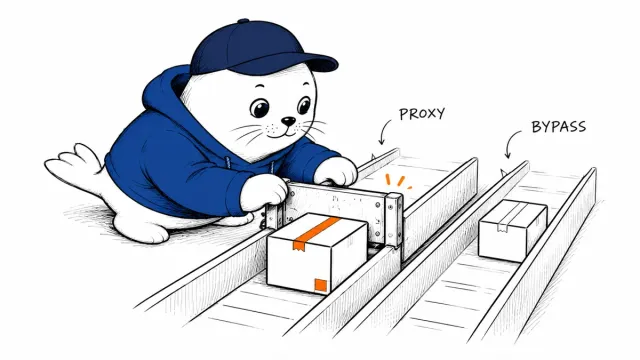


A small active parameter count can hide a much larger deployment. Start with the full model and the terms attached to its weights.
What Meta has released
The official model card describes a mixture-of-experts model with 816 billion total parameters and 42 billion active parameters. It accepts text, images, video, and audio, and produces text. The documented context window reaches up to one million tokens.
The release includes BF16 and NVFP4 checkpoints. These formats change the storage and serving trade-offs. Neither the active parameter count nor the maximum context length establishes what your particular server can run.
Separate weights, runtime memory, and context
The Hugging Face integration guide provides deployment recipes. Treat each recipe as a complete configuration: checkpoint, serving software, accelerator arrangement, and context settings belong together.
A mixture-of-experts model selects part of its capacity for each token. That reduces active computation, but the system still needs access to the model’s weights. Long prompts and concurrent requests add their own runtime demands.
- Record the exact checkpoint revision and numerical format.
- Budget for the full serving system, including context and concurrency.
- Measure time to the first token and completed-task latency separately.
- Include failed requests and human corrections in the comparison.
Read the Muse terms before choosing a deployment
The weights use the Muse Model License and an associated usage policy. Calling the release unrestricted open source would hide those conditions. The terms include attribution and display requirements, with additional provisions for some distribution and service arrangements.
Read the license supplied with the checkpoint for the way you plan to use or distribute it. Keep a copy of that version with your deployment record. Availability on a model hub does not resolve a commercial licensing question.
Start with a task whose output you can verify
For a document workflow, I would choose a small set of files with known answers and a clear rule for citing the source. Keep the same files and acceptance criteria when comparing a hosted trial with a self-hosted installation.
A hosted test can reveal whether the model is suitable for the task before you commit to hardware. It cannot establish the speed, cost, or data handling of a different local configuration. The published benchmark comparisons are vendor evaluations; we have not reproduced them.
Compare the current Beam deployment guide and Step 5 artifact and license review when assessing other large models.
Read the sources and plan your next step
What task would justify operating the full model yourself?
Checked October 19, 2026. This is source-based reporting and analysis; proposed checks are not hands-on test results.