
A cloud assistant that remembers you across devices has to keep that memory somewhere. Google has proposed an encrypted route through its servers, but the design’s trust boundaries deserve a closer look.
Google DeepMind published an architecture update on September 23, 2026, describing secure server-side memory for Private AI Compute. The proposal would let an AI service reuse personal context across sessions and devices while keeping stored data encrypted and restricting decryption to an isolated processing environment. This is an architecture disclosure, not an announcement that every Gemini user now has persistent private memory.
Why persistent cloud memory is hard
An on-device assistant can keep context on one phone, but another device cannot automatically see it. A cloud service can synchronize context, but it introduces a server, storage system, and key-management path. Google is trying to combine cross-device access with tighter limits on who can inspect the stored material.
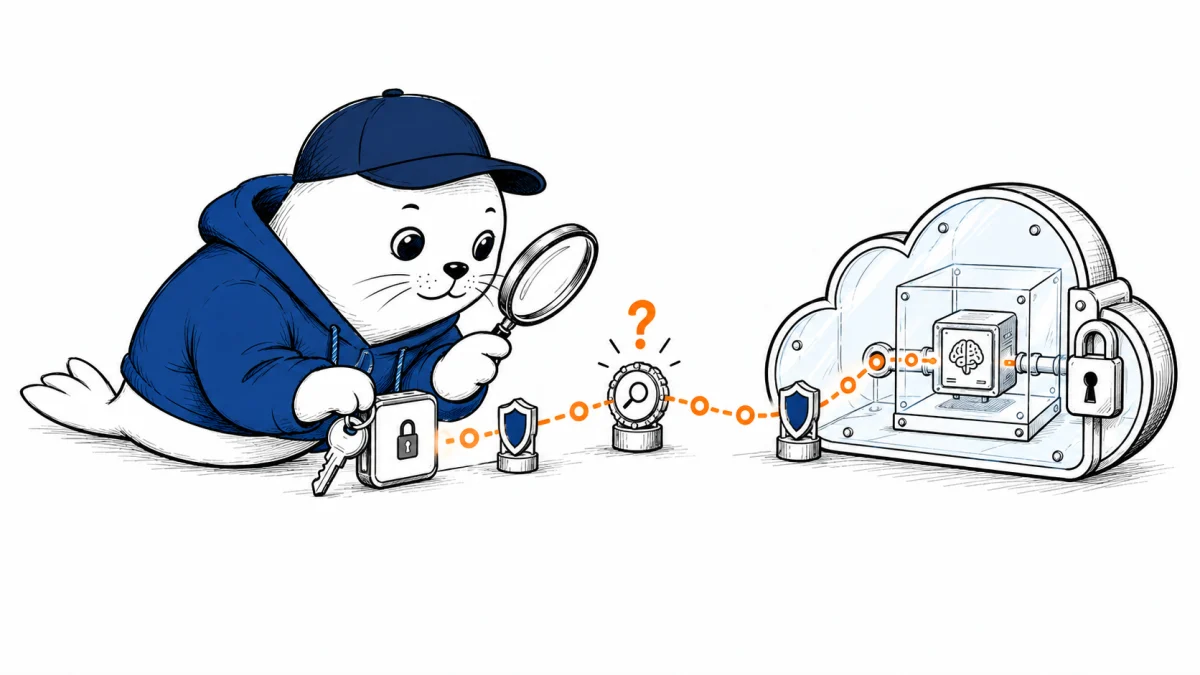
The distinction is more practical than the word “private” suggests. Readers should ask where information is encrypted, who controls the keys, where plaintext briefly exists during a model request, and which software is trusted at that point.
The data path Google describes
Google says a user’s device helps establish the keys for encrypted memory. The cloud stores encrypted context, and an authenticated, isolated server environment can decrypt the relevant portion for an authorized AI request. Google describes secure channels and attestation so a client can check the environment before releasing sensitive material.
That describes the intended system, not independent proof that no operator or attacker can access the data. The exact implementation, key lifecycle, recovery rules, and audit scope matter. A threat model should include device compromise, malicious or mistaken software updates, unauthorized account access, and context the user did not intend to save.
What an enclave does, and does not, settle
An isolated compute environment can narrow access to plaintext while a request runs. It does not, by itself, guarantee that a response is correct, that the model will forget unwanted facts, or that the memory selected for a task is appropriate. Even a well-isolated service needs clear user control to inspect, delete, and manage the feature.
Google says it has published technical material and obtained an independent security audit. We have not independently reviewed the complete audit or reproduced its findings, so we are not treating its strongest confidentiality claims as verified. The published design is interesting; the practical question is whether future products expose the promised controls and limits.
How this differs from shared agent memory
This is about private user context across devices, not a team knowledge base or a shared work agent. Our earlier Google CC shared-memory permissions analysis concerns a different product and different access decisions. Mixing the two would obscure who owns the memory and who may invoke it.
The same distinction applies to workplace agents with connected data: encrypted storage can protect one layer, while a connected account can still authorize an overly broad action at another.
Questions to ask when a product uses this design
- Can the user see, edit, and delete individual memory entries?
- Does turning off memory delete stored context, or merely stop adding new entries?
- What happens if the user loses a device or changes account credentials?
- Which attested code versions may decrypt a memory, and where is that policy published?
- What exactly did the independent audit test, and will its report be available to inspect?
Until a shipping product answers those questions, the story is Google’s proposed security architecture. It is worth studying, but not a reason to assume that any current assistant has a verified, private, cross-device memory feature.
Source and scope
Checked September 24, 2026. Architectural and audit claims above are attributed to Google. Consumer availability and independent validation have not been established.