
A model name can remain unchanged while the service behind it moves to a newer generation.
Google’s November 5 API release notes set a new transition for Omni 1.1 Flash. From December 3, 2026, requests to gemini-omni-1.1-flash will automatically route to gemini-omni-1.2-flash. The price table says those requests will use the 1.2 rates.
Keep the two migrations separate
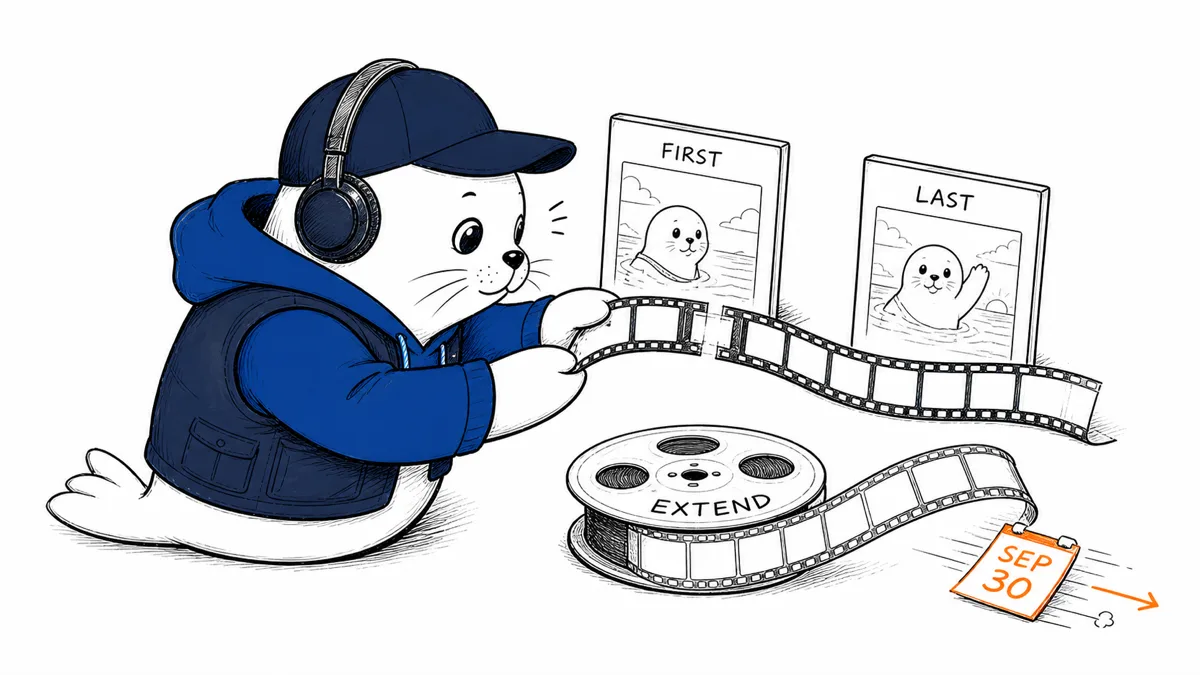
Omni 1.1 reached general availability on August 27. The earlier preview endpoint had a September 30 retirement date. That historical preview transition is separate from December’s routing change for the stable 1.1 name. An application that already migrated off the preview still needs to account for the new switch.
What the 1.1 release introduced
The 1.1 release added production access for video extension and first-and-last-frame interpolation, with several output resolutions. Google described 1080p and 4K outputs as upscaled. Its September Vids update brought related capabilities into a separate editing interface. Those historical product changes remain distinct from the current API routing policy.
Prepare for the December destination
Our Omni 1.2 release report covers the new duration and pricing details. Use a fixed prompt and reference-asset set before changing a production integration. Include each operation the application uses, because generation, interpolation and extension have different duration limits.
Record the requested model name with each job and preserve the settings used to make accepted assets. Compare failure behavior, response handling and review effort alongside visual output. We have not performed an endpoint comparison, so this update does not claim quality or compatibility parity.
For budgets, the published standard 720p video-output conversion gives about US$1.04 for a 15-second 1.2 generation, before input and other charges. Retries and edits can increase the cost of an accepted shot. Would your deployment detect a model change behind a stable name?

Abdessalam Alaoui
I'm Abdessalam Alaoui, founder of Musthave.AI. I write practical guides to AI models, tools, generative media.