

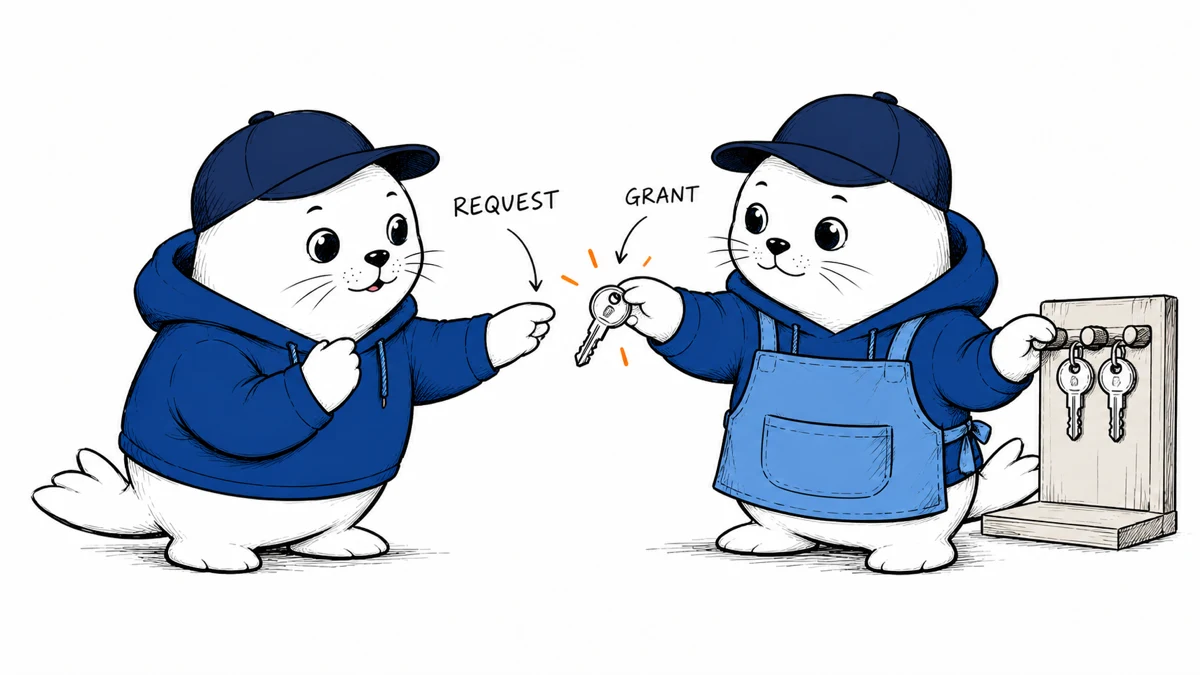
An agent can start with limited access and request more when a task needs it. The useful review happens at that extra request.
The API server can request additional scopes
The October 19 changelog adds step-up authorization to Cloudflare’s API MCP server. Choose Minimal on the consent page to start with the least access offered by that flow.
When a tool operation needs an ungranted scope, the server returns an insufficient_scope challenge naming it. A supporting MCP client requests approval, and it retains scopes already granted.
Read the requested scope beside the intended action
A later approval changes the connection’s available access. Check the resource and operation before granting it. The same broad task description can hide several tool calls with different consequences.
The MCP authorization specification provides the protocol context. Cloudflare’s release applies to clients implementing the relevant flow; it does not establish identical behavior in every MCP client.
Test denial before depending on the workflow
A useful trial includes a request the initial connection cannot perform. Use a disposable resource and keep the task’s intended scope narrow.
- Connect using Minimal consent in a supporting client.
- Run a permitted read operation.
- Request a bounded action requiring additional access.
- Inspect the named scope and decline the request first.
- Confirm that the denied action did not change the resource.
- Approve only the intended grant and verify the result separately.
Record the scopes after the test. Because earlier grants are retained, the initial Minimal choice does not describe the connection’s permissions forever.
Keep network access and tool authority separate
A private route answers where traffic can go. An authorization grant answers which operations an identity may request. Neither alone proves that a proposed change is appropriate.
I would keep the requested action, approval, and observed resource state in one review record. No attack simulation or security-effectiveness test was conducted for this report.
Our private MCP portal guide covers network reachability. The Cloud Workload Security guide covers policy checks for cloud API traffic routed through a proxy.
Read the sources and plan your next step
Which operation should remain unavailable until a reviewer grants additional access?
Checked October 20, 2026. This is source-based reporting and analysis; the proposed checks are not hands-on test results.