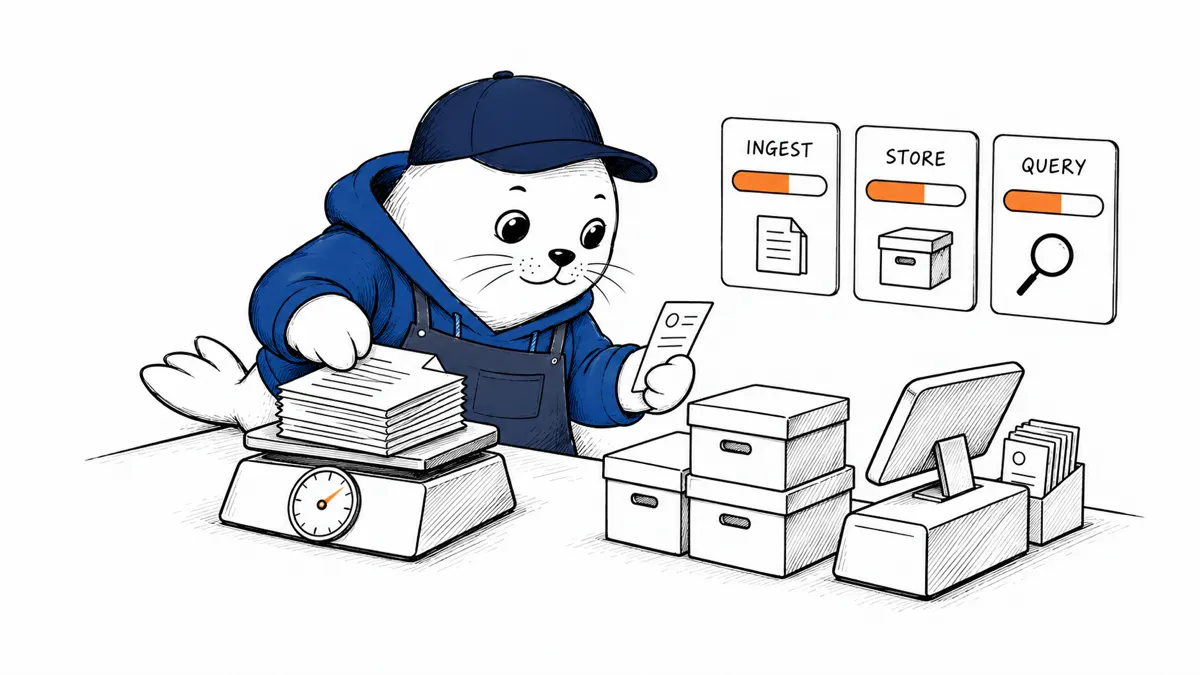
A multilingual search trial needs real questions from the languages your readers use. A tokenizer change also needs an indexing and cost plan.
October 19 update: CJK keyword queries improve
Cloudflare’s October 16 changelog says AI Search keyword matching now handles Japanese, Chinese, and Korean queries with the trigram tokenizer, including full natural-language questions.
Previously, an unspaced query could be treated as a single exact phrase, resulting in no keyword results. Cloudflare recommends trigrams for content in these languages. Changing the keyword tokenizer triggers a full reindex.
Test keyword retrieval separately from the final answer
This change concerns keyword matching in AI Search. It does not improve public search engine rankings or guarantee that a generated answer will be correct.
I would keep a small set of representative questions, each with a known relevant document. Include exact product names, unspaced questions, and mixed-language queries. Save the retrieved passages before judging the generated response.
- Record the instance configuration and tokenizer.
- Schedule the reindex and confirm completion.
- Compare retrieval against the same document collection.
- Review both missed relevant passages and irrelevant matches.
- Check whether the final answer remains faithful to the retrieved evidence.
November 1 billing still needs a separate budget
The current limits and pricing page states that billing starts on November 1, 2026. Monthly included usage is 5 million ingestion tokens, 10 GB-month of storage, 1,000 semantic queries, and 1,000 full-text queries.
Beyond those allowances, the base ingestion cost is $0.75 per million tokens, with an additional $0.50 per million for image processing. Storage costs $2 per GB-month. Semantic, vector, and hybrid queries cost $0.75 per 1,000; full-text queries cost $0.10 per 1,000.
Managed Workers AI embedding and reranking usage is included. Generation, query rewriting, and external providers are billed through their respective services. Ingestion counts final indexed chunks, including overlap; OCR adds image-processing usage.
Use your workload to estimate the bill
As a simple example, 100,000 hybrid queries in a month use the 1,000-query allowance, leaving 99,000 billable queries. At $0.75 per 1,000, that query component is $74.25. It excludes ingestion, storage, generation, and any other applicable services.
A reindex changes the operational workload, so check usage during the tokenizer migration. Keep its one-time activity separate from a regular month when creating a recurring budget. This update replaces the earlier cost illustration with an explicitly scoped example.
The Cloud Workload Security beta guide covers a separate API control. Our agent cost-control guide addresses budgets across a wider workflow.
Read the sources and plan your next step
- CJK keyword matching and full-reindex requirement
- Keyword tokenizer configuration
- Current allowances, prices, and billing scope
Which real multilingual questions should your retrieval test include?
Checked October 19, 2026. This is source-based reporting and analysis; proposed checks are not hands-on test results.