The Apple OpenAI lawsuit has moved from an explosive complaint to a less cinematic question: what evidence exists, where did it come from, and what should a court stop before the full case is heard?
Update, August 6, 2026
OpenAI asks the judge to dismiss the case
OpenAI asked a federal judge on August 5 to dismiss Apple’s trade-secret lawsuit. Axios reports that the motion portrays the case as an attempt to answer Apple’s difficulty retaining talent and competing in AI. That is OpenAI’s argument, not a court finding.
The motion arrives while Apple is seeking a preliminary injunction that would restrict use of the alleged trade secrets during the case. The two requests pull in opposite directions: Apple wants early protection before discovery is complete, while OpenAI wants the claims removed before that discovery expands.
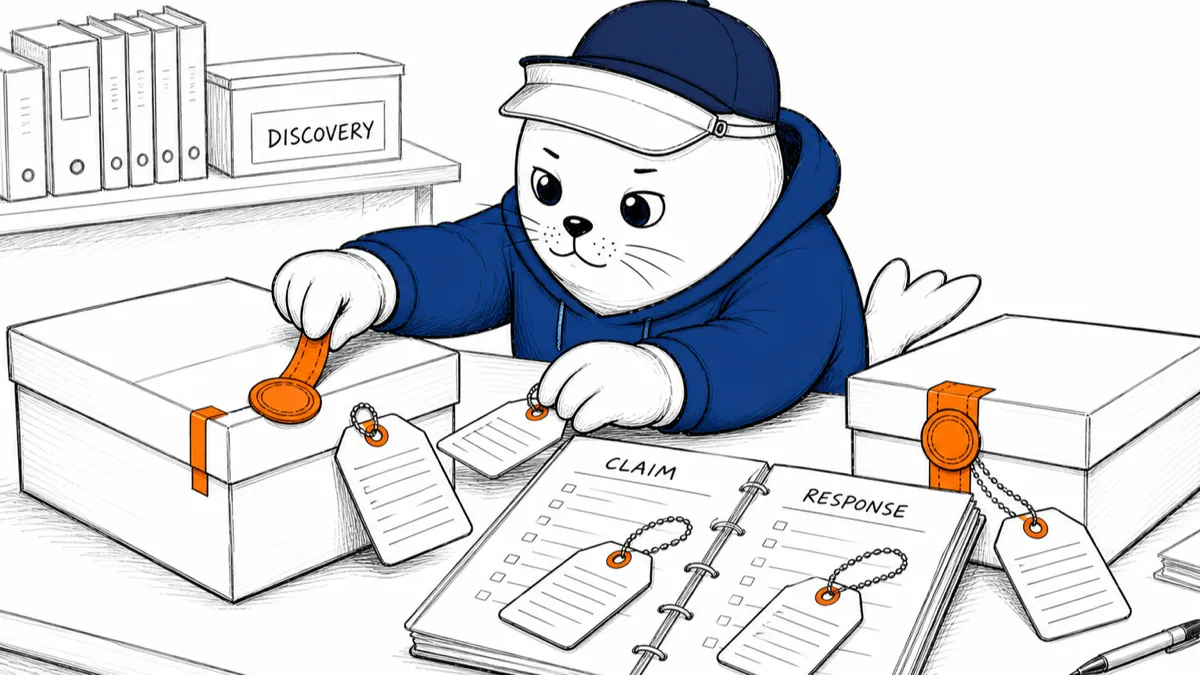
A motion to dismiss is not a dismissal. At this stage, the court asks whether Apple’s pleaded claims can proceed under the applicable legal standards; it does not resolve every disputed fact. If the case survives, discovery could expose hiring communications, device records, access logs, hardware-development material, and the controls both companies used around confidential information.
Apple says more than 400 former employees now work at OpenAI. That figure is an allegation in Apple’s case and does not establish that those employees transferred or used trade secrets. The high-information event remains the judge’s order: whether the court dismisses, narrows, or allows the claims to proceed.
Apple is seeking a preliminary injunction and faster discovery in its trade-secret case against OpenAI, io, and former Apple employees. In a new filing described by TechCrunch, Apple says its investigation identified 11 additional former employees who may have witnessed or participated in relevant conduct.
OpenAI denies possessing or wanting Apple trade secrets and says the requested injunction relies on false information. None of Apple’s new allegations has been adjudicated. That sentence belongs near the top, not buried after the drama.
The dispute in two columns
Claims are not findings; responses are not proof.
- Apple alleges: More former employees may be involved; one person took screenshots before an OpenAI interview; several devices were retained; expedited discovery is necessary.
- OpenAI responds: It does not have or want Apple’s trade secrets; the injunction is unnecessary; Apple misstated parts of its contact and offboarding story.
What changed in the Apple OpenAI lawsuit
The original July complaint accused OpenAI and former Apple employees of obtaining confidential information connected to unreleased hardware, engineering processes, and product development. Apple named former employees Chang Liu and Tang Yew Tan among the defendants and asked the court to prevent use or disclosure of its material.
The August filing raises the pressure. Apple reportedly says another former employee discussed proprietary information before an OpenAI interview, another captured confidential-document screenshots, and multiple people later contacted Apple about returning company-issued devices they had kept.
Those details may support Apple’s request to gather evidence quickly. They do not establish that OpenAI directed theft, received every item, used it in a product, or should be stopped from all hardware work. Discovery is where the parties seek documents, device records, communications, and testimony that can narrow those questions.
A preliminary injunction is an early remedy, not a verdict
How the case escalated
A simplified procedural timeline based on public reporting.
- July 10: Apple files its trade-secret complaint and seeks return and preservation of material.
- July 14: OpenAI publicly disputes the case and says it sees no evidence the complaint has merit.
- August 4: Apple seeks expedited discovery while a preliminary-injunction request is pending.
A preliminary injunction can restrict conduct before trial. Courts generally treat that as extraordinary because the requested order arrives before the full factual record. Apple therefore needs more than a serious accusation; it must persuade the court that early relief is justified under the applicable legal test.
I am not predicting the ruling. The useful point for readers is procedural: “Apple seeks to stop” and “a court stopped” are different news events. This article will be updated if the judge rules.
The practical stakes are larger because OpenAI is developing consumer hardware with Jony Ive’s former company, io. Our earlier explainer on OpenAI’s hardware ambitions covers why product timing makes this dispute unusually sensitive.
The evidence trail matters more than the headcount
“11 additional former employees” is memorable, but the number alone says little. A witness, a recipient, a person copied on a message, and someone who actively transferred a file are not equivalent. The court will need a role-by-role record.
The evidence questions that can change the case
A reader’s checklist for future filings and rulings.
- Possession: What material existed on which device or account?
- Authorization: Was access still technically possible, and was it permitted?
- Transfer: Did confidential material move to a person, system, or company?
- Knowledge: Who knew the source and confidentiality status?
- Use: Did any OpenAI or io work incorporate the material?
- Preservation: Were devices, logs, messages, and documents retained intact?
This is also an information-security story. Retained work devices, residual access, and incomplete account deprovisioning can turn an employment dispute into a breach. Technical access after departure does not by itself equal permission to use the system.
Companies hiring from competitors need clean-room rules: no former-employer material, documented device returns, interview questions that avoid confidential projects, and immediate escalation when a candidate volunteers protected information. The same operational discipline appears in our analysis of AI containment and audit trails.
OpenAI’s rebuttal creates factual tests of its own
OpenAI says Apple contacted the wrong person after confusing similar surnames, misdescribed a conversation with its general counsel, and omitted that residual access arose from Apple’s own offboarding system. Those assertions do not answer every allegation, but they are testable.
Email headers, call records, access logs, identity records, and device inventories can show where each account diverges. That is healthier than treating a forceful company blog post as a ruling.
There is also a scope question. Even if the court finds misconduct by one or more individuals, the remedy should follow the proven information and conduct. A broad block on hardware development is different from an order preserving evidence or forbidding use of identified trade secrets.
My read: watch the custody trail, not the corporate adjectives
The Apple OpenAI lawsuit will attract confident claims from both sides because the commercial stakes are enormous. Apple wants to protect years of hardware work. OpenAI wants to build a new device without a legal cloud over every engineer who once worked in Cupertino.
The next high-information documents are a court order on expedited discovery, the preliminary-injunction ruling, and any evidence schedule that identifies specific materials. Until then, “alleged,” “Apple says,” and “OpenAI denies” are not timid wording. They are accurate wording.
If the case produces a verified chain from Apple material to an OpenAI product decision, the risk changes. If it produces offboarding mistakes and unsupported inferences, the risk changes the other way. Evidence, not employee count, decides which story survives.
Go deeper
- Read OpenAI’s public response to Apple.
- Follow the public Apple Inc. v. Liu docket.
- Read Axios’s report on OpenAI’s motion to dismiss.
- Read our guide to control and accountability in AI infrastructure.
Updated August 6, 2026. This article distinguishes allegations, denials, procedural requests, and court findings. OpenAI’s dismissal arguments and Apple’s employee count remain party positions unless a court finds otherwise. This is news analysis, not legal advice.