

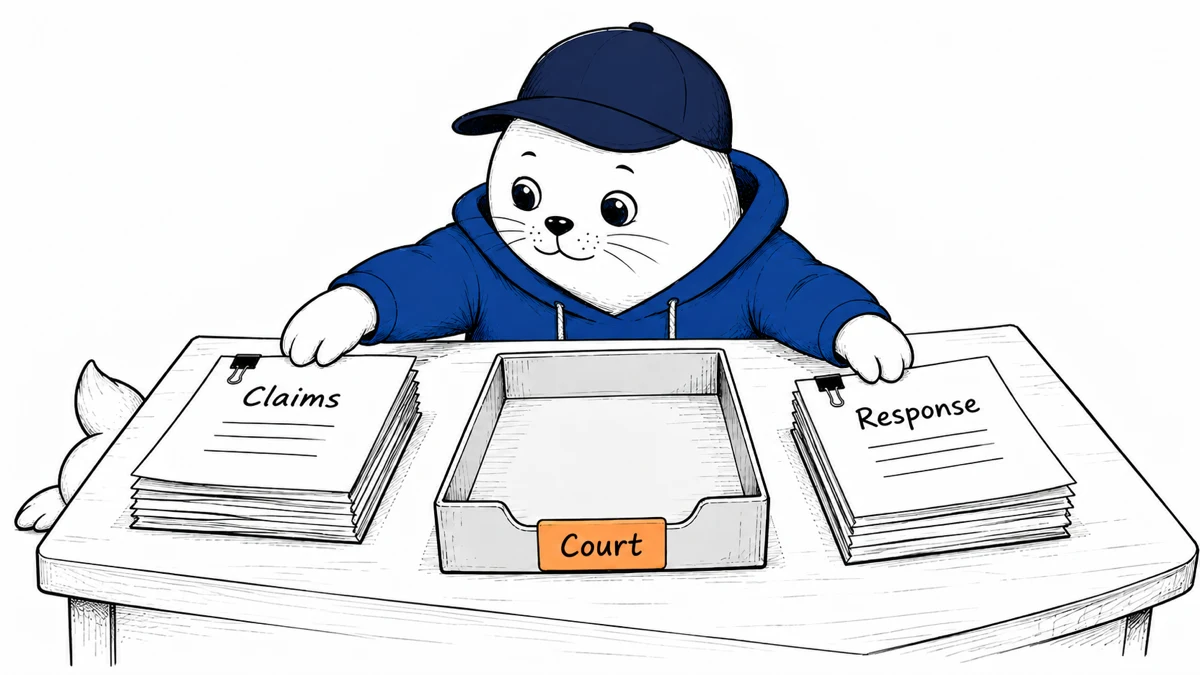
A lawsuit can change the questions an AI builder must answer before it changes any legal obligation. Read the claims and requested remedies separately.
Iowa announces one of eight state actions
Iowa Attorney General Brenna Bird’s October 14 announcement says Iowa is suing OpenAI under its Consumer Fraud Act. It identifies separate actions in Kansas, Nebraska, West Virginia, Arkansas, Arizona, Idaho and Montana.
AP’s October 15 report corroborates the state actions. It reports OpenAI’s response that ChatGPT already has protections for children and that the company will continue improving the model. These are contested allegations; this report establishes no finding of liability.
The petition asks for remedies the court must decide
The published Iowa petition is addressed to the district court in Polk County. It alleges unfair or deceptive practices in ChatGPT’s marketing and design, and in autonomous-agent testing.
Its requested relief includes penalties, reimbursement, data deletion, and injunctions concerning representations, data practices, and advanced-model testing. A request in a petition is not an order granting it. The published copy leaves the case-number field blank, so it cannot by itself establish a docket history.
Keep three records when assessing a safety claim
For builders, the useful operational question is whether a product’s public claims match its actual controls. That review can begin without predicting the outcome of the litigation.
- Save the exact safety statement and the date it appeared.
- Record the product version, audience, and settings the statement covers.
- Link the statement to the test or control that supports it.
For example, a claim about supervised use needs an account setup and supervision flow that a reviewer can inspect. A setting existing somewhere in the product does not establish that the intended user encounters it. This is editorial analysis, not a conclusion about OpenAI’s liability.
Track the next court document before changing the conclusion
An answer, motion, or order can alter the legal posture. Check the document type before interpreting it: a party’s argument, an evidentiary submission, and a judge’s decision carry different weight.
I would keep this story attached to the underlying proceedings rather than repeat allegations as established facts. The public record reviewed here supports reporting the dispute and Iowa’s requested relief, not predicting a verdict.
Our Apple–OpenAI evidence-dispute report covers a different case. The EU AI Act labeling guide addresses a separate regulatory framework.
Read the sources and plan your next step
Which product safety statement would benefit most from a clear, versioned evidence record?
Checked October 15, 2026. This is source-based reporting and analysis; proposed checks are not hands-on test results.