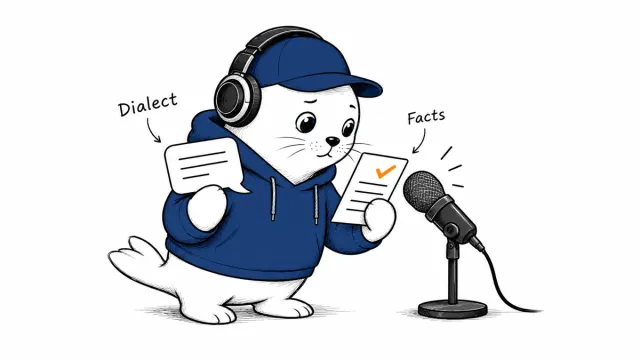

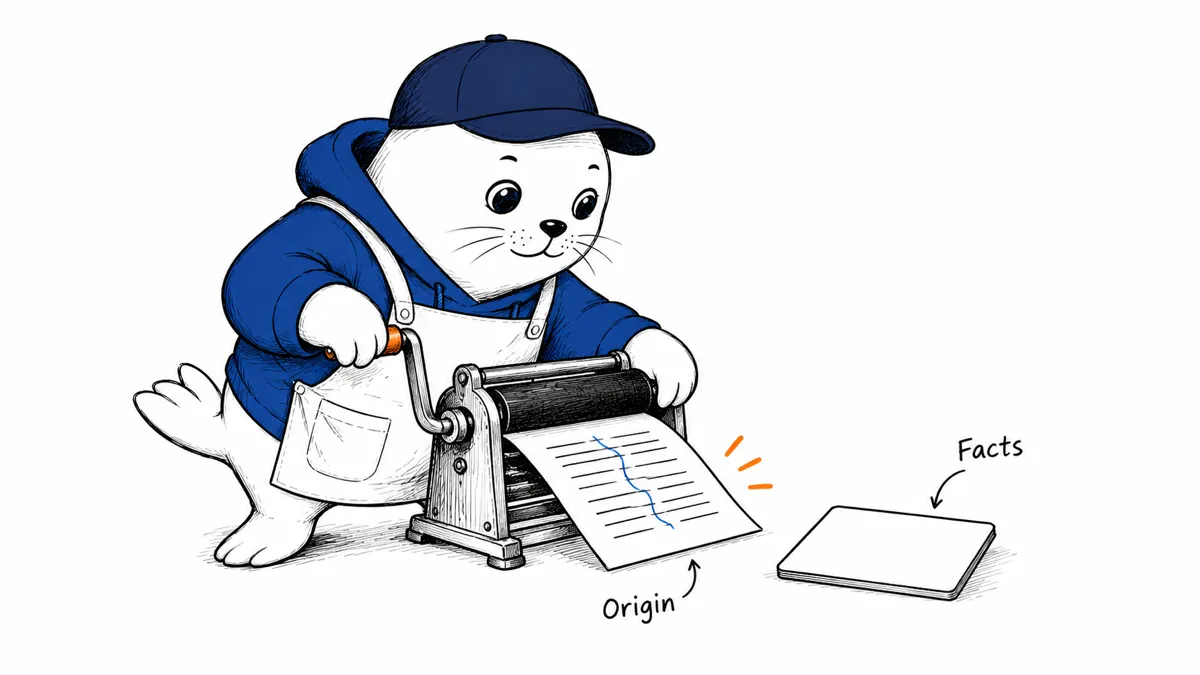
A detector result can help trace a passage’s origin. An editor still has to decide whether that passage deserves publication.
What OpenAI announced
OpenAI introduced textGrain on October 5, 2026, in its text-provenance announcement. Selected API models support worldwide opt-in watermarking, with the setting off by default. The company plans to add watermarks to eligible ChatGPT and Codex text in the EU over the coming weeks.
The detector initially requires approval for researchers and expert organizations. OpenAI also plans an open-source release. Those plans should not be read as a public detector or downloadable implementation available today.
A signal in word choices
OpenAI describes a statistical pattern in the model’s word choices. It does not describe hidden punctuation or extra characters. Short passages, constrained wording, and later editing can make detection harder. Translation can also affect whether the signal survives.
A positive result does not identify the user or establish the text’s accuracy, ownership, or human contribution. A negative result cannot prove human authorship. For an editor, neither result replaces the source trail behind a claim.
Keep provenance and editorial review separate.
Consider a supplier sending product copy for publication. A detector result cannot tell you whether its delivery promise matches the contract. Ask for the supporting document and check the claim against it. Keep that review record separate from any provenance result.
For a disputed passage, preserve the submitted version before editing. Record where it came from and which transformations followed. Otherwise, a later result may describe a rewritten passage rather than the text under dispute.
- Confirm whether the model and account support watermarking.
- Record the original submission and any translation or editing.
- Interpret detection as one piece of evidence, with room for error.
- Verify factual claims through their own sources.
- Avoid using a detector result alone to accuse a writer or assign ownership.
What publishers should do next?
I would keep the ordinary editorial process intact: verify sources, review the finished copy, and name the person responsible for publication. A provenance record can sit alongside that process. It should not become a shortcut around it.
The same caution appears in our Claude watermark explainer. Our AI-content publication checklist covers the separate work of checking reader value and factual support.
Read the documentation
Read OpenAI’s provenance help page before planning an account-specific workflow. Confirm access in the account itself because rollout language can change. Where would an origin signal help your review process, and which decisions would still need human evidence?