

Claude Sonnet 5.5 is a new option for everyday coding and document work, including in GitHub Copilot. The real question isn’t whether its launch chart looks impressive. It is whether it completes your actual tasks faster, with fewer paid tokens and less repair.
Anthropic launched Claude Sonnet 5.5 on September 28, 2026. In its own testing, it reports output more than 30% faster than Sonnet 5 and up to 30% lower cost per task. Those are vendor-reported results, not a discount to the API token rate or a guarantee for every workload. On the same day, GitHub announced Sonnet 5.5 in Copilot, with a gradual rollout across its paid plans.
What Sonnet 5.5 costs
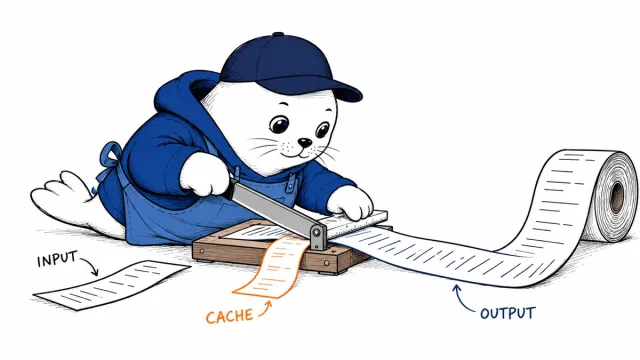
Anthropic lists Sonnet 5.5 at $2 per million input tokens, $10 per million output tokens, and $0.20 per million cache-read tokens. These are the same input and output rates as Sonnet 5. Opus 5.5, by comparison, is listed at $4 per million input tokens and $20 per million output tokens. Cache writes also differ: $2.50 for Sonnet 5.5 and $5 for Opus 5.5. Our Opus 5.5 pricing guide explains why the share of cached context matters in long coding sessions.
“Up to 30% less per task” means Anthropic observed fewer tokens or steps to finish some work. It doesn’t mean every API invoice drops by 30%. For a fair comparison, run the same task set on Sonnet 5 and 5.5, including retries, tool calls, and human corrections. Divide total spend by accepted tasks, not by generated answers.
Where GitHub Copilot offers it
GitHub says Sonnet 5.5 is generally available for Copilot Pro, Pro+, Max, Business and Enterprise. Its model picker covers Visual Studio Code, Visual Studio, Copilot CLI, the coding agent, the Copilot app, github.com, mobile, JetBrains IDEs, Xcode and Eclipse. GitHub cautions that rollout is gradual, so an eligible account may not see the option immediately.
GitHub says usage is billed at provider list pricing under its usage-based billing arrangement; check the current Copilot model pricing documentation before adopting it widely. Business and Enterprise administrators can manage access through Copilot model policy. A team should verify the model’s availability and policy settings, then run a small repository-specific trial. This is a separate change from the Copilot billing and retention policy changes we covered earlier.
How it compares with Opus 5.5
Anthropic positions Sonnet 5.5 for well-scoped work, bug fixes, documents, slides and spreadsheets. It says Opus 5.5 remains stronger on complex, open-ended assignments requiring sustained judgment. That distinction is more useful than claiming one model wins universally. Use Sonnet for defined implementations or repeatable reviews; route uncertain architecture and consequential decisions to the stronger model when your tests justify the extra cost.
Anthropic reports a 70.6% score for Sonnet 5.5 on Terminal-Bench 4.0, versus 10.3company’snet 5 under the company’s reported setup. Benchmark versions, effort settings, harnesses and task selections can change the result. Treat that gap as a reason to test a representative project, not as a prediction that your backlog will improve by the same margin.
Migration checklist for API and Claude Code users
- Pin the new model identifier. Anthropic lists
claude-sonnet-5-5for its platform; verify the exact identifier and availability in the provider you use. - Check thinking settings. If your Sonnet workflow has thinking turned off, Anthropic says to move to its new
between_toolssetting before switching. Follow the linked vendor migration guide rather than assuming old request parameters still work. - Replay accepted tasks. Compare correctness, elapsed time, uncached and cached tokens, tool calls, and required human edits.
- Keep rollback simple. Route a small portion of traffic first, save failures, and retain the previous model until the new route meets your acceptance threshold.
Anthropic says Sonnet 5.5 is available through its own platform and major cloud providers, including AWS, Google Cloud and Azure, and supports zero data retention. Availability and controls can still vary by provider and account. If you use agents with external tools, review object-level tool permissions separately; a better model does not grant itself safe authority.
The practical decision
Sonnet 5.5 is a plausible default for bounded coding and knowledge work because its listed token rate stays flat while Anthropic reports better speed and task efficiency. The Copilot rollout makes that comparison easy for many developers. Adopt it where your own accepted-task cost and review time improve; keep Opus or another model for work where its added judgment pays for itself.
Primary sources
- Anthropic: Claude Sonnet 5.5 launch (September 28, 2026).
- GitHub: Claude Sonnet 5.5 in Copilot (September 28, 2026).