
Fine-tuning normally begins with examples of the answer you want. What if the answer is difficult to write but easy to score? Google now documents a managed reinforcement-learning route for Gemini: give the service prompts and a reward function, then evaluate what the model learns. The crucial caveat is that this is a pre-GA testing feature, not a production launch.
How Gemini reinforcement-learning fine-tuning works
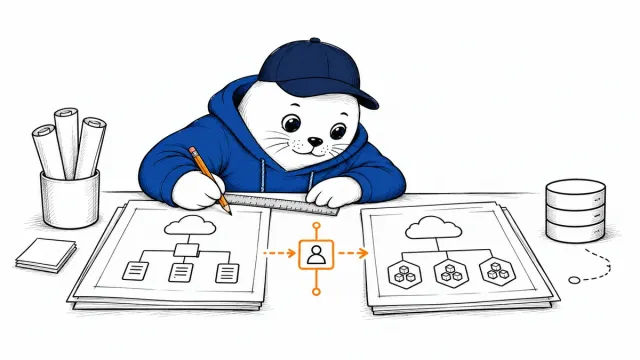
In its September 26, 2026, guide, Google Cloud describes a managed reinforcement-learning fine-tuning service. A team supplies prompts and a scoring function. The service generates candidate responses, scores them, and adapts the model toward outputs that earn higher rewards. Google handles the training infrastructure and model internals; the customer is responsible for reward quality.
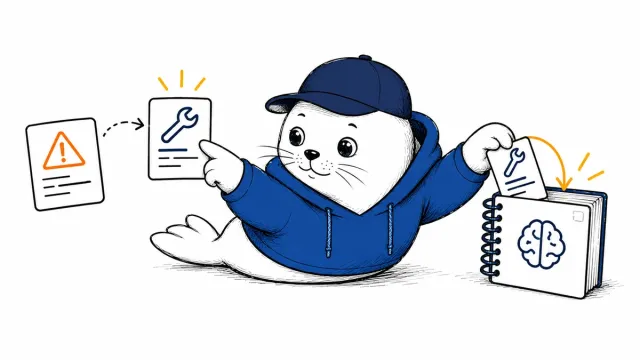
The useful use case is a task with an objective check but no single perfect example. You can run an SQL query against a test database; you can verify an extracted record against a schema and source document. A weak reward can still teach the wrong shortcut. Teams should keep a separate evaluation set and test whether gains survive outside the training examples.
When not to use it
Google recommends prompt engineering and supervised fine-tuning first. Reinforcement learning is more attractive when the base model occasionally succeeds, the result can be scored reliably, and supervised tuning has stalled on the metric that matters. If you rarely observe success, you have little useful signal to amplify; a short supervised fine-tuning stage may provide a starting point before reinforcement learning.
That is an architectural decision, not just a feature comparison. Our prompt-versus-RAG-versus-fine-tuning guide helps decide whether changing model behavior is even necessary. If missing or outdated facts are the real problem, retrieval may be more appropriate than training a reward model.
The preview limits that change the buying decision
Google’s product documentation states that the service is pre-GA and is for limited testing and evaluation, not commercial or production use. It also warns against using proprietary, sensitive, or confidential data in this stage. Supported tuning models are Gemini 3.5 Flash and Gemini 3.1 Flash-Lite, with tuning endpoints in us-central1 and europe-west4. Video appears in tuning datasets only for Gemini 3.5 Flash; text, image, and audio are also supported.
Cost is not just the tuning job. Google says tuned-model inference for Gemini 3 and later is priced at 1.5 times the base-model prediction price, while tuning and optional evaluation incur their own charges. A team comparing a tuned model with a prompted base model should therefore measure end-to-end task cost at the same quality threshold, not only the improvement on a training metric. Our agent cost-controls guide provides a framework for caps and routing once such a model is eligible for production.
A small, honest experiment
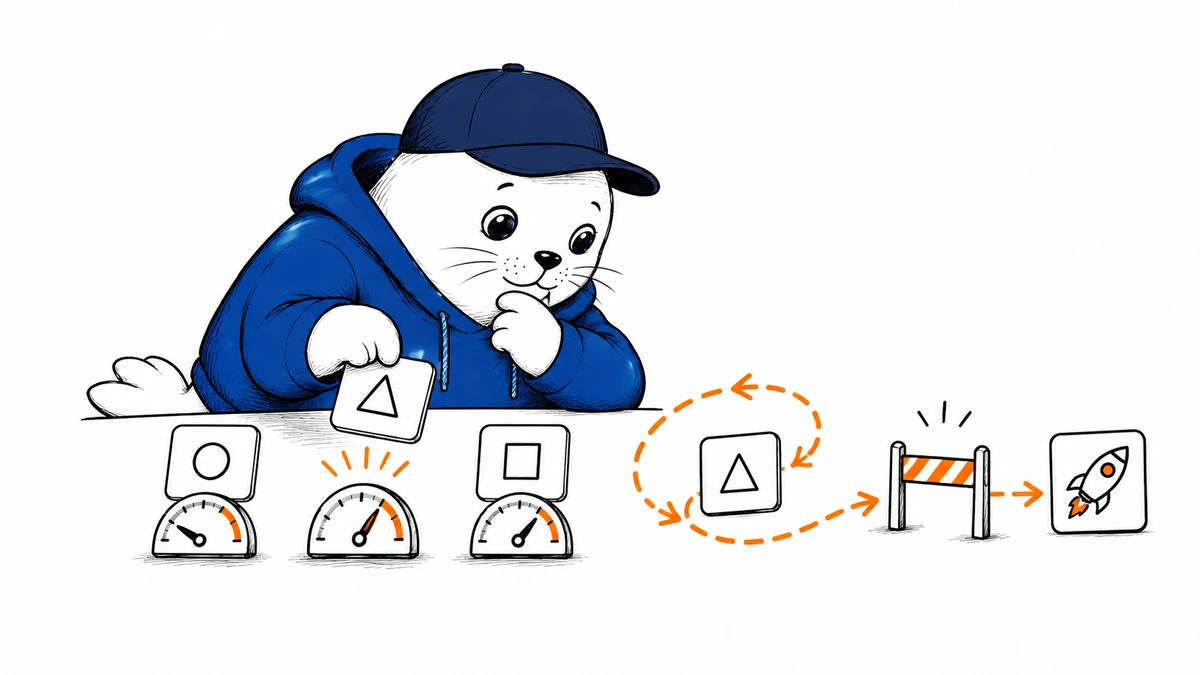
Choose a non-sensitive task with an executable or repeatable score. Establish a base-model result, write the reward to penalize invalid shortcuts, and hold out a test set representing real variation. Compare prompting, supervised tuning where appropriate, and the RL-tuned candidate. Review failures manually, especially cases that score well for the wrong reason. Do not route real customer data or production traffic through a pre-GA service that Google currently restricts to evaluation.
Google has provided an unusually concrete customization recipe, but its availability and legal boundary are the news: this release is a preview for controlled experiments. The reward function determines what “better” means; the release lab determines where you may safely use the result.