Enveda has raised $311 million in a Series E to push AI-discovered medicines further into clinical development and expand its PRISM discovery platform. The financing is substantial, but early human data should not be confused with proof that a medicine works.
What the new financing funds
Enveda AI drug discovery received a $311 million Series E led by Catalio. The company says the round brings its total capital raised above $845 million. Proceeds are intended to advance three clinical-stage medicines, open additional trials and scale the PRISM platform.
The financing gives Enveda more time and capacity to cross the most expensive part of drug development. It does not remove the scientific, regulatory or operational uncertainty that appears as a program moves from discovery into larger human studies.
How PRISM changes the search problem
Enveda focuses on natural chemistry, where biological samples can contain many molecules and possible interactions. PRISM uses machine learning and experimental data to characterize that chemical space, connect structures with biological activity and prioritize candidates for development.
AI can expand the set of compounds examined and help teams choose what to test. It cannot establish human safety or clinical benefit from a database prediction. Those claims require laboratory work, manufacturing controls and staged trials.
The evidence ladder should stay visible
| Stage | What it can establish | What it cannot establish alone |
|---|---|---|
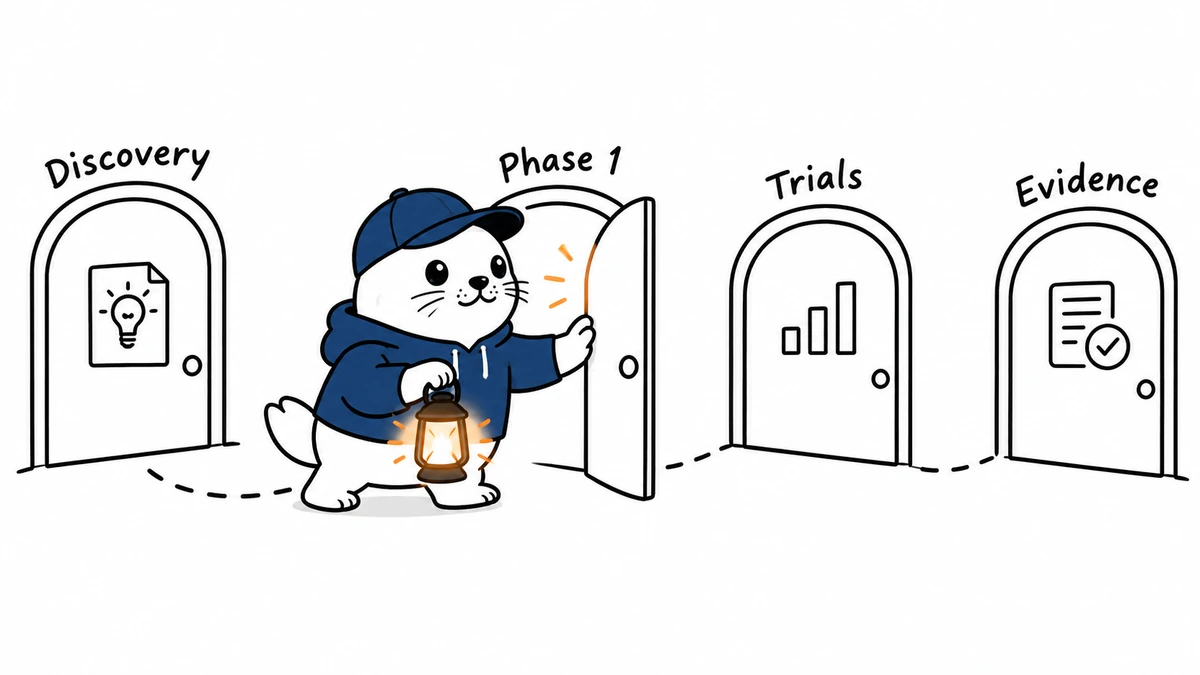
| Discovery and preclinical work | Mechanism hypotheses, activity and animal or laboratory evidence | Safe and effective treatment in people |
| Phase 1 | Initial safety, tolerability, dosing and pharmacology | Broad clinical efficacy |
| Phase 1b or early patient study | Early safety and preliminary patient signals | Confirmed benefit against an appropriate control |
| Later controlled trials | Comparative evidence across a larger population | Automatic approval or success in every patient |
| Regulatory review | Whether the full package supports a labeled use | Permanent certainty after launch |
Why positive early readouts need careful wording
Enveda points to two positive early clinical readouts in 2026. Early studies can show that a candidate reached expected concentrations, produced a biological signal or was tolerated at planned doses. Those are valuable milestones. They are not the same as demonstrating that patients improve.
A responsible article should name the trial phase, participant population, comparator, endpoint and observation period. If the company has not published those details in a peer-reviewed paper or clinical registry result, the claim remains company-reported.
A due-diligence checklist for AI-biotech claims
- Match every candidate to its trial registry entry and current status.
- Separate preclinical predictions from human observations.
- Record the number of participants and the study design.
- Distinguish safety, pharmacology and efficacy endpoints.
- Check whether analysis was prespecified or exploratory.
- Look for adverse events, discontinuations and missing data.
- Treat platform speed and cost claims as separate from clinical success.
What investors and partners should watch next
The next meaningful evidence is not another count of molecules screened. It is progress through defined clinical milestones without a deterioration in safety, manufacturability or study quality. Enveda will also need to show that PRISM repeatedly produces differentiated candidates rather than one favorable program.
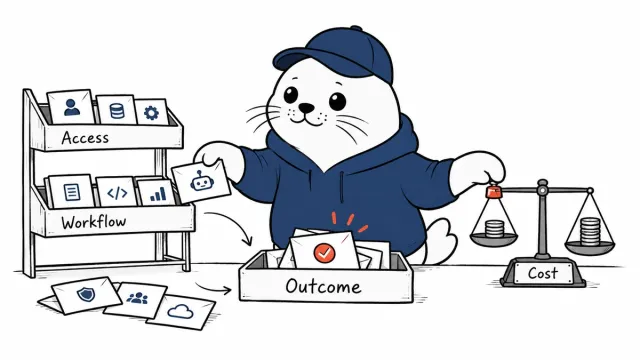
Platform economics should include the cost of failed candidates and later-stage trials. A faster discovery loop can still be expensive if it sends too many weak programs into development.
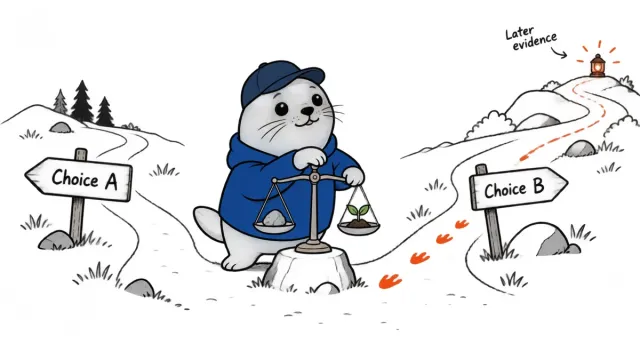
Partners should also ask how candidate selection changes after negative evidence arrives. A credible learning system should retire weak hypotheses, document why priorities changed and show whether later programs benefited. Without that feedback record, a large discovery funnel can hide selection errors instead of demonstrating that the platform improves over time.
How AI changes work without changing the standard
AI can compress search, rank experiments and connect data that a small team could not manually inspect. The Model Hardware Standard report shows how agents are beginning to operate laboratory equipment, while the AI research-company analysis explains why organization and incentives matter alongside models.
None of those tools lowers the evidentiary bar for medicine. The standard remains a reproducible clinical record that supports a specific use in a defined population.
The practical verdict
Enveda has raised enough capital to test whether its discovery platform can repeatedly convert natural chemistry into medicines. That is a significant business and scientific milestone. The public clinical evidence is still early.
Coverage should celebrate financing and platform progress without presenting Phase 1 or Phase 1b signals as confirmed efficacy. The most useful follow-up will track each candidate, trial stage, primary endpoint and result as the evidence matures.
Primary sources
Checked September 23, 2026. Financing is confirmed. Clinical and platform outcome statements remain company-reported unless supported by published trial records or independent primary evidence.