
Morocco has moved its national AI plan beyond a list of ambitions. The harder question is which parts are operating, which remain prototypes and how progress will be measured.
Maroc IA 2030 has entered what Morocco’s Ministry of Digital Transition describes as an implementation phase. At a September 8, 2026 presentation in Rabat, the ministry connected the national roadmap to named institutions and public-service projects, including the JAZARI research network, a Data Factory, a Software Factory, a sovereign AI marketplace and the Idarati AI administrative assistant.
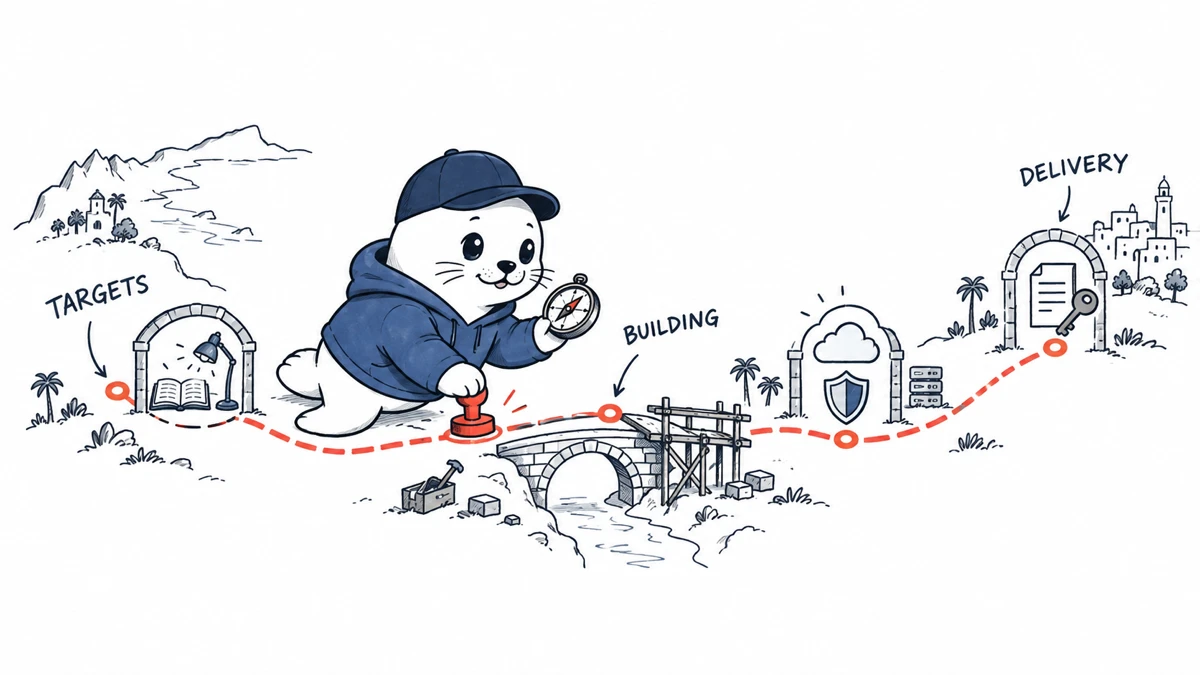
The economic headline is substantial: the government wants the roadmap to generate 100 billion Moroccan dirhams in added value to GDP, create 50,000 direct and indirect jobs, and train or certify 200,000 people by 2030. Those figures are official targets, not recorded outcomes. The distinction matters because the implementation update includes a mixture of launched institutions, active workstreams, presented tools and proofs of concept.
What changed in the September implementation update
The latest ministry account is more concrete than the broad strategy discussions that began at Morocco’s first National AI Conference in July 2025. It identifies delivery mechanisms for research, government software, data preparation, sovereign infrastructure and citizen services.
| Element | Official description | Status to report accurately |
|---|---|---|
| JAZARI network | Research and innovation institutes organized around national priorities | Network announced; JAZARI ROOT officially launched |
| Data Factory | Collects, structures and prepares data for AI models | Workstream presented; public operating metrics not supplied |
| Software Factory | Shares reusable software components across administrations | Workstream presented; catalog and adoption figures not supplied |
| Sovereign AI marketplace | Unified platform for trusted AI solutions serving citizens and government | Platform presented; general availability not established |
| Idarati AI | Agentic assistant for administrative procedures | Tool presented; nationwide public access not established |
| National meta-app and e-wallet | Combined public-service application concept | Proof of concept, not a national launch |
This status table is the central reading of the announcement. A presented platform is not necessarily a service that every citizen can use today. An institute can be officially launched while its staffing, compute capacity, research agenda and publication record are still developing.
Three targets define the Maroc IA 2030 scorecard
| 2030 target | Government figure | Evidence still needed |
|---|---|---|
| Added economic value | MAD 100 billion added to GDP | Baseline, calculation method, sector attribution and annual progress |
| Employment | 50,000 direct and indirect jobs | Definition of an AI job, direct-versus-indirect split and independent count |
| AI talent | 200,000 people trained and certified | Credential standard, completion rate, regional distribution and employment outcomes |
The targets provide an understandable public scorecard, but the official announcement does not publish the baseline or methodology behind them. GDP value can mean revenue, productivity gains, investment or a wider estimate of sector impact. Job counts can include newly created roles, converted positions and indirect employment. A credible progress dashboard will need to define those terms before reporting annual gains.
The roadmap has three pillars and ten programs
The ministry organizes Maroc IA 2030 around three foundations: sovereignty and trust; innovation and competitiveness; and impact, adoption and influence. Ten program themes sit beneath them:
- AI regulation and trust.
- Compute, data-center and sovereign-cloud infrastructure.
- Shared national digital platforms.
- National language models.
- Human capital and training.
- Financing for innovation and DeepTech.
- Territorial and regional innovation.
- International cooperation.
- Performance measurement.
- Change management and adoption.
The program design is broader than building a Moroccan chatbot. It attempts to connect infrastructure, data, research, procurement, workforce development and public administration. That breadth is strategically coherent, but it also creates an execution problem: every program needs a named owner, budget, deadline and measurable output.
JAZARI is intended to turn research into deployed systems
The JAZARI network is the roadmap’s research and innovation arm. The government identifies four initial institutes: JAZARI ROOT, JAZARI Smart City, JAZARI EduTech and JAZARI Industrie X.0. JAZARI ROOT was formally launched during the January 2026 AI Made in Morocco event as the founding center of the network.
The structure suggests a hub-and-domain model. ROOT can provide shared research capacity, while the other institutes focus on urban services, education and industrial transformation. The next useful disclosures would be each institute’s host organization, leadership, staffing, compute allocation, research projects, public datasets and rules for startup or university access.
The January event also announced an R&D laboratory through a memorandum of understanding with Mistral AI. An MoU records cooperation; it does not by itself prove that a lab is fully staffed or producing deployable systems. MustHave.ai’s coverage of Mistral’s broader sovereign-AI strategy shows why local control depends on infrastructure, skills and operating rights, not only a model-provider partnership.
The public-service stack is the most tangible part
Several announced components fit together as a possible government AI stack. The Data Factory would prepare approved data for model use. The Software Factory would prevent ministries from rebuilding the same components separately. The sovereign marketplace would provide a controlled distribution layer. Idarati AI would become the citizen-facing assistant for navigating administrative procedures.
That architecture could reduce duplicated spending and make public services easier to navigate. It also concentrates responsibility. Before an assistant can advise citizens safely, agencies need authoritative source data, version control, identity and access rules, documented escalation paths, multilingual evaluation, accessibility testing and a way to challenge an incorrect answer.
- Answers should identify the responsible agency and underlying source.
- High-impact actions should require explicit confirmation rather than silent execution.
- Personal data should remain separated by purpose, role and retention policy.
- Darija, Arabic, Amazigh and French behavior should be evaluated independently.
- Citizens need a non-AI route when the assistant is unavailable or wrong.
- Public dashboards should report uptime, error categories, appeals and resolved incidents.
Sovereign AI requires operational control, not only local hosting
The ministry says the sovereignty work includes data centers, infrastructure and sovereign cloud. Physical location is only one layer. Operational sovereignty also depends on who controls encryption keys, administrator access, software updates, model weights, training data, audit logs, incident response and the ability to migrate away from a supplier.
This is the same practical distinction seen in other national programs. The UK sovereign AI procurement program ties public funding to concrete infrastructure and delivery requirements, while the AWS European Sovereign Cloud illustrates how residency, operations and service dependencies can differ. Morocco will need to publish its own control model rather than relying on the word sovereign as a complete specification.
The two talent targets need to be reconciled
The main roadmap target calls for 200,000 people to be trained and certified in AI by 2030. The September ministry update separately refers to reaching 100,000 newly trained digital talents per year by 2030. These figures may describe different populations, but the public materials do not explain the relationship.
A useful talent dashboard would separate introductory AI literacy, professional retraining, university degrees, research training, vendor credentials and job placement. It should also show geographic and gender distribution, completion rates and the number of graduates who move into relevant work. Counting enrollments alone would make a large program appear more successful than it is.
What remains unverified or unpublished
The official sources establish the roadmap, targets, program themes and named initiatives. They do not yet provide enough information to judge delivery at national scale.
- Total Maroc IA 2030 budget and allocation by program.
- Accountable owner and deadline for each of the ten programs.
- Public URLs and eligibility rules for the marketplace and Idarati AI.
- Capacity, energy sourcing and completion dates for data centers and sovereign cloud.
- Language coverage, training-data governance and benchmarks for national language models.
- Procurement, privacy, security and independent model-audit requirements.
- Annual methodology for the GDP, employment and training targets.
- A public progress dashboard with baselines and historical measurements.
A practical public scorecard for the next four years
| Area | Evidence to publish | Why it matters |
|---|---|---|
| Infrastructure | Operational capacity, utilization, energy source, uptime and customer access | Shows whether sovereign compute is usable rather than planned |
| Public services | Live services, active users, completion rates, errors and appeals | Measures citizen benefit and failure cost |
| Research | Projects, datasets, papers, patents and deployments by JAZARI institute | Separates institutional launch from scientific output |
| Startups | Funding awarded, procurement contracts, regional spread and survival | Tests whether the strategy expands opportunity beyond large suppliers |
| Talent | Completions, credentials, job placement and demographic distribution | Measures outcomes instead of registrations |
| Economy | Annual value-added method and sector-level contribution | Makes the MAD 100 billion target auditable |
What Maroc IA 2030 could mean for citizens and builders
For citizens, the near-term value is not a national foundation model by itself. It is shorter administrative journeys, clearer eligibility information, fewer repeated documents and trustworthy multilingual assistance. For startups, the opportunity is access to public data, compute, test environments and procurement routes that do not require an existing government relationship. For universities, success means shared infrastructure and research programs that lead to public outputs and local deployment.
Maroc IA 2030 now has enough structure to be tracked as a delivery program. Its strongest feature is the connection between research institutes, shared government software, data preparation and citizen services. Its largest risk is that targets and prototypes could be reported as outcomes before independent measurements exist.
The practical verdict
Morocco’s roadmap is more developed than a generic national AI vision. It names institutions, platforms and public-service tools, and it places sovereignty, innovation and adoption inside one program. The September update is therefore meaningful. The next phase should be judged by published budgets, live access, accountable owners, audited metrics and evidence that citizens and regional ecosystems are benefiting.
Primary sources
- Ministry update on the current state of Maroc IA 2030
- Official government summary in English
- AI Made in Morocco implementation announcement
- 2025 National AI Conference program
- Official synthesis report from the National AI Conference
Checked September 21, 2026. Economic, employment and training figures are government targets. Tools described as presented or proof of concept are not treated as generally available services.