Notion 3.7 turns a team’s reusable AI instructions into portable SKILL.md packages that can be downloaded for Codex, Claude Code, Cursor, Gemini and Grok. That makes Notion a possible control plane for agent instructions, but portability still depends on tools, permissions and version discipline.
The September 15, 2026 release also adds custom MCP connections, sub-agent calls, post-meeting automations, an Agent SDK public beta and new administrative surfaces. The update is broader than a prompt library. It gives teams a path from shared instructions to connected, observable agent workflows.
The important artifact is SKILL.md
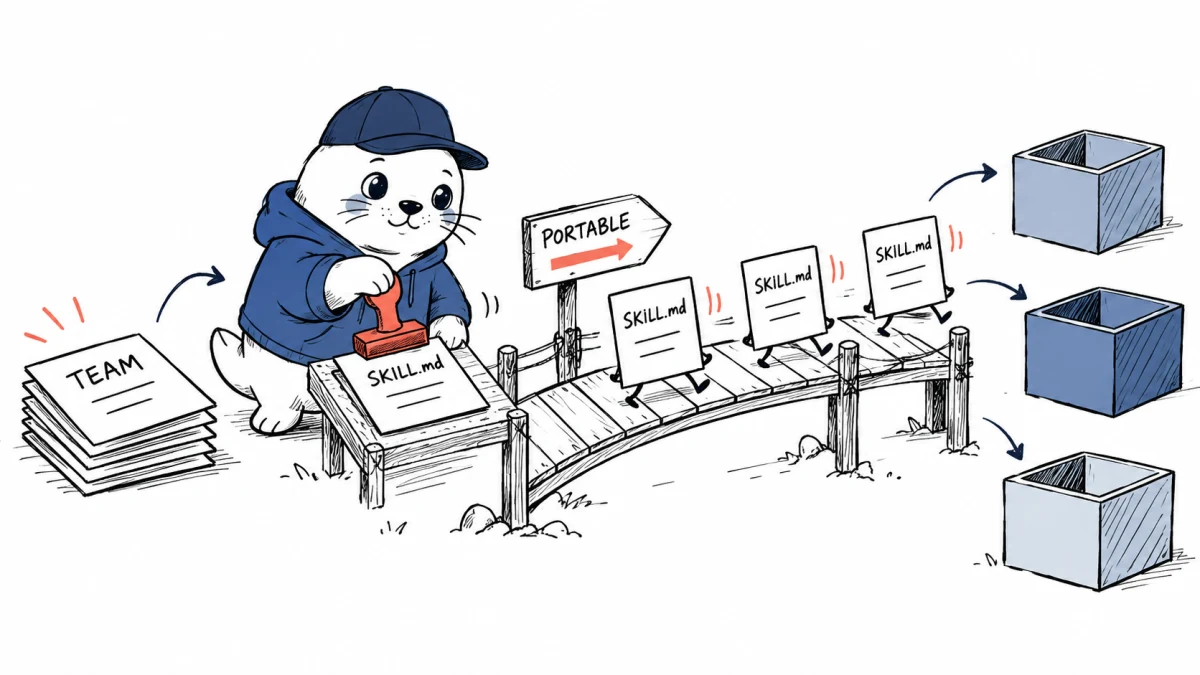
Notion defines a skill as reusable instructions that teach AI how a team works. A skill might encode a product review rubric, an approved hiring format or a monthly business review. Instead of leaving that process in one employee’s chat history, a workspace can place it in a shared skills library.
When a user downloads a skill, Notion writes a SKILL.md file and approved supporting files. The release page explicitly names Claude Code, Codex, Cursor, Gemini and Grok as destinations. Notion also shows an update badge when the managed copy changes, prompting users to download the latest version.
Portable instructions do not guarantee identical behavior
A Markdown instruction file can carry goals, steps and constraints across tools. It cannot make every agent environment identical. Models interpret instructions differently, tool names vary, file access differs and one agent may support capabilities another lacks.
| Portable layer | What can still change |
|---|---|
| Process instructions | Model interpretation and instruction priority |
| Supporting files | File paths, upload limits and local access |
| Tool calls | Tool names, schemas and approval behavior |
| Expected output | Formatting defaults and model capability |
| Security boundary | Permissions granted in each agent environment |
The practical interpretation is “portable operating procedure,” not “bit-for-bit reproducible agent.” A team should run the same acceptance test in every target environment before calling a skill supported there.
Skills, Custom Agents, MCP and the SDK solve different problems
| Notion 3.7 component | Role | Main control question |
|---|---|---|
| Skills | Reusable team instructions | Which procedure should the agent follow? |
| Custom Agents | Persistent workers with context and models | Which worker owns the task? |
| Custom MCP | Connection to external tools and data | What can the agent read or change? |
| Agent SDK | App-level access to agent conversations and streams | How does another application invoke the worker? |
| Insights API | Usage, run status and controls | What happened and how much did it consume? |
Custom MCP adds a confirmation boundary before writes
Notion says users can ask an agent to connect services such as GitHub and Amplitude through Custom MCP. Connections can retrieve context, check performance or take actions. The release page says confirmations prevent connected tools from changing until the user approves the action.
That is a useful boundary, but teams still need to inspect the connection’s scopes. A confirmation dialog does not reduce an unnecessarily broad token. Use read-only access where possible, isolate production systems and log every approved write. Custom MCP is listed as a beta feature for Business and Enterprise plans.
Sub-agents create a delegation graph that needs ownership
A Custom Agent can now call other Custom Agents as sub-agents, each with its own instructions, context, access and model. Notion’s example routes bug reports to a triage agent and metrics questions to a reporting agent before the primary agent assembles a Slack update.
- Assign one owner to the final result, not one owner per intermediate message.
- Keep tool permissions at the specialist level instead of sharing every credential.
- Record which model and skill version produced each handoff.
- Set stop conditions so agents cannot delegate indefinitely.
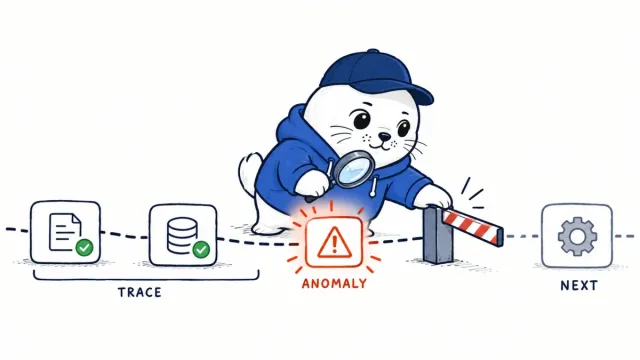
- Test partial failure when one specialist times out or returns weak evidence.
The Agent SDK and Insights API turn workflows into a platform
The Agent SDK is in public beta for Business and Enterprise. Notion says applications can continue Custom Agent conversations, trigger agents and stream results. The Insights API exposes credit usage, completed runs and status, and can enable, disable or set agent limits. A new Developer section surfaces Workers, connections and run logs.
Together, those additions close part of the gap between a workspace assistant and an agent platform. The remaining questions are operational: retry semantics, idempotency, data retention, exportable logs, rate limits and the exact guarantees around streamed and interrupted runs.
Two headline performance claims need caveats
Notion says AI Search is 50% faster, but the release page does not publish a benchmark design, baseline, percentile distribution or dataset. It also says Remote saves $500,000 per year by running its IT help desk on five agents. That figure is a company-presented customer example, not an independently audited result in the release notes.
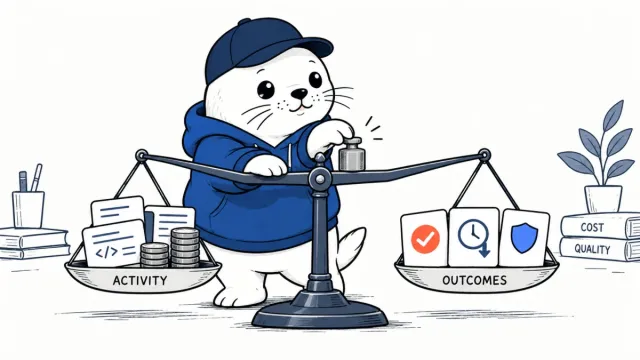
Teams should measure their own median and tail latency, escalation rate, cost per completed workflow and human correction time. Vendor percentages can suggest what to test; they should not replace an internal baseline.
A safe rollout starts with one versioned skill
- Choose one repetitive, low-risk workflow with a human-reviewed output.
- Write success criteria and forbidden actions into the skill.
- Export the same
SKILL.mdpackage to two target agents. - Run a fixed test set and compare correctness, tool behavior and cost.
- Record the Notion version, downloaded file hash and target-agent version.
- Promote the skill only after permissions and failure handling pass review.
Our Codex versus Claude Code guide provides a framework for comparing agent environments that consume portable instructions. The 50 AI GitHub repositories review includes tools and frameworks teams can use to test and observe agent workflows.
The practical verdict
Notion 3.7 makes a strong bet that team know-how should be stored once and carried to many agents. The portable file is valuable, but the real enterprise feature is the surrounding control system: shared versions, confirmations, specialist agents, usage data and administrative limits.
Primary sources
Checked September 15, 2026. Product availability and vendor claims come from Notion. Portability, security and rollout recommendations are MustHave.ai analysis.