
Basis turned employee onboarding into a reusable Codex skill. Clay gives every account a persistent agent workspace. Exa lets an agent carry an integration signal into a tested pull request. These are better case studies than “we gave everyone a chatbot,” but the public evidence is still uneven.
OpenAI selected and published all three examples. Basis and Clay report time saved. Exa shows the clearest bounded execution path, but no error rate or time result. The information gain comes from separating a useful operating pattern from a supplier’s success-story framing.
Basis turned onboarding into a teachable skill
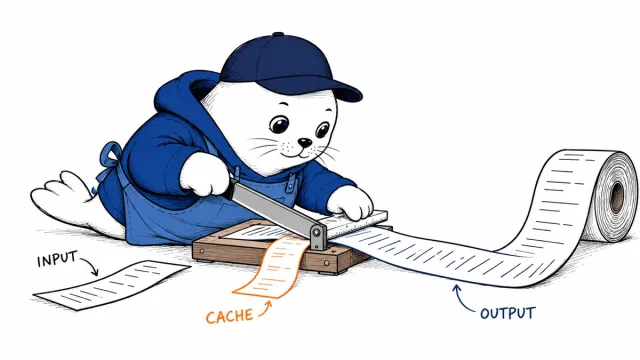
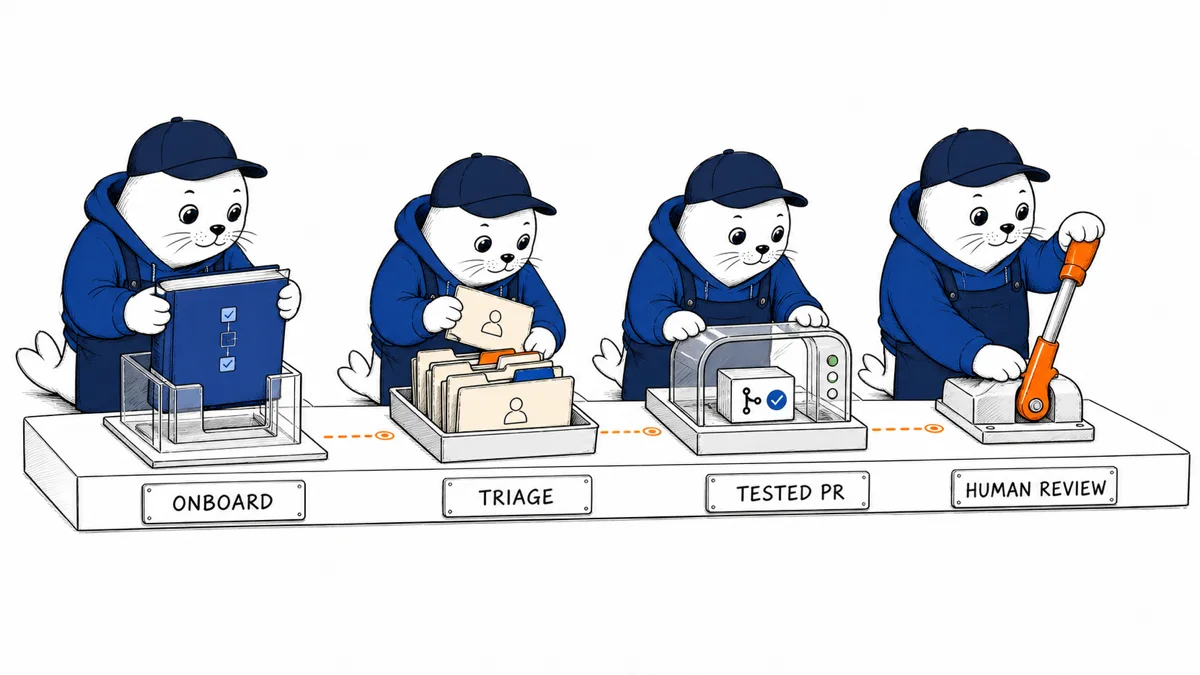
OpenAI reports that Basis cut first-day onboarding from two hours to 30 minutes. New employees receive Codex and a company-specific skill containing the process, resources, integrations, and finish criteria.
The strongest part is not the 90-minute difference. Basis demonstrated the process once, packaged it, and updates the skill when exceptions appear. The workflow has a trigger, known steps, the right tools, and a definition of done. That makes an improvement available to the next cohort instead of leaving it in one HR employee’s memory.
Clay uses persistence for changing account context
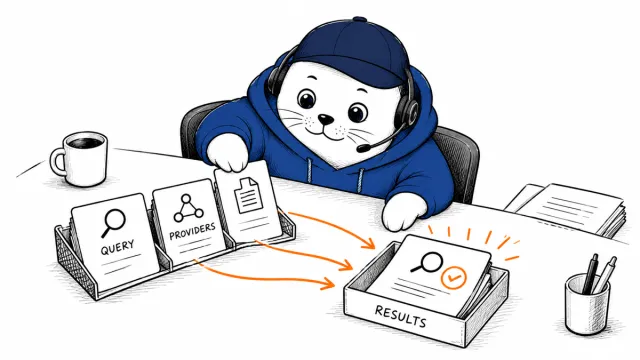
Clay’s GTM workflow gives each account a persistent workspace and a dedicated subagent. The agent reviews CRM, email, Slack, calls, presentations, and other primary sources, then updates the account folder overnight. A coordinating agent turns those changes into a short morning priority list.
Clay says the workflow saves one GTM engineer roughly an hour of inbox triage each night. That is a single company-reported example, not a company-wide average. The better design detail is that recommendations stay close to their evidence, allowing the seller to inspect the sources before contacting a customer.
Exa carries an opportunity into a tested pull request
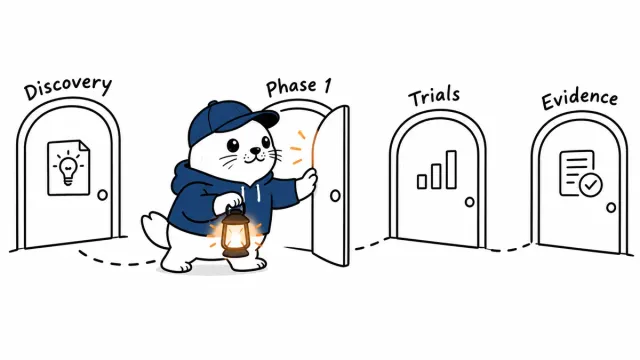
Exa wanted its search API to appear in more developer ecosystems. Its Codex workflow monitors for integration opportunities, gathers context, creates pull requests, runs tests, and prepares weekly updates. It can also draft an announcement for review.
People still decide which opportunities matter, which commitments are appropriate, and what ships. That stop point is important. The agent does enough work to reduce research and engineering handoffs, but tests and human review remain between a generated artifact and an external promise.
The evidence is not equally strong
| Company | Reported result | Missing evidence |
|---|---|---|
| Basis | Onboarding falls from 2 hours to 30 minutes | Cohort size, exceptions, maintenance time, and error rate |
| Clay | About 1 hour of nightly triage saved for one engineer | Broader sample, recommendation quality, and correction load |
| Exa | Signals move into tested pull requests and review | Cycle-time change, acceptance rate, failures, and operating cost |
Token output is not business value
OpenAI’s Enterprise Signals says the top 10 percent of organizations by AI usage generate 8.3 times as many output tokens per active user as typical firms, up from 2.6 times in January. It also says Codex produces 64 percent of combined output tokens in the dataset.
OpenAI warns that tokens are an imperfect proxy for business value. A longer agent trace can mean deeper work, inefficient wandering, or both. Leaders need outcome measures: completed onboarding, qualified account actions, accepted pull requests, human repair minutes, cycle time, cost, and error severity.
The reusable pattern has seven parts
- A repeatable trigger that tells the agent when to start.
- A defined outcome with a measurable finish line.
- Curated company context and source permissions.
- Tools scoped to the smallest useful action set.
- A verifier such as a checklist, test suite, or source citation.
- A human stop point before consequential action.
- An owner who measures value and updates the workflow.
This is the operational version of our guide to agentic AI in plain English. Autonomy is not the number of steps. It is the combination of authority, persistence, external effects, and evidence.
A 14-day pilot should kill weak workflows quickly
Pick one recurring process with a known baseline. For two weeks, track completion rate, wall time, human touch time, rework, tool failures, and cost. Require the agent to leave an evidence package a reviewer can inspect. Compare the full system with the old workflow, not the model against a person typing unaided.
Stop if the workflow saves minutes but creates hidden review work, if permissions are broader than the outcome requires, or if nobody owns exceptions. Scale only after the process produces a repeatable gain. The case studies in our AI Startups & Business section use the same discipline: revenue, time, risk, and handoff quality before hype.
My verdict: copy the handoff design, not the claim
Basis shows how to package a stable process. Clay shows why changing work needs persistent context and visible sources. Exa shows how an agent can cross research and engineering without skipping tests or human approval. Those are useful designs even if your company never uses the same models.
The public case studies do not prove general ROI. Two time numbers and one workflow description are a starting point. Borrow the structure, establish your own baseline, and count the corrections. An AI-native workflow earns the label when it becomes a measured operating capability, not when it produces a lot of tokens.
Read the source material
- Read OpenAI’s Basis, Clay, and Exa workflow case studies.
- Review OpenAI’s Enterprise Signals methodology and usage findings.
- Compare our audit of AI-native business valuations.
Checked September 1, 2026. Workflow descriptions, time savings, and token metrics are reported by OpenAI and the featured companies. Missing-field analysis, the seven-part pattern, and the pilot design are Musthave.ai analysis.