Wonderful is raising money to hire people, not to remove them from the deployment loop. Its plan to grow from 350 employees to about 900 is evidence that enterprise AI can be a service-heavy business.
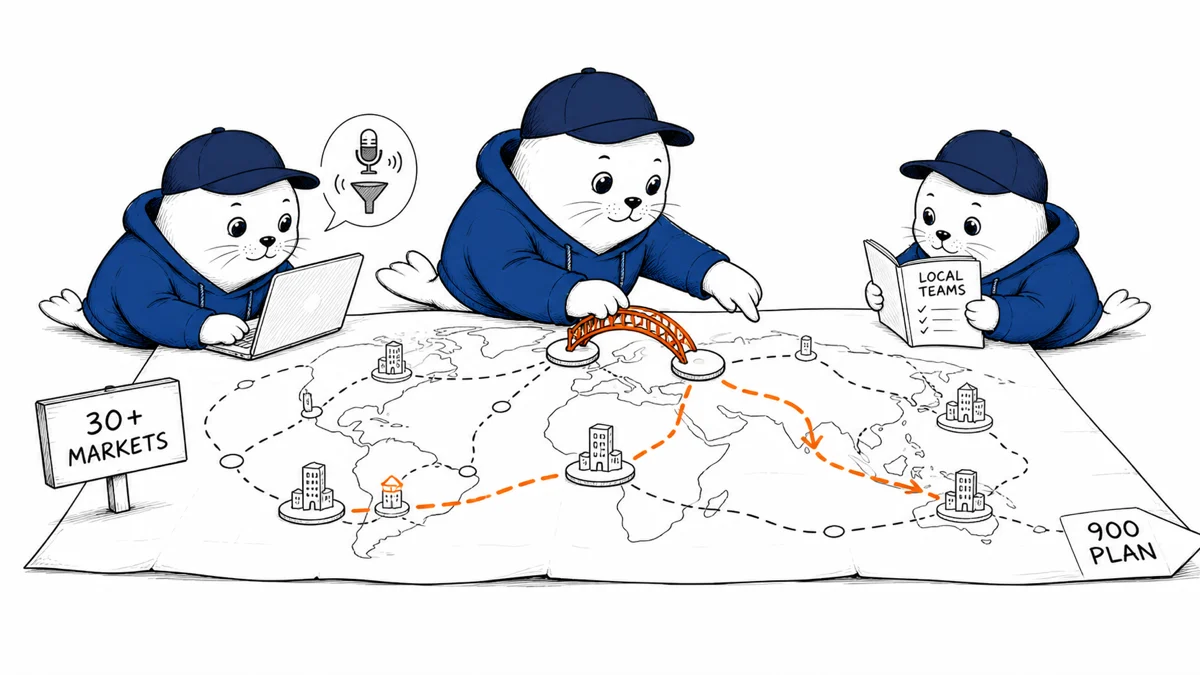
Wonderful AI forward-deployed teams are the core of the company’s expansion model. Wonderful announced a $150 million Series B at a $2 billion valuation on March 12, 2026. It said the money would support growth across more than 30 markets and expand headcount from 350 to approximately 900 by year-end.
The staffing plan challenges a popular startup story: that a capable model lets a tiny team sell the same software everywhere. Wonderful argues that large enterprises need local teams to integrate systems, adapt language and culture, manage regulated workflows, and keep improving agents after launch.
The funding announcement describes an operating model
| Published figure | Scope | Builder interpretation |
|---|---|---|
| 0 million | Series B led by Insight Partners | Capital for platform investment and geographic execution |
| billion | Announced valuation | Investor pricing, not revenue or cash flow |
| 30+ markets | Company expansion target and reported footprint | Localization is a repeated operating task |
| 350 to about 900 employees | Planned year-end headcount growth | Deployment capacity is labor-intensive |
| Local full-stack teams | Co-located and forward-deployed with customers | Implementation and optimization are part of the product |
A valuation is not a business outcome. A hiring plan is not proof that every deployment will succeed. The announcement is still useful because it reveals where Wonderful expects the constraint to be: enterprise adoption, integration, and local execution rather than access to a model API alone.
Language localization reaches beyond translation
Google Cloud’s customer case says Wonderful supports markets using Arabic, Czech, French, Greek, Dutch, and Italian. Wonderful’s CEO gives Italy as an example: dialect, gender, and regional variation can require more than 20 voice versions for one market.
That is a product-management problem, not a prompt-translation task. A voice agent has to pronounce names, understand interruptions, follow local disclosure rules, route exceptional cases, and behave correctly when a customer switches language or uses a regional phrase.
- Build evaluation sets with local speakers and real failure patterns.
- Separate language accuracy from policy and process accuracy.
- Test latency and handoff behavior on the local telecom path.
- Give local teams authority to block a launch that passes a global benchmark.
- Retest after model, prompt, policy, or knowledge-base changes.
The 70% cost claim is narrower than the headline
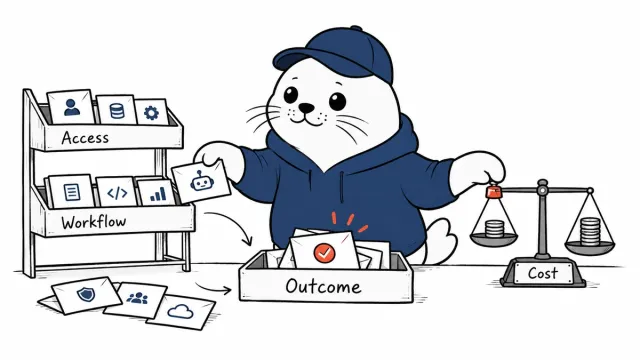
Google Cloud says Wonderful helps companies reduce customer-service costs by up to 70%. In the detailed copy, Wonderful’s CEO says each minute of a call or chat handled by an AI agent reduces enterprise costs by around 70% on average.
This is a company-reported claim inside a technology partner’s customer story. The page does not publish a customer-by-customer cost model, sample size, evaluation period, or independent audit. It should not become "AI cuts support costs 70%" without those qualifiers.
Cost per handled minute also omits some consequences that decide the real economics: unresolved cases, escalations, repeat contacts, customer churn, compliance review, supervision, model and voice infrastructure, and the local team doing deployment work.
Four days versus 50 people needs an acceptance test
Wonderful says a banking client created a promotional agent in four days for work that previously would have taken 50 people several weeks. That is a striking construction-speed comparison. The source does not identify the bank, define "created," or publish the quality and compliance results.
A promotional banking agent can be technically live and still be commercially unsafe. The acceptance test should cover approved offers, eligibility, pricing, required disclosures, complaint routing, accessibility, language variation, records, and the ability to transfer to a person without losing context.
Forward-deployed work changes SaaS economics
| Economic question | Why it matters | Healthy evidence |
|---|---|---|
| How much implementation is reusable? | Custom work can grow faster than recurring margin | Shared connectors, evaluation harnesses, and deployment templates |
| Who owns post-launch tuning? | Agents change as policies, models, and customers change | Named owner, service level, and review cadence |
| When does the customer take over? | Permanent vendor dependence can block scale | Training, documentation, access transfer, and exit plan |
| How is local quality measured? | A global average can hide a bad regional experience | Market-level containment, escalation, defects, and satisfaction |
| What is recurring software revenue? | Headcount growth can disguise services economics | Clear separation of subscription, implementation, and support |
Wonderful says more than 70% of enterprises that begin with one use case expand to additional workflows within three months. That is another company-reported figure. If verified by recurring revenue and retained usage, expansion could offset high deployment cost. If each new workflow requires a fresh project team, the business behaves more like a technology-enabled consultancy.
What smaller startups can copy
A founder does not need 900 employees to copy the useful part of Wonderful’s approach. Start with one narrow market and build a deployment pack:
- Map the customer’s systems, policies, owners, and exceptional cases.
- Create local-language evaluation data with native reviewers.
- Define the human handoff and incident rollback before go-live.
- Turn each custom connector or test into a reusable component.
- Track implementation hours beside subscription gross margin.
- Write the ownership-transfer plan before the second workflow begins.
The human acceptance-test pattern in Shopify founder cases applies here at enterprise scale. The model can accelerate drafts, retrieval, and actions; the business still needs an owner who decides whether the workflow is ready.
The headcount plan also complements the lesson in our AIContenfy exit analysis: a valuable operating system must eventually become transferable, documented, and less dependent on one founder or one deployment hero.
My verdict: services are not a failure if they compound
Wonderful’s hiring plan is not evidence that AI automation failed. It is evidence that production enterprise software includes integration, language, process change, evaluation, and trust. The mistake would be hiding those costs behind a pure-software story.
A forward-deployed model can work when each implementation leaves reusable infrastructure, deeper account expansion, clearer customer ownership, and a smaller marginal effort for the next market. If every deployment remains bespoke, revenue can grow while operating leverage never arrives.
Builders should read Wonderful as an operating-model case, not a promise that one agent can replace a contact center. The company is betting that local people are the mechanism that gets the software through the last mile.
Read the primary sources
- Read Wonderful’s $150 million Series B announcement.
- Read Google Cloud’s Wonderful customer case study.
Which part of your enterprise AI deployment becomes reusable after the local team leaves?
Checked August 15, 2026. Funding, valuation, headcount plan, market reach, expansion, deployment, and cost figures are attributed to Wonderful or Google Cloud’s customer story. Neither source supplies an independent customer-level audit of the 70% cost claim.