
The useful question is not whether an AI business can sell. It is what a buyer is actually paying for when the listing leaves the marketplace.
AI business exits are beginning to produce public case studies, but the available evidence is still uneven. Flippa has described a $450,000 sale of an AI product portfolio and a separate sale of PhotoSolve, an iOS homework assistant. Acquire.com has published the founder’s account of AIContenfy reaching $1 million in annual recurring revenue before an all-cash exit. None of those posts provides a complete, audited market.
They are still useful when read as transaction anatomy rather than price promises. Across the cases, buyers appear to reward recurring revenue, operational clarity, transferable customer acquisition, low founder dependence, and evidence that the product can survive a change of owner.
Three public cases, three different kinds of evidence
| Case | Publicly reported evidence | What remains private |
|---|---|---|
| Aleksei’s AI portfolio on Flippa | Flippa reports a $450,000 exit | Full financial statements, buyer identity, and final deal terms |
| PhotoSolve | Flippa confirms the iOS AI product sold through its marketplace | Sale price and complete operating economics |
| AIContenfy | Acquire.com reports $1M ARR, 100+ LOIs, and an all-cash sale | Sale price and buyer identity |
These are platform-published success stories. The platforms helped facilitate the transactions and benefit from showing successful outcomes. Treat the figures as company-reported unless a filing, buyer announcement, or independently audited record confirms them.
Buyers paid for a system, not an AI label
The strongest common thread is transferability. AIContenfy’s founder says the company documented operations in English, implemented the Entrepreneurial Operating System, reduced founder dependence, and divided the business into three listings. That work made the asset easier to inspect and operate after closing.
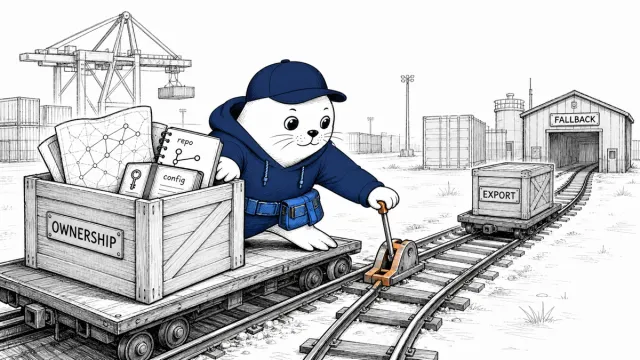
The $450,000 portfolio story points in the same direction. The headline number attracts attention, but a buyer cannot operate a headline. It needs access to the code, model accounts, customer contracts, billing, analytics, support history, domains, data rights, and a documented deployment path.
If the founder is the only person who can repair a prompt chain, calm an angry customer, or understand the margin after inference costs, the business is not ready for a clean handoff.
Revenue quality matters more than launch speed
AI products can launch quickly. That speed can disguise fragile revenue. A buyer will ask how much of monthly revenue renews, whether the product depends on a temporary acquisition channel, how concentrated the customers are, and whether model costs rise faster than revenue.
- Recurring revenue: Are customers paying again without a founder-led sales push?
- Gross margin: What remains after model inference, data, hosting, support, refunds, and payment fees?
- Retention: Do cohorts stay after the novelty period?
- Acquisition durability: Can the new owner repeat the channel without the founder’s audience?
- Operational independence: Can a competent operator run the business from the documentation?
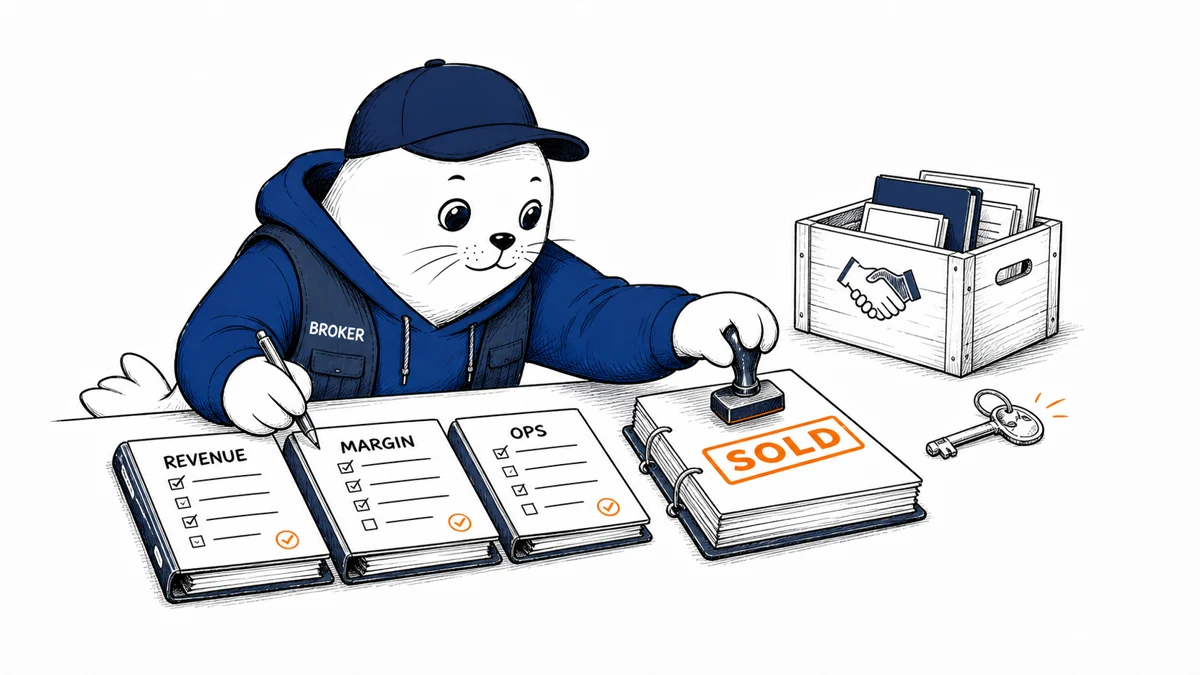
That is why our honest map for making money with AI starts with a sellable outcome, not a tool list. The same rule applies at exit: buyers acquire dependable cash flow and controllable risk.
A practical AI business exit scorecard
| Area | Evidence a buyer can verify | Red flag |
|---|---|---|
| Revenue | Cohort retention, billing exports, customer concentration | One launch month presented as a run rate |
| Costs | Model usage by feature and customer segment | No record of retries, support, or inference spikes |
| Product | Deployment guide, tests, incident log, dependency map | Founder is the undocumented recovery plan |
| Rights | Code ownership, data permissions, vendor terms | Scraped data or unclear contractor assignments |
| Growth | Repeatable channel with acquisition and payback data | Traffic tied to one personality or temporary trend |
Build the data room before you need a buyer
A founder should not begin documenting the company after receiving an offer. Start with monthly profit-and-loss statements, customer and revenue cohorts, vendor contracts, model-cost reports, a source-code ownership schedule, product analytics, security incidents, and a list of every manual task.
Then remove one dependency at a time. Give support to another operator for a week. Rebuild production from the written instructions. Rotate credentials. Explain the acquisition channels without relying on memory. The goal is not paperwork for its own sake. It is proof that the business can change hands.
Our guide to selling AI-powered research as a service makes a related distinction: the customer pays for a reliable deliverable and the human judgment around it, not the prompt that produced a first draft.
Do not reverse-engineer a valuation from three stories
A $450,000 deal does not establish a multiple for every AI wrapper. A $1 million ARR company does not reveal its sale price. A completed marketplace transaction does not tell us how many similar listings failed to sell.
The responsible use of these cases is to identify diligence patterns. The irresponsible use is to multiply your current monthly revenue by a number copied from a marketplace blog and call it a valuation.
My verdict: build for transfer before you build for exit
The public AI business exits do not prove that buyers will pay a premium for the letters "AI." They show that a small AI company becomes more credible when revenue, costs, rights, operations, and growth can be inspected without the founder narrating every screen.
If you want optionality later, make the business operable now. The documentation, margins, and customer evidence that help an acquisition are the same things that make the company healthier if you never sell.
Read the case studies
- Read Flippa’s $450,000 AI portfolio case study.
- Review Flippa’s PhotoSolve transaction story.
- Read Acquire.com’s AIContenfy founder account.
Could a buyer operate your AI business for 30 days without calling you?
Checked August 14, 2026. Transaction figures and operating details are attributed to the marketplace case studies that published them. Sale terms not disclosed by the sources are reported as undisclosed. This article does not infer a market-wide valuation multiple from selected success stories.