
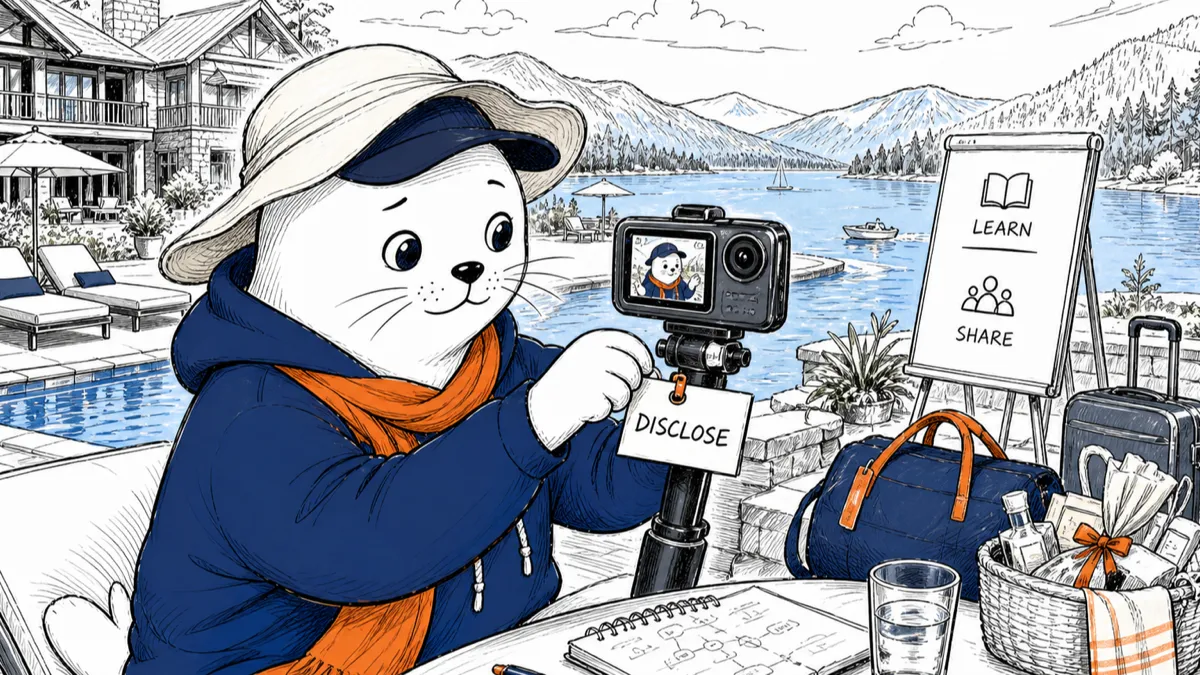
OpenAI took creators to a luxury retreat to teach practical ChatGPT use. The internet saw the rooms, dinners, and wellness activities before it saw the lesson. That mismatch turned the OpenAI influencer trip into a case study in disclosure and trust.
The event, called “Summer Club,” brought a small group of influencers to an upstate New York retreat. TechCrunch reported farm-to-table dinners, activities including beekeeping, and classes on OpenAI products. OpenAI said the education-led program gave creators hands-on experience with ChatGPT Work so they could show followers practical uses.
Criticism focused on the luxury setting, AI data centers’ environmental impact, and OpenAI’s defense work. The company said it expected creators to discuss its technology critically, as traditional media and marketing partners do.
One event, two visible stories
The trust gap formed before most viewers could evaluate the educational content.
- OpenAI’s intended story: Creators learn ChatGPT Work, build documents and presentations, and translate unfamiliar features into practical demonstrations.
- The audience’s first story: A powerful AI company provides a photogenic luxury experience while public concerns about energy, labor, data, and defense remain unresolved.
Why the OpenAI influencer trip drew a different reaction
Brand trips are normal in beauty, travel, food, and consumer technology. AI is not currently experienced as a normal lifestyle category. People connect it to job insecurity, school rules, copyrighted work, energy use, military contracts, and decisions made by a few large companies.
That means the setting carries more meaning. A retreat in nature can look tone-deaf when the product category is under scrutiny for data-center resources. A polished creator video can feel evasive when the viewer wants to know what the tool cannot do or what data it uses.
This does not prove the classes were empty or the creators acted dishonestly. It shows that production value cannot substitute for context. The audience needs to understand the relationship before it can interpret the recommendation.
Disclosure has to explain more than “hosted”
Five questions every creator post should answer
A compact disclosure card would add more trust than another montage.
- Who paid?: Travel, accommodation, meals, activities, and production support.
- Was posting required?: State the deliverables or say clearly that no post was required.
- Who controlled the edit?: Did OpenAI review, approve, or restrict the final content?
- What access was special?: Identify demos, staff help, accounts, credits, or unreleased features.
- What remains uncertain?: Limits, errors, privacy, pricing, and features the creator did not test.
- What can viewers reproduce?: Separate an ordinary user workflow from a guided event demonstration.
A platform disclosure label can satisfy a legal minimum and still leave the audience confused. “Hosted by OpenAI” says there was a relationship. It does not explain value, obligations, review rights, or whether the demonstration happened under normal conditions.
The EU has begun applying clearer labeling duties to some AI-generated content, which we explain in our EU AI Act creator-labeling guide. Sponsored human endorsements need equally plain context.
Education-led marketing can be useful
Most people do not learn a complex work tool from a model card. A creator can show how to turn a meeting into a brief, revise a presentation, or inspect a spreadsheet in a way product documentation rarely does. Good education is a legitimate marketing strategy.
OpenAI’s mistake was not inviting creators. It was allowing the luxury wrapper to become more legible than the curriculum. The company should publish the workshop agenda, the exact features taught, reusable example files, and the limitations discussed. Then the public can judge the educational value without relying on resort footage.
Creators can also make the lesson more credible by including a failed attempt. Our guide to using ChatGPT effectively emphasizes verification and iteration because a clean final result hides the work that matters.
Trust changes at three handoffs
The creator trust path
Each handoff can preserve context or strip it away.
- Company → creator: Access, hospitality, training, talking points, and boundaries.
- Creator → audience: Disclosure, independent testing, criticism, and reproducible examples.
- Audience → action: Whether a viewer can make an informed choice about using or paying.
A campaign fails when the first handoff is generous, the second is vague, and the third asks for trust. It works when special access produces information the public can test.
This framework applies beyond OpenAI. Anthropic and Microsoft have reportedly held creator events too. AI companies are becoming consumer brands, so the creator economy’s disclosure habits will increasingly shape how technical claims reach ordinary users.
My read: show the workshop behind the weekend
The OpenAI influencer trip became a trust test because the company chose a format optimized for aspiration during a moment of skepticism. That does not make influencer education impossible. It makes proof and disclosure part of the creative brief.
OpenAI should release public versions of the lessons and encourage attendees to state what was paid, what was required, what failed, and what they still question. Creators should treat those facts as useful editorial material, not clutter at the bottom of a caption.
A luxury trip can earn attention. It cannot earn belief on its own. For an AI campaign, the most persuasive content may be an unglamorous screen recording that another person can reproduce on a normal account.
Go deeper
- Read TechCrunch’s report on OpenAI Summer Club.
- Use our guide to making AI-assisted content feel human.
- See our transparent method for evaluating AI tools.
Reporting checked August 4, 2026. The event details and OpenAI response are attributed to TechCrunch. This analysis does not infer undisclosed contracts or payments to any individual creator.