Ten hard mathematics results, one unreleased model, roughly $2,000 in inference, and a pile of proof obligations: OpenAI has made a claim that deserves more than either instant applause or an instant eye-roll.
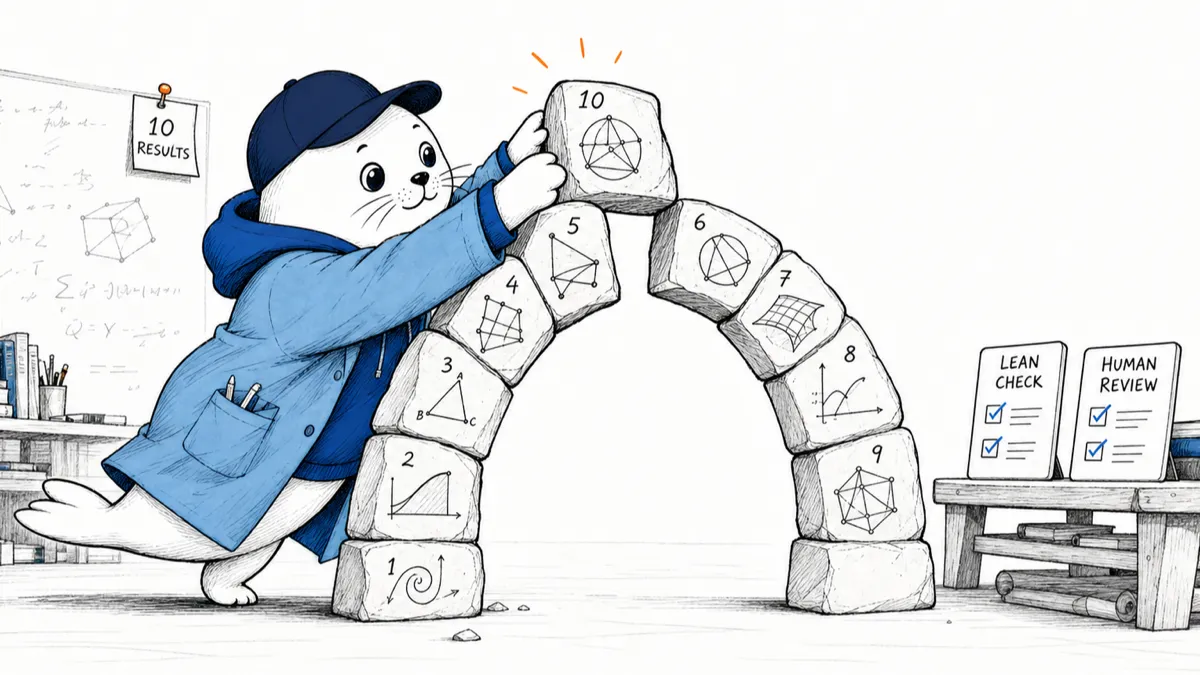
OpenAI Astra math searches broke out on Google Trends after OpenAI published “Ten advances in mathematics and theoretical computer science” on August 1. The company says an internal version of Astra (described as its next major model) resolved or substantially advanced ten long-standing problems. Humans prepared the manuscripts with the same model, and Astra then formalized each argument in Lean.
That is an unusually concrete research package. It is also not the same thing as ten results being permanently accepted by the mathematical community. OpenAI itself asks mathematicians to scrutinize and contextualize the work. That sentence is the correct place to start.
What OpenAI actually released
The announcement is not a benchmark table. It links to a paper, reasoning walkthroughs, manuscripts, and Lean certificates. The subjects range from sphere packing and coding theory to non-sofic groups, quantum complexity, lattice problems, Ramsey numbers, and extremal graph theory.
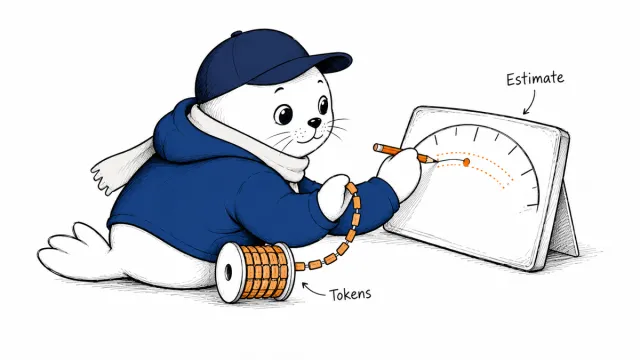
OpenAI says the model-generated arguments cost roughly $2,000 in tokens at Sol API rates. That number is attention-grabbing, but it does not include the full cost of choosing problems, running failed paths, preparing papers, checking assumptions, maintaining the model, or recruiting experts capable of reviewing the output. “A proof cost $200” is not a conclusion supported by the release.
The ten OpenAI Astra math results, grouped by problem family
- A compact map of the fields named in OpenAI’s August 1 publication. Hover a card to separate the clusters.
- Geometry and coding: Sphere packing; binary and spherical codes; Ehrhart’s volume conjecture.
- Algebra and groups: Non-sofic groups; Connes’s rigidity conjecture.
- Complexity and cryptography: Arithmetic circuits; quantum parallel repetition; closest vector problem.
- Extremal combinatorics: Multicolor Ramsey numbers; extremal graph theory conjectures.
Why Lean certificates matter, and what they do not settle
Lean is a proof assistant. A valid certificate can show that a formal statement follows from explicitly encoded definitions and rules. That removes a large class of ordinary algebraic gaps and hand-waving.
Formal verification does not decide whether the encoded statement captures the intended open problem, whether the assumptions are the right ones, whether a result was already known in another form, or how the work should be attributed. Those are mathematical and scholarly questions, not syntax checks.
This distinction is easy to lose when OpenAI Astra math gets summarized as “AI solved ten impossible problems.” A better summary is that OpenAI has published ten serious candidate advances, accompanied by formal artifacts that make examination easier.
From generated argument to trusted result
- The release covers more of this path than a normal model demo, but community review still closes the loop.
- 1. Discover: Astra produces a mathematical argument.
- 2. Prepare: Humans and the model turn it into a manuscript.
- 3. Formalize: The argument becomes a Lean certificate.
- 4. Scrutinize: Independent experts test novelty, framing, and correctness.
The attribution argument is as important as the model
OpenAI takes a clear position: calling a proof generated entirely by an AI system “human-authored” would misrepresent both the system’s contribution and genuine human intellectual work. The company says it helped prepare and formalize the manuscripts and accepts responsibility for correctness, while crediting the mathematical arguments to the system.
That framing will be contested, and it should be. A research result contains more than the final derivation. Problem selection, prior literature, definitions, taste, interpretation, and the decision that a result matters all come from a human scientific culture. Still, hiding the model behind a conventional author list would be worse.
OpenAI Astra math is not a normal model launch
Astra is unreleased. There is no public model card, price sheet, context limit, or API to test. OpenAI calls it its “next major model,” but the announcement does not say when Astra will ship or which capabilities will reach ChatGPT.
That makes this a research claim, not a buying guide. If you are choosing an assistant today, use our practical guide to choosing an AI model without living in benchmark tables. If you are evaluating OpenAI’s current agent behavior, our look at GPT-5.6 Sol’s tool loop is the more relevant comparison.
What I would watch next
- Independent mathematical review. Which results survive line-by-line examination, and which need repair?
- Novelty checks. Do specialists find prior work that changes the scope of the claims?
- Reproduction. Can other systems or teams reconstruct the arguments from the released material?
- Access. Will researchers outside well-funded labs be able to use comparable reasoning capacity?
- Attribution norms. Do journals and conferences treat model-generated arguments as authorship, tooling, or a separate contribution class?
The useful conclusion is neither “solved” nor “fake”
The OpenAI Astra math release is stronger than a model confidently typing a proof into a chat window. There are manuscripts, formal certificates, a public description of the pipeline, and an explicit invitation to inspect the work.
It is also early. Mathematics earns trust through people finding gaps, simplifying arguments, comparing related literature, and building on a result. Lean can help verify a formal object; it cannot replace that community process.
For builders, the bigger signal is that frontier models are being aimed at work where the output can be checked against a demanding external standard. That is a healthier direction than a prettier demo with no way to inspect what happened.
Open the evidence yourself
- Read OpenAI’s official Astra mathematics publication.
- Use the paper and reasoning-walkthrough links on that page rather than relying on a viral summary.
- Inspect the linked Lean certificates repository if you can evaluate formal proofs.
Would formal verification make you trust an AI research result more, or would you still wait for independent specialists? Tell me in the comments.
Research note: I checked OpenAI’s August 1 publication, its linked proof materials, and the related Google Trends query on August 3, 2026. OpenAI’s ten results are reported claims undergoing public scrutiny, not a claim by Musthave.ai that every result has already received final community acceptance.