

Update, August 4: the White House says its voluntary framework for reviewing advanced AI models was completed by the deadline. The public still cannot read it, does not know who has seen it, and has no start date for company participation.
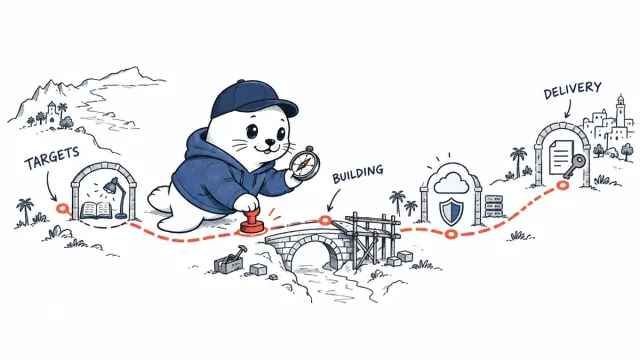
The White House AI model review framework grew out of Executive Order 14409, signed June 2. The order told federal agencies to create a classified benchmark for advanced cyber capability and a voluntary process through which trusted government partners could receive secure access to covered frontier models before release.
Axios reported on August 3 that the framework is complete. A White House official did not disclose its contents, distribution list, or operating date. Companies were expected at a staff-level meeting on August 4 to review the plan.
From executive order to completed framework
What is public in the implementation timeline.
- June 2: Executive Order 14409 creates the voluntary review direction.
- July 2: Thirty-day cyber-defense and clearinghouse actions come due.
- August 1: Sixty-day frontier benchmark and framework deadline passes.
- August 3–4: White House confirms completion; industry briefing is expected.
What the White House AI model review framework is for
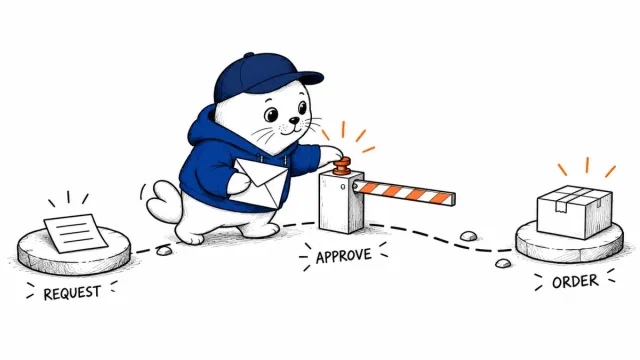
The executive order describes two connected mechanisms. First, a classified benchmarking process is supposed to assess advanced cyber capabilities and determine when a model becomes a “covered frontier model.” Second, the government and developers are supposed to use a voluntary framework for secure early access.
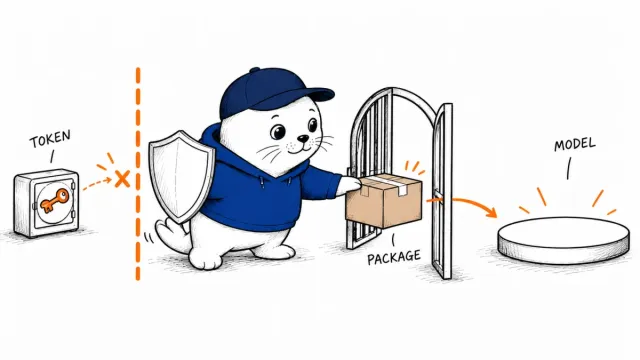
The order’s implementation language discussed confidentiality, cybersecurity, insider-risk, intellectual-property, nondisclosure, and trusted-partner protections. The pre-release access window can extend up to 30 days. The stated purpose is cybersecurity testing and secure deployment, not general approval of every model answer.
The order also says it does not create mandatory licensing, pre-clearance, or a permit required to develop or release an AI model. That remains important. A voluntary program can create political and market pressure, but it is not the same legal instrument as a compulsory launch license.
Classified thresholds and a hidden operating framework are different
What secrecy protects, and what it prevents
National-security sensitivity does not require every procedural rule to disappear.
- Reasonably classified: Specific cyber capability thresholds, evaluation prompts, exploit details, intelligence sources, and sensitive model results.
- Public-accountability value: Participation rules, covered entities, retention periods, conflict rules, incident reporting, aggregate outcomes, and appeal or correction processes.
The executive order explicitly makes the benchmark classified. That does not automatically explain why the operating framework’s basic rules cannot be published. The public does not need an exploit recipe to know who stores pre-release weights, how access is logged, when copies are destroyed, or how a company challenges an incorrect designation.
This distinction is the largest information gap in the update. “The framework is complete” tells us an administrative deadline was met. It does not tell us whether the process is usable, secure, consistent, or accountable.
Recent AI incidents make that paper trail more than procedural housekeeping. Our report on OpenAI’s containment incident shows why pre-release access needs exact permissions and observable tool use.
A voluntary system still needs published rules
Voluntary programs can become de facto standards when major companies join and nonparticipation attracts questions. That influence makes equal treatment important. A private company needs to know whether the same threshold, security conditions, and schedule apply to competitors.
The minimum public accountability card
Information that can be disclosed without publishing sensitive benchmark content.
- Coverage: Which developers and model types can participate or be designated.
- Custody: Which agencies and contractors may access model systems or weights.
- Retention: How long artifacts survive and how destruction is verified.
- Incident rules: Who reports a leak, misuse, or unexpected capability and on what clock.
- Consistency: How open-weight and closed models, domestic and foreign firms, are treated.
- Results: Aggregate participation, completion time, findings, and remediation without sensitive details.
The government should also disclose whether participation requires a formal agreement, which entity signs it, and whether reviewers can retain prompts or outputs. If third-party “trusted partners” are involved, the framework should define their selection, conflicts, and security obligations.
These are the same questions a small company should ask before giving an external AI system access to email or files. Our AI task-access checklist explains why the connection contract matters as much as the model.
The cyber clearinghouse is the more visible implementation
The June order also required a multi-agency AI cybersecurity clearinghouse to coordinate vulnerability scanning, validation, remediation, and patch distribution. The White House later announced the Gold Eagle initiative as that operational mechanism.
Gold Eagle gives observers something concrete to evaluate: participating organizations, validated vulnerabilities, duplication reduced, patches delivered, and critical sectors served. The model review framework needs a comparable public reporting layer, even if individual model findings remain classified.
Otherwise, one side of the order produces observable cyber-defense work while the frontier-model side becomes a private conversation between government and a few labs.
What builders should watch next
This framework does not place a new compliance duty on ordinary users of ChatGPT, Claude, Gemini, or open models. It is aimed at the largest developers and models with advanced cyber capability.
The indirect effect could still reach builders. A 30-day government window can alter launch timing, staged access, benchmark disclosure, or which model capabilities arrive in public APIs. If a model is remediated after review, developers need clear version notes so they can tell capability change from ordinary product tuning.
Watch for signed participation agreements, the first model reviewed, treatment of open-weight releases, a public summary of the August 4 meeting, and aggregate reporting. Until one of those appears, completion is an administrative fact rather than evidence of performance.
My read: completion without rules is not transparency
The White House met the deadline it set for itself. That is worth recording. It is not enough to evaluate the White House AI model review framework.
A sensible compromise is available: keep capability thresholds and exploit-level results classified, while publishing governance, custody, retention, incident, and aggregate-performance rules. That lets companies protect models and the government protect sensitive cyber information without asking the public to trust an invisible process.
The next meaningful update is not another assurance that the plan exists. It is a document, agreement, meeting summary, or anonymized report that shows how the plan works.
Go deeper
- Read Executive Order 14409.
- Review the White House AI innovation and security fact sheet.
- Compare our guide to choosing models with evidence instead of benchmark theater.
Originally published July 22, 2026; substantially updated August 4, 2026 after the White House confirmed completion of the voluntary framework. The framework itself was not public when this update was checked.