

Update, August 24, 2026: OpenAI has cut GPT-5.6 Sol API input pricing to $4 per million tokens and output pricing to $20 per million tokens for a promotion scheduled to run until at least November 21, 2026. OpenAI says the same promotional rate also applies to Codex usage and credits. The company has not promised that price after the promotional window.
Kiro has added the three GPT-5.6 tiers with relative credit multipliers of 2.4× for Sol, 1.0× for Terra, and 0.1× for Luna. OpenAI says an internal Terminal-Bench 2.1 evaluation in Kiro found that successful Sol tasks cost roughly 82% less than the previous price. That is a company-reported result, not a complete public benchmark: the announcement does not provide the task count, baseline run, seeds, token totals, or full scoring method needed to reproduce the saving.
| Item | Published figure | Decision note |
|---|---|---|
| API input | $4 per million tokens | Promotional, through at least Nov. 21 |
| API output | $20 per million tokens | Promotional, through at least Nov. 21 |
| Kiro multiplier | 2.4× credits | Compare accepted-task cost, not multiplier alone |
| Kiro result | Roughly 82% lower cost on successful tasks | Company-reported; full methodology is not public |
The practical response is to rerun a fixed repository task set before the promotion ends. Record success rate, human review time, input and output tokens, retries, and total cost per accepted change. Then model the same workload at the old price and at a conservative post-promotion price. A temporary token discount is useful evidence, but it is not a permanent architecture.
Read OpenAI’s Kiro announcement, the GPT-5.6 Sol model page, and Kiro’s current model multipliers.
GPT-5.6 now has three speed choices, but the fastest one still has no public price.
Update, August 13, 2026: OpenAI is previewing an Ultrafast service tier for GPT-5.6 Sol. The company says it can run up to 14 times faster than Standard and reach up to 750 output tokens per second on Cerebras hardware. Access is limited to select API customers, capacity will expand later, and OpenAI has not published a price.
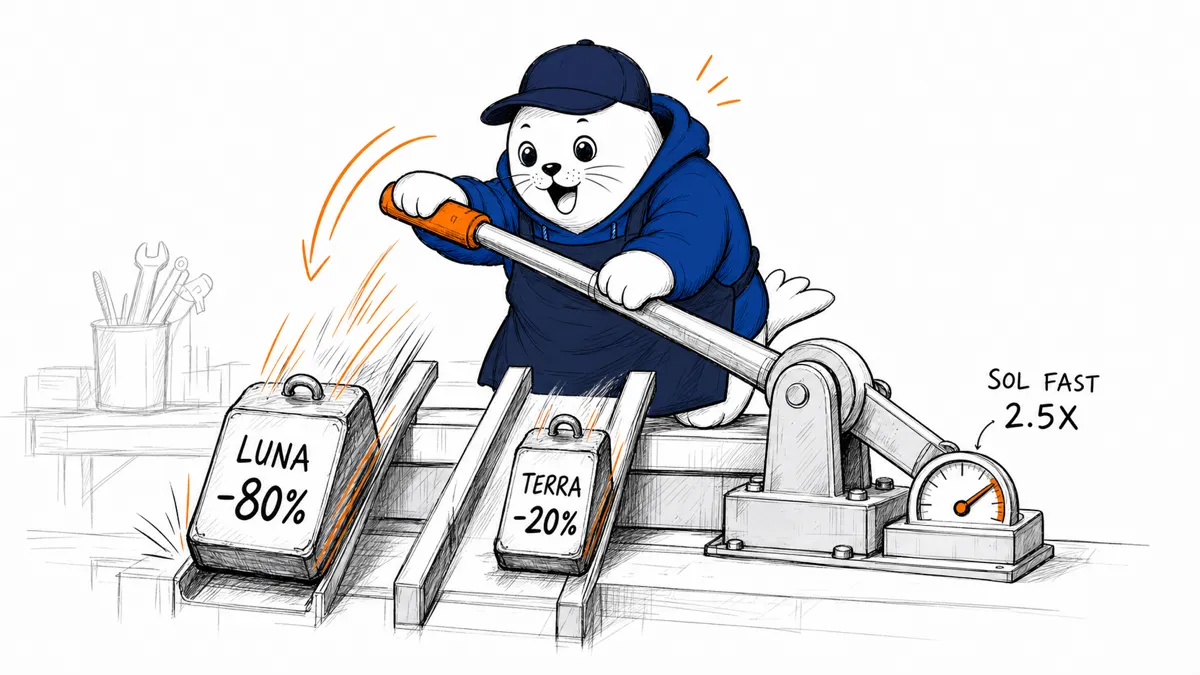
That preview arrives after a broader GPT-5.6 pricing change: Luna became 80% cheaper, Terra fell 20%, and Sol gained a paid Fast mode. The result is not one simple price cut. It is a routing menu with different tradeoffs for batch work, interactive work, and latency-critical jobs.
Ultrafast adds a third latency route
| GPT-5.6 Sol tier | Advertised speed | Price status | Availability |
|---|---|---|---|
| Standard | Baseline | Normal API price | General API route |
| Fast | Up to 2.5× Standard | 2× Standard price | API and supported Codex surfaces |
| Ultrafast preview | Up to 14× Standard; up to 750 output tokens/second | Not publicly disclosed | Select API customers; capacity expands later |
Ultrafast is not a general-availability replacement for Fast. It is a separate limited preview. Until OpenAI publishes price, region, quota, and workload details, the only responsible cost comparison is an instrumented customer test.
Luna’s price fell by 80%
OpenAI reduced GPT-5.6 Luna input pricing from $0.25 to $0.05 per million tokens and output pricing from $2.00 to $0.40. That is an 80% reduction on both meters. For high-volume classification, extraction, routing, and simple transformations, Luna is now the clearest cost change in the family.
A request with 10,000 input tokens and 2,000 output tokens now costs about $0.0013: $0.0005 for input and $0.0008 for output. One million identical requests would cost about $1,300 before caching, tool use, retries, or platform charges.
Terra is 20% cheaper, but the routing question stays the same
GPT-5.6 Terra input pricing fell from $2.50 to $2.00 per million tokens, while output fell from $15 to $12. That is a 20% cut. Terra still sits between Luna and Sol, so the useful test is whether its higher acceptance rate offsets its higher per-attempt cost.
Our GPT-5.6 tool-loop guide explains why programmatic tools, subagents, retained reasoning, and compaction can change the bill even when the model price stays fixed.
Fast and Ultrafast sell time, not lower token cost
Fast charges twice the Standard price for up to 2.5 times the speed. That can be rational when a developer is waiting on a coding loop, a customer is watching an agent work, or a revenue-critical workflow has a strict deadline. It is harder to justify for offline summarization, overnight analysis, or background enrichment.
Ultrafast pushes that latency tradeoff further. The Cerebras-backed preview may be valuable for interactive agents or large coding loops, but "up to 14×" is a ceiling, not a service-level guarantee. Queueing, prompt length, reasoning effort, tool latency, and output length can all narrow the observed gain.
Use one test to compare all three routes
- Choose at least 50 production-shaped tasks with clear acceptance rules.
- Run Standard, Fast, and (if you have access) Ultrafast with the same prompt, tools, reasoning level, and output cap.
- Record time to first token, total wall time, tokens, retries, tool calls, errors, and reviewer intervention.
- Calculate cost per accepted task and the value of time saved.
- Route only the jobs whose saved time is worth the premium.
This is also why we recommend a production-shaped test in our guide to choosing an AI model. A faster trace can still be a worse business result if it fails more often or requires more review.
ChatGPT subscriptions are a separate meter
API prices do not change what a ChatGPT subscription includes. A flat monthly plan and metered API usage solve different problems. Teams should keep subscription seats, API spend, and premium latency tiers as separate budget lines.
My verdict: buy speed only where waiting is expensive
Luna’s 80% cut is the strongest immediate saving. Terra’s 20% reduction is useful but still needs a quality comparison. Fast is a paid latency tool. Ultrafast may become a more dramatic one, but a limited preview without public pricing is not yet a procurement decision.
Read the primary record
- Read OpenAI’s Ultrafast preview announcement.
- Check the current OpenAI API pricing page.
- Review OpenAI’s GPT-5.6 launch documentation.
Updated August 13, 2026. Speed claims and current prices are attributed to OpenAI. Cost examples are Musthave.ai calculations and exclude caching, tools, retries, and other charges.