“Agentic AI” is everywhere right now, wrapped in enough jargon to make it sound like magic or a threat. It’s neither. Strip away the buzzwords and the idea is simple, and once you get it, you can tell the genuinely useful products from the marketing in about ten seconds.
The plain-English definition
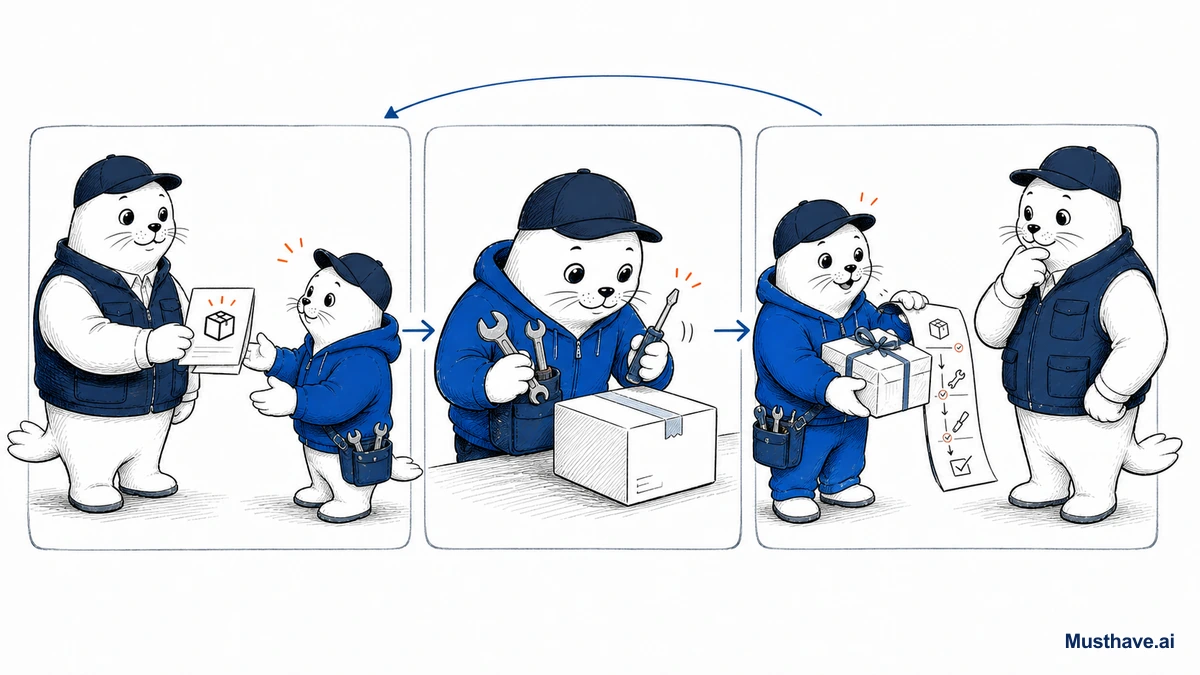
Here’s the whole concept in one line: a regular AI answers; an agent acts. A normal chatbot responds to your question and stops. An agent takes steps to actually complete a task, using tools, doing several things in sequence, and deciding what to do next along the way.
An analogy: a regular AI is like asking a knowledgeable friend for directions. An agentic AI is like handing someone your car keys and saying “go pick up the order”, they’ll drive there, handle the steps, and come back done. More useful, and obviously more you need to trust them.
The three ingredients that make something “agentic”
When a product claims to be agentic, it should have three things. If it doesn’t, it’s just a chatbot with a fancier label.
- Tool use: it can actually do things (search the web, run code, edit a file, send a request, use an app) not just talk about them.
- Multiple steps: it can carry out a task that takes several moves, not a single reply.
- Decision-making: it can figure out the next step toward a goal, adjusting as it goes.
Booking-a-trip is the classic example: an agent searches flights, compares options, checks your calendar, and drafts an itinerary, multiple tools, multiple steps, decisions along the way. That’s agentic. “Write me a poem” is not.
The questions that cut through the hype
Here’s the practical part. When a company tells you their product is “agentic,” don’t nod along, ask four boring questions that marketing hates:
- What tools can it actually call? (Vague answers mean vague capability.)
- What needs my approval before it happens? (You want a yes/no on consequential actions.)
- Where do the logs live? (You need to see what it did.)
- What happens when it fails halfway through? (Because it will, sometimes.)
Marketing adjectives are free. Observability (being able to see and supervise what the agent does) is the actual product. A tool that can’t answer these clearly isn’t advanced; it’s a liability wearing a trench coat.
What to ignore
Now the hype to tune out. Ignore the breathless “fully autonomous AI will run your entire business while you sleep” pitch. That’s mostly fantasy, and where it’s not fantasy, it’s reckless. Real agentic AI in 2026 is genuinely useful for bounded, supervised tasks, but “point it at your company and walk away” is a great way to get an expensive, confidently-wrong mistake.
Also ignore anyone using “agentic” as a synonym for “good AI.” It’s a specific capability (act, multi-step, decide), not a quality rating. Plenty of excellent AI tools aren’t agentic at all, and that’s fine.
The bottom line
Agentic AI just means AI that takes action to complete tasks, using tools across multiple steps. It’s a real and useful shift, but the version worth adopting is the supervised kind, where you can see what it’s doing, approve what matters, and catch it when it stumbles. Judge these tools by transparency and control, not by how autonomous they claim to be. Do that, and the jargon stops being intimidating and starts being a simple checklist.
The red flags in ‘agentic’ marketing
Here’s a quick lie-detector for agentic product claims. Be skeptical whenever a pitch promises full autonomy with no mention of oversight, can’t tell you plainly which tools the agent can actually call, hides where the logs live, or leans on “agentic” as a synonym for “advanced.” Genuine agent products are eager to show you the approval steps and the run history, because that transparency is the selling point. Vague ones sell the fantasy of walking away while the AI runs your life. The tell is simple: real agents show their work; hype agents just ask for your trust.
What would you actually trust an AI agent to do for you, and what would you never hand over? Tell me where your line is in the comments.
Verification sources and related guides
Primary reference: OpenAI practical guide to building agents. This is an official provider source. Treat performance, adoption, and product claims as company-reported unless the article identifies an independent check.