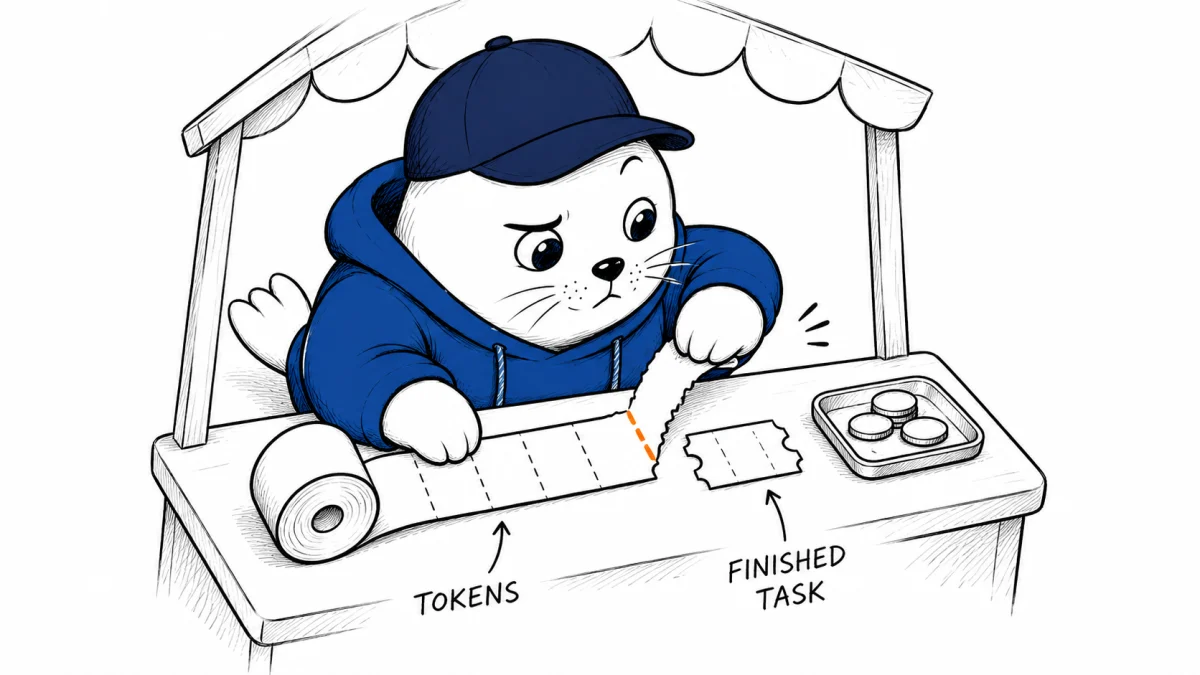
The cheaper model depends on the job, the token count, and which price you use for the comparison.
Google introduced Gemini 4 Neon on November 18, with access rolling out through its API, Gemini for Business, Antigravity, and the Gemini app. The announcement lists Pro and Ultra access for the consumer app and Antigravity. The model accepts multimodal input and produces text, with a 1-million-token context window.
Price the same request twice
The Gemini API pricing page lists Neon at $3 per million input tokens and $15 per million output tokens. Thinking tokens count toward billed output. Cached input costs $0.15 per million tokens, and the current pricing documentation specifies implicit caching.
| Model and price period | One million uncached input tokens | 200,000 billable output tokens | Total |
|---|---|---|---|
| Neon | $3.00 | $3.00 | $6.00 |
| Carbon, introductory prices through November 30 | $2.00 | $2.00 | $4.00 |
| Carbon, standard prices from December 1 | $4.00 | $4.00 | $8.00 |
The example holds token counts constant and excludes taxes and separately billed tools. At those volumes, Neon costs 50% more than discounted Carbon and 25% less than Carbon’s standard rate. The promotion’s end date changes which comparison applies. The existing Carbon article explains the release and pricing period.
A completed task can use a different number of tokens
Artificial Analysis ran its own Neon evaluation. It reports a score of 61 at xhigh effort on its Intelligence Index. In that setup, Neon’s cost per task was $6.44, compared with $7.76 for Carbon at standard prices. The evaluator also reports that Neon used about 15% more output tokens per task.
Those figures describe a measured workload with specific effort levels. Our fixed-token example describes the tariff. Both are useful when deciding whether to switch. If a model completes a job in fewer attempts, a higher per-token rate can still result in a lower bill. If it writes a longer answer or needs more retries, part of a price advantage can disappear.
Keep the acceptance rule fixed
For a coding migration, save a small set of tasks with the repository revision and check that each patch must pass. Record all input, thinking, output, and tool charges, including failed attempts. Divide the total by the number of accepted patches. Compare elapsed time separately, using the same start and finish events for both models.
That is a proposed evaluation method. Google’s model card documents the release and limitations. Your own tasks, tool configuration, and review standards determine whether its published strengths help your workflow.

Abdessalam Alaoui
I'm Abdessalam Alaoui, founder of Musthave.AI. I write practical guides to AI models, tools, generative media.