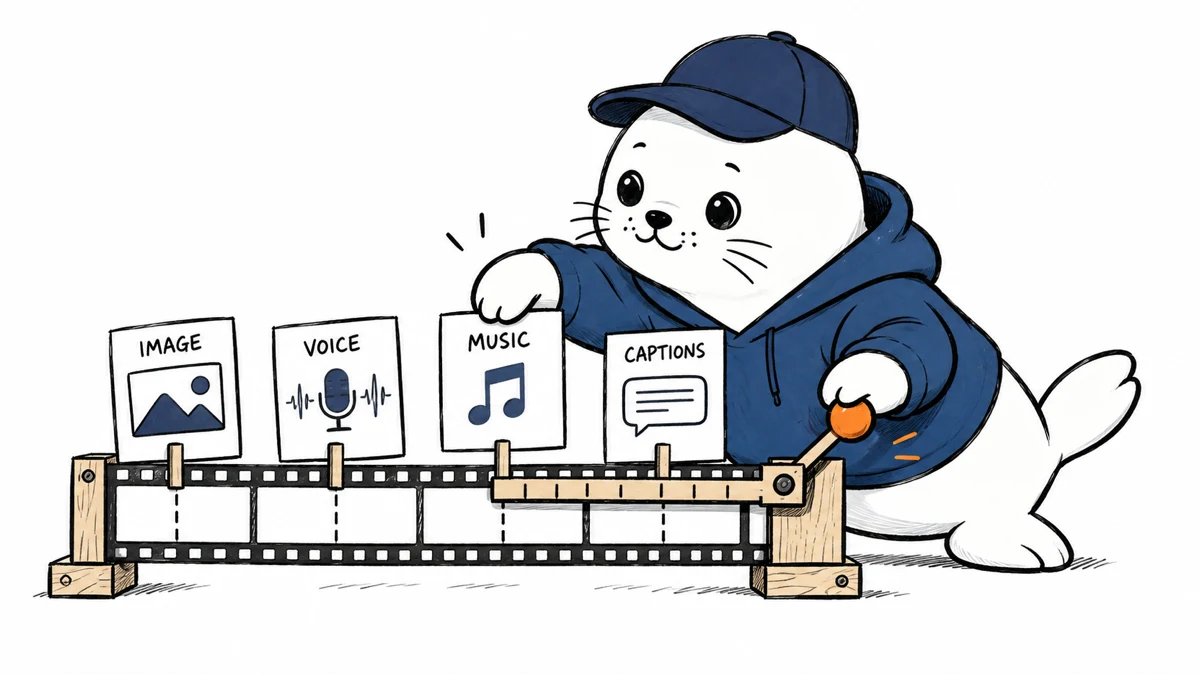
ElevenLabs Studio 4.0 puts video, images, voices, music, sound effects, captions and an editing agent inside one browser timeline.
ElevenLabs Studio 4.0 launched September 21, 2026. It expands the company’s long-form audio workspace into a multimodal editor where creators can generate media, align clips and ask an agent to draft or revise a project. The important limitation is equally clear: Studio remains a web product, and ElevenLabs says there is no Studio API.
What Studio 4.0 adds
| Capability | How it works | What to verify |
|---|---|---|
| Video and image generation | Create visual clips inside the project | Model availability, credit cost and commercial terms |
| Voice, music and effects | Generate audio without leaving the timeline | Licensing, pronunciation and loudness consistency |
| Studio Agent | Drafts projects and applies requested edits | Every cut, asset and factual claim |
| Frame analysis | Uses visual content to inform edits | Scene interpretation and timing errors |
| Captions | Creates and synchronizes text tracks | Names, numbers, jargon and reading speed |
The agent drafts, but the timeline remains editable
Studio Agent can turn a prompt into a first cut, analyze frames and change a project through chat. ElevenLabs also preserves manual editing controls. That combination matters because an agent can accelerate assembly without becoming the final authority. A creator can inspect the timeline, trim a clip, move narration, replace an asset or correct a caption.
The strongest workflow is staged: let the agent create a draft, then review the project track by track. Our Higgsfield API guide covers the opposite integration model, where developers orchestrate media models from code rather than editing inside one hosted workspace.
A practical five-pass review
- Story pass: confirm the opening, claim order and ending before polishing.
- Visual pass: check that generated frames match the narration and do not introduce false details.
- Audio pass: normalize voice, music and effects so dialogue stays intelligible.
- Caption pass: verify names, numbers, technical terms and line breaks.
- Rights pass: document the source and permitted use of every imported or generated asset.
This order avoids spending credits on a polished scene that the story pass later removes. It also makes error ownership visible: the agent can suggest edits, but the publisher remains responsible for accuracy, rights and final output.
Studio 4.0 pricing uses more than one meter
ElevenLabs says Studio Agent is available across plans. Agent chat consumes agent tokens, while generated media uses the platform’s standard credit system. The effective project cost therefore depends on both conversation length and the selected voice, image or video operations. Free exports can carry a video watermark; paid plans remove it according to the launch information.
Before a team commits, build a small cost sheet with agent tokens, video seconds, image generations, speech characters, music duration and regeneration rate. A cheap first generation can become expensive when the acceptance rate is low.
There is no Studio API
ElevenLabs documentation describes Studio as web-only and says it does not expose an API. Developers can use separate ElevenLabs APIs for voices and other media capabilities, but they should not design an automated production pipeline around undocumented Studio controls. The distinction is important for agencies that need repeatable rendering, approvals or batch publishing.
For an API-first comparison, see our Runway Enhance API cost guide, which separates the visual quality decision from the programmatic integration decision.
Documentation still has a version-label mismatch
The launch post calls the release Studio 4.0, while parts of the product documentation reviewed on September 22 still refer to Studio 3.0. That can happen during a staged documentation update. For version-specific claims, the dated launch post is the stronger source; for workflow and access instructions, confirm the live product documentation.
Who should test Studio 4.0
- Solo creators who want one workspace for draft, voice, music, visuals and captions.
- Editorial teams that need a visible timeline and manual takeover after an AI draft.
- Podcast and audiobook teams adding video or social cuts to existing audio work.
- Not a direct fit for teams that require a supported end-to-end Studio API.
For a fair pilot, use one 60-second project and one five-minute project. Record the original prompt, selected media models, total credits, agent tokens, regeneration count, editing time and final export status. Ask a second reviewer to check factual claims and asset rights without seeing which steps were generated. The resulting acceptance rate will say more about production value than a polished demo created by the vendor.
Primary sources
Checked September 22, 2026. Feature access, credits and watermark rules can change by plan and region.