

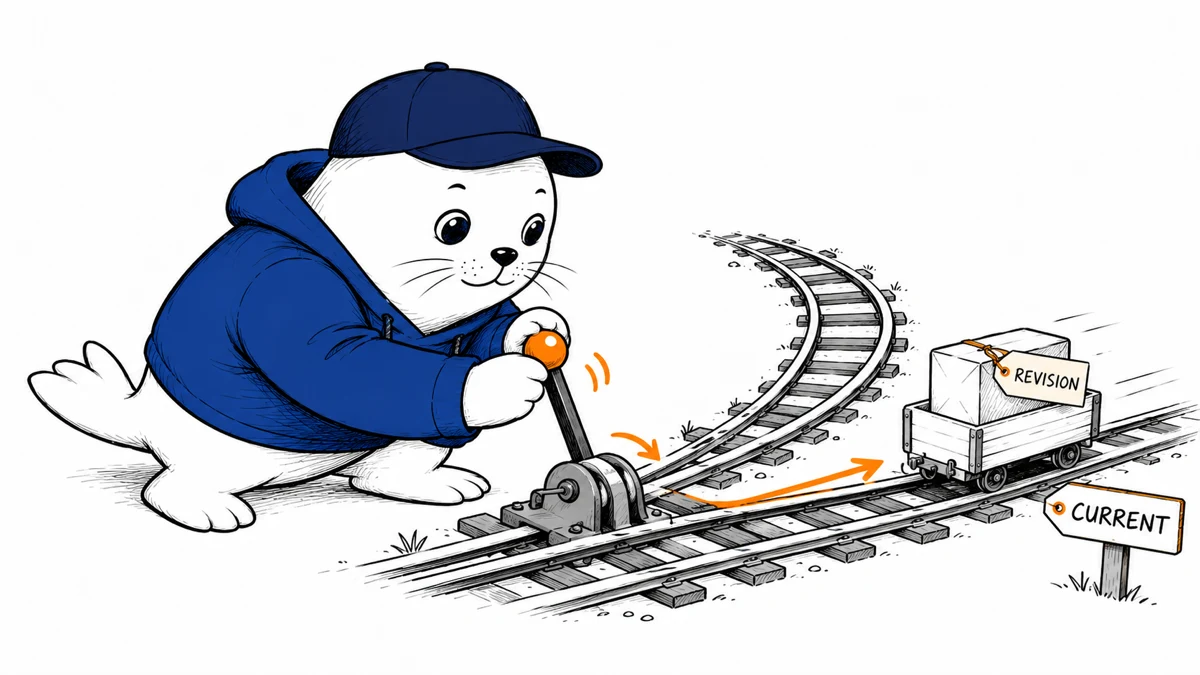
A checkpoint revision, an API alias, and a provider’s training pool are different records. Check all three before changing a production workflow.
October 20 update: Workers AI adds a provider route
Cloudflare’s October 19 release makes DeepSeek V4.1 Flash 1017 available on Workers AI. It requires Workers Paid billing or prepaid AI Gateway credits.
The release lists a 1,048,576-token context window, vision, and function calling. Reasoning defaults to high effort, with low, max, and none settings available. Default rate limits are 20 requests per minute with standard billing and 50 with prepaid credits.
The Workers AI model page lists $0.30 per million input tokens, $1.20 per million output tokens, and $0.006 per million cached input tokens. These are Cloudflare’s published rates. Do not apply the native DeepSeek off-peak discount to a different provider.
Before changing endpoints, save the provider, model identifier, reasoning setting, and observed token usage. Compare the same accepted tasks through each route. Native API limits and Fireworks training limits remain separate from this deployment.
Provider information checked October 20, 2026. The earlier native API and training guidance follows below.
October 19 update: the API points to revision 1017
The official 1017 checkpoint has an October 17 release commit and MIT-licensed weights. Its benchmark results are DeepSeek’s evaluations; we have not independently reproduced them.
The current API pricing page maps deepseek-flash to DeepSeek-V4.1-Flash-1017. The legacy deepseek-v4-flash and deepseek-v4-flash-vision-exp names remain accepted, but requests use 1017 and Flash pricing.
Current Flash token rates
As of October 19, Flash prices per million tokens are:
- Cache-hit input: $0.006 peak and $0.003 off-peak.
- Cache-miss input: $0.30 peak and $0.15 off-peak.
- Output: $1.20 peak and $0.60 off-peak.
Peak windows are 01:00–04:00 and 06:00–10:00 UTC on weekdays, excluding Chinese public holidays. Other times are off-peak. The documentation lists a one-million-token context window and vision support.
For a cost estimate, separate cached input, uncached input, and output. A low cache-hit rate cannot price a request whose prefix changes. Check your usage records before assuming a long repeated prompt receives the cached rate.
Fireworks’ migration concerns a training pool
The October 18 Fireworks changelog adds 1017 to shared Serverless LoRA Training, with a maximum 262K context. It does not add this checkpoint to Managed Training or the Dedicated Training API.
Fireworks says the older V4 Flash 0731 model leaves that Serverless Training pool on November 2. This is a provider-specific training change, not a statement that all inference services retire the model on that date.
Keep the training limit separate from DeepSeek’s native API context. A checkpoint’s advertised capacity does not override the limit of a particular provider operation.
Review a revision with the same accepted tasks
I would keep a small set of prompts with known answers, plus representative tool calls and images where relevant. Save the requested alias, provider, date, and available response metadata beside each result.
- Compare accepted answers and failed tool calls.
- Record token categories and total cost per accepted task.
- Check output length and time spent reviewing it.
- Verify training-job compatibility before the provider’s deadline.
This update replaces the earlier version and routing guidance while retaining the article’s URL. It does not claim that the latest checkpoint will improve every task.
Our Muse Spark Open deployment guide covers full-model hardware planning. The Beam release update separates downloadable weights from hosted access.
Read the sources and plan your next step
- DeepSeek 1017 model card and evaluation record
- Current Flash mapping, rates, and time windows
- Fireworks Serverless Training support and migration
Which alias and provider operation does your application actually use?
Checked October 19, 2026. This is source-based reporting and analysis; proposed checks are not hands-on test results.