
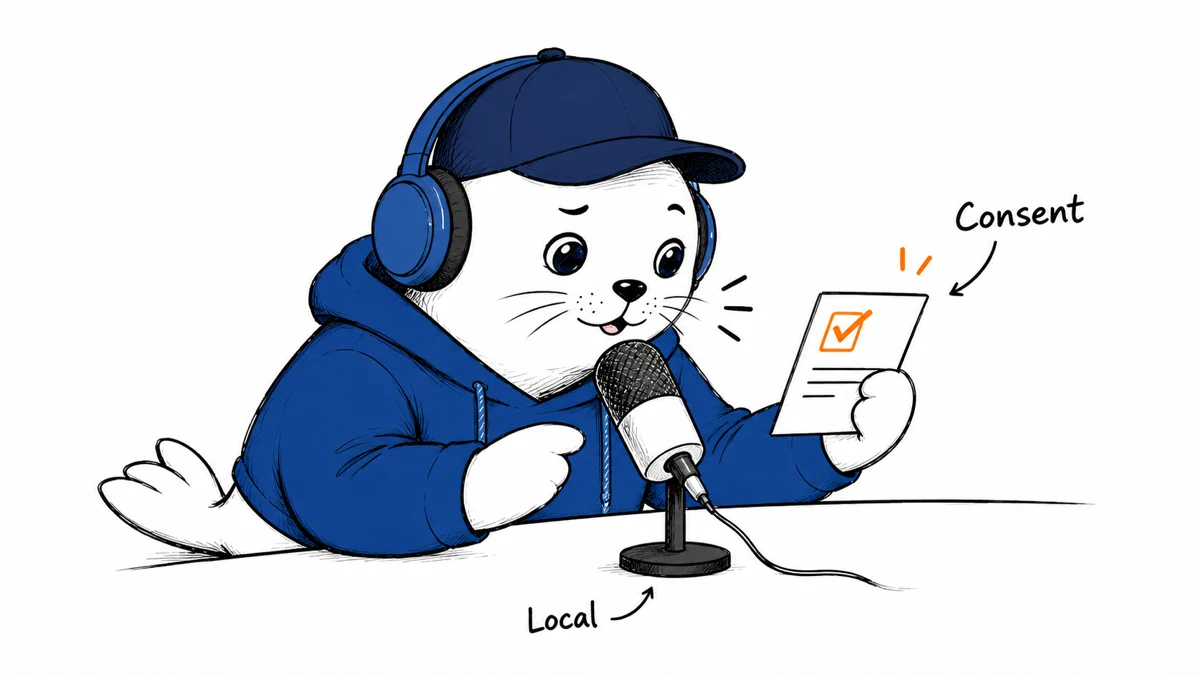
A local voice tool can reduce dependence on an online editor. The voice, model, and final recording still need a clear permission record.
Start with the current application and engine
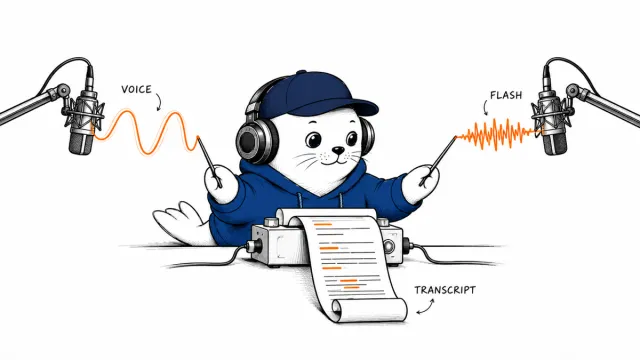
VoiceStudio’s repository describes local workflows for speech generation, transcription, and dubbing. It specifies an Electron application and states that the older Tauri application has been retired. The repository appeared in GitHub Trending during our October 13 scan; this article does not establish a new launch date.
The application uses AGPL-3.0. The README distinguishes those application terms from the conditions for model weights, tokenizers, voices, and generated output. Review the exact engine and asset you plan to use before a commercial project.
Keep a permission record for the voice
For a proposed trial, use your own recording or material whose owner has authorized this use. Record the permission scope beside the source file. A software license alone does not establish permission to reproduce a person’s voice.
Choose one engine and one short script. Preserve the original text, model version, and settings. Avoid comparing an output from one engine with a quality claim made for a different engine inside the same application.
- Confirm permission for the source recording.
- Save the selected engine and model terms.
- Choose a short script with difficult names and numbers.
- Check pronunciation and missing words.
- Record generation and correction time.
- Inspect the final export in the intended player.
Judge the final recording at its destination
For a narration trial, compare every spoken word with the script. For dubbing, check whether timing changes the meaning or cuts a sentence. Keep a listener’s correction log so the cost of cleanup remains visible.
Measure the hardware used and whether generation completes without exhausting memory. The repository’s broad language claims do not establish equal quality across languages. We have not tested the application, its installers, or those claims.
Our synthetic-content transparency guide covers disclosure questions. The watermark guide explains the limits of an origin check.
Use one permitted recording to decide the next step
I would compare the time to produce a finished minute of usable audio, including cleanup time, with the existing workflow. Which part requires the most correction: names, timing, or the voice itself?
Repository and application license checked October 13, 2026. This is an evaluation plan, not a hands-on audio review or legal determination.