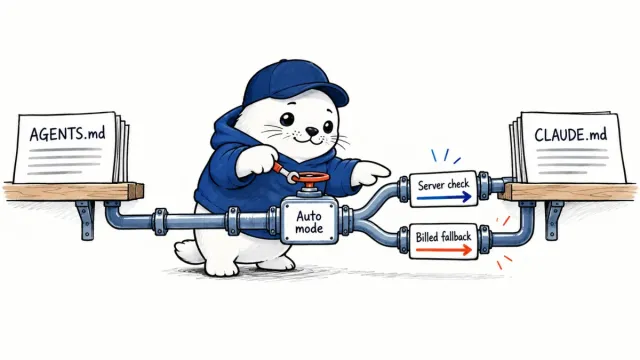

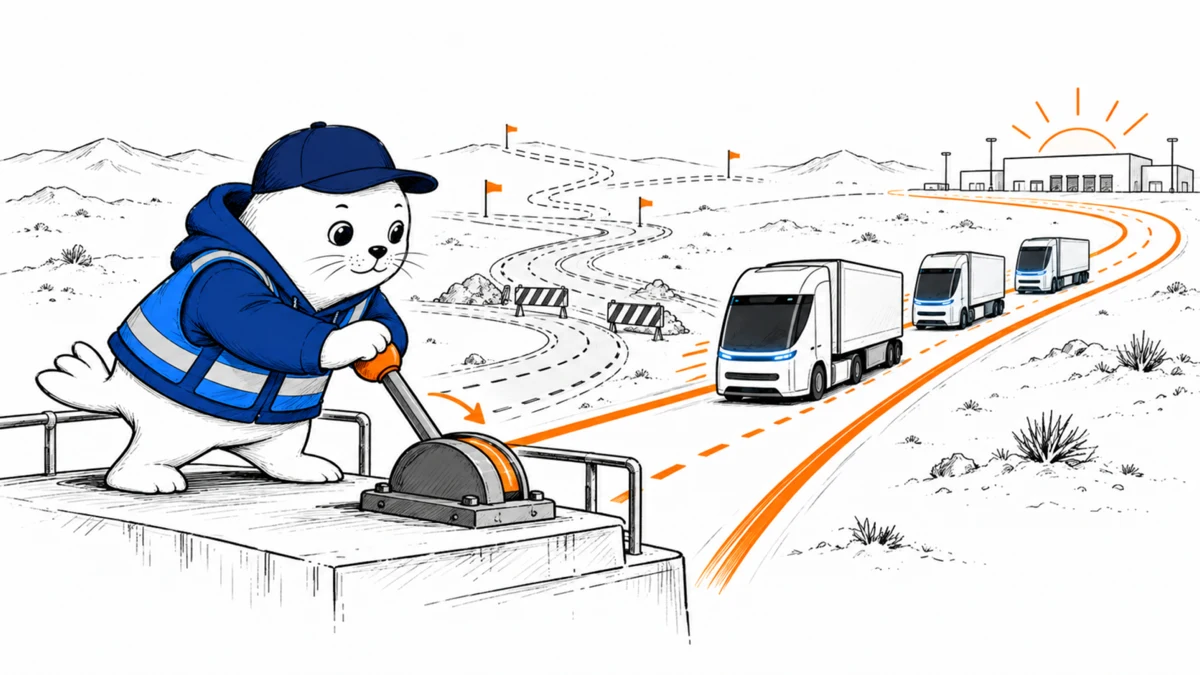
The headline number is thousands of autonomous trucks. The harder question is what has to happen on the road, at the depot and inside the operating rules before that number becomes real.
Applied Intuition and HUMAIN have announced a strategic collaboration to deploy thousands of autonomous trucks along Saudi Arabia’s logistics corridors by 2030. The companies describe a network that could later expand into robotaxis, manufacturing and agriculture.
This is a deployment target, not a fleet count
The announcement is forward-looking. It does not say that thousands of trucks are already operating, identify a first public route or provide an audited deployment schedule. Readers should treat 2030 as the goal against which later milestones can be checked.
That distinction matters for autonomous-vehicle news. A technology partnership, a corridor trial, a safety-driver operation and a commercial driverless service are different stages. Combining them into one “deployed” number makes progress impossible to evaluate.
A corridor is more than a line on a map
Long-haul corridors can be a practical starting point because routes repeat and depot operations can be standardized. Saudi conditions also introduce demanding cases: intense heat, glare, dust, roadwork, mixed traffic and long distances between support locations.
A viable network therefore needs more than the driving stack. It needs mapped operating domains, inspection and cleaning procedures for sensors, high-temperature hardware validation, remote-assistance rules, roadside recovery, secure connectivity and a clear handoff when the automated system exits its approved conditions.
The milestones that would make the 2030 claim testable
| Milestone | Evidence to look for |
|---|---|
| First corridor named | Endpoints, distance, road class and freight partner |
| Operating design domain defined | Weather, visibility, speed, construction and traffic limits |
| Pilot fleet starts | Truck count, safety-driver policy and hours or kilometers |
| Driverless authorization | Regulator, permit scope and remote-assistance rules |
| Commercial expansion | Paying routes, utilization, interventions and incident reporting |
| Thousands-scale network | Active vehicles, route coverage and availability, not purchase orders alone |
The safety denominator cannot be optional
A raw incident count is not enough. The useful denominator is exposure: autonomous kilometers, road type, weather, load condition, time of day and the frequency of remote or onboard human intervention. A system can report zero serious incidents and still be uninformative if it operated for a small number of easy kilometers.
For a practical comparison, track disengagements caused by perception, planning, hardware and operations separately. Also publish recovery time after a disabled vehicle blocks a corridor. Safety covers the rest of the logistics system as well as the moments when the truck is moving.
The business case needs a denominator too. Report loaded kilometers, empty repositioning, depot dwell time, remote-assistance minutes and vehicle availability. Removing a driver from one leg does not create savings if the truck waits longer for inspection, loses payload to extra hardware or needs a large remote-operations team. Compare the complete route cost with the current human-driven operation, including insurance and recovery, not with an idealized truck that is always moving.
That operating record also tells shippers whether the service is reliable enough for contracts. A route can be technically driverless and still miss delivery windows too often for commercial use.
Why the partnership could extend beyond trucking
Applied Intuition provides vehicle intelligence and simulation tools. HUMAIN is building AI infrastructure and programs in Saudi Arabia. The combination could support other physical systems where simulation, data and localized operations matter, which is why the announcement mentions robotaxis, manufacturing and agriculture.
The evidence bar should stay domain-specific. Success on a highway freight corridor does not prove a robotaxi is ready for dense urban streets or an agricultural machine is ready for unstructured terrain. Our report on Gemini Robotics 2 explains why one successful action does not describe the whole job. The Figure Helix 2.5 evaluation shows the same problem in unfamiliar homes.
What I would watch next
The collaboration is worth following because the target is large and the operating environment is specific. The next credible update should name a corridor, define the automated operating domain and publish a pilot denominator. Until then, this is an ambitious plan with relevant partners, not proof that a driverless freight network is already in service.
Read the primary record
Checked September 19, 2026. Partnership scope and the 2030 target come from Applied Intuition. The milestone framework and reporting tests are MustHave.ai analysis.