
Anthropic is testing a way to give qualified life-science teams broader Claude access without treating every research request as equivalent. The program changes who may ask, what safeguards remain and how long elevated access lasts.
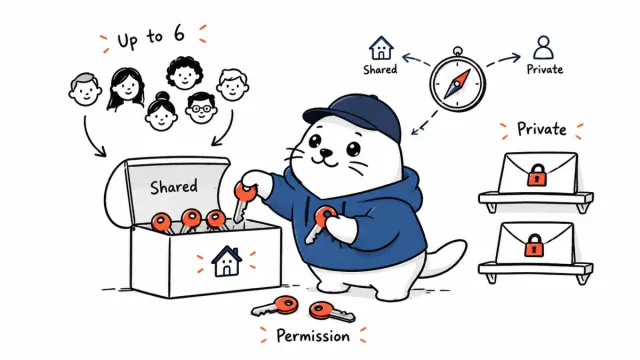
The beta Anthropic Verification Program is open to eligible teams and institutions. It covers Mythos 5.1, Opus 5 and Sonnet 5 through Anthropic’s first-party API console and Enterprise or Team plans. Individual accounts and third-party access paths are excluded.
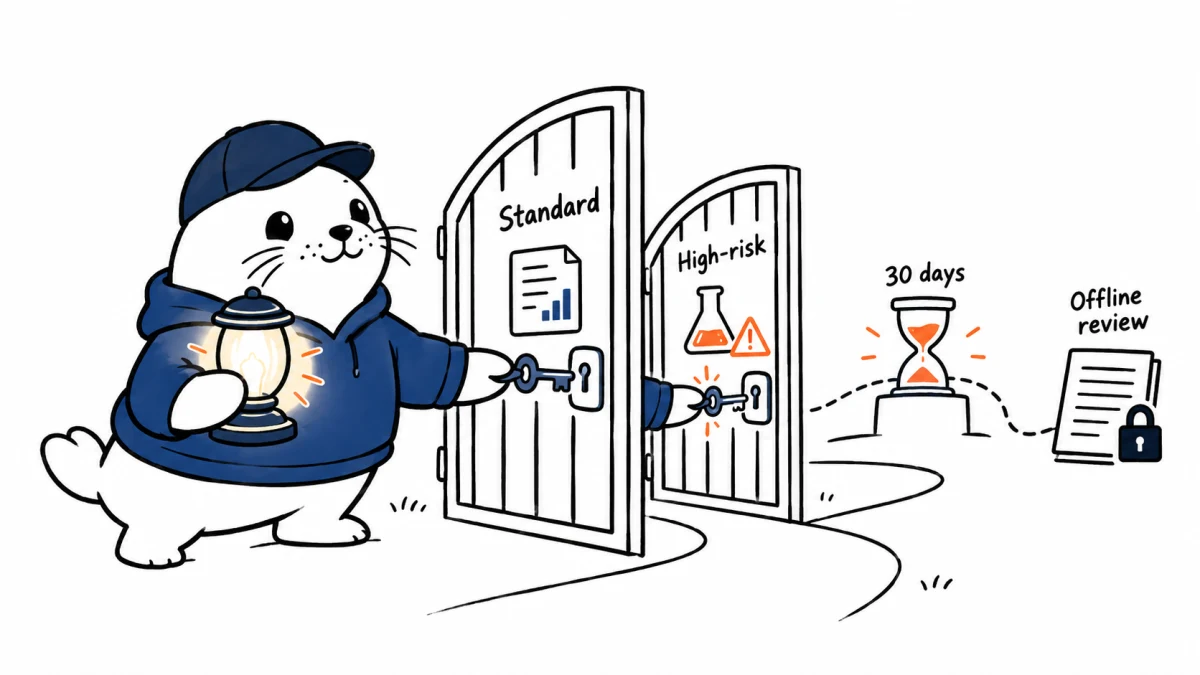
The two access tracks solve different problems
| Track | Approval unit | Duration | Important boundary |
|---|---|---|---|
| Standard | Eligible team or institution | Annual grant | Ordinary product safeguards and use policies remain. |
| High-risk | A named project after review | Six months before renewal | Biology-request blocks may be removed, but other safeguards still apply. |
This means a verified organization does not receive a permanent blanket exception. The high-risk path follows the project, and renewal creates a new review point. Teams should map every approved project to owners, datasets, systems and an expiry date.
High-risk access is not unrestricted access
Anthropic says approved high-risk projects can have biology request blocks removed. It does not say that safety policies, security requirements or other product controls disappear. A team should document exactly which block was changed and avoid describing verification as a general waiver.
The practical control is a project-scoped credential and workspace. Do not share the same key across approved and unapproved work. Apply budget, tool and data boundaries independently, because a more capable response can still trigger a risky downstream action.
What Anthropic says about monitoring data
Anthropic describes offline monitoring for the program. It says monitoring data is compartmentalized, retained for 30 days, not used to train models and unavailable to Anthropic life-science researchers. These statements narrow secondary use, but administrators still need to decide whether their own material is appropriate for the service.
- Retention: record the 30-day monitoring period in the project data map.
- Access: confirm who in the customer organization can inspect prompts and outputs.
- Deletion: distinguish service monitoring retention from copies in customer logs or connected tools.
- Incident response: define who is notified if a request is blocked or flagged.
The PHI and BAA boundary is explicit
Anthropic says the beta does not support BAA organizations. Protected health information should be handled in a separate organization that has the required agreement and configuration, not routed through this non-BAA beta. Verification for biological research does not create HIPAA eligibility.
That distinction is easy to miss when a life-science project includes clinical material. De-identification, consent and contractual controls must be established before any prompt is sent. If the team cannot prove the data is appropriate, the safe default is not to upload it.
Renewal should be an evidence review
A six-month renewal should not become an automatic calendar task. Review what the project actually asked, which tools it reached, whether safeguards interrupted risky work and whether the scientific objective changed. Remove access when the approved experiment ends, even if the credential technically remains valid. That closes the gap between a paper approval and a living research program.
A governance checklist for applicants
- Name the scientific objective and risk class. Avoid a broad request covering unrelated future work.
- Separate credentials by project. Make expiry and renewal enforceable rather than calendar reminders.
- Limit tools and data. Verification changes model access, not downstream authorization.
- Log human review. Record who accepts an experimental design or operational recommendation.
- Plan for the end date. Decide what happens to workflows, keys and stored outputs if renewal is denied.
How this fits Anthropic’s lab strategy
The program sits beside Anthropic’s broader effort to connect models with scientific workflows. Our report on the Model Hardware Standard for lab agents covers equipment integration. The analysis of Claude science claims and protein binders shows why experimental evidence must remain separate from model fluency.
The bottom line
Anthropic has created a reviewable route for sensitive life-science work, not a universal research pass. The strongest design choice is the project-level, six-month high-risk approval. Its value depends on customers matching that boundary with separate credentials, explicit data rules and a real renewal decision.
Read the primary record
Checked September 18, 2026. Product details and reported results come from the linked first-party sources. Interpretation, limitations and implementation advice are MustHave.ai analysis.