Vercel has added Mem0 to its Marketplace, giving developers a one-click way to add persistent memory to AI agents. The integration provisions a scoped Mem0 project, injects a MEM0_API_KEY and places billing on the Vercel invoice.
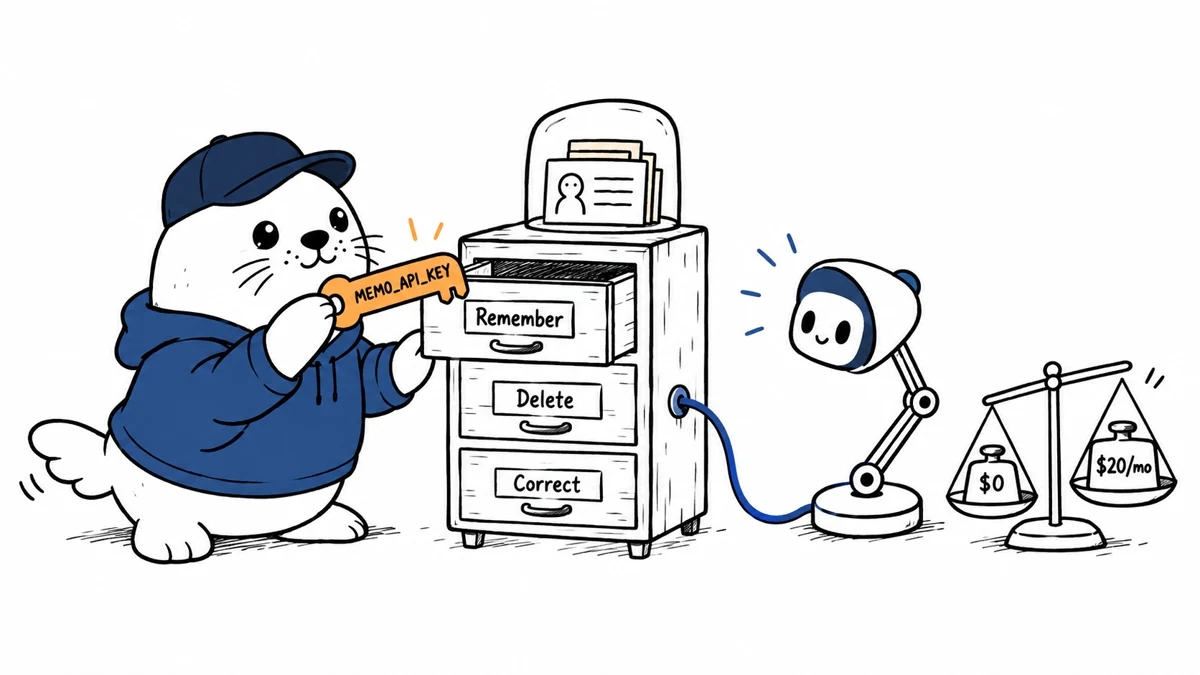
The Marketplace listing shows a free plan and a $20 monthly plan, and Vercel says the integration is available across its plans. Convenience is the headline. The engineering decision is what an agent should be allowed to remember, correct and delete.
What the Vercel Mem0 integration automates
| Setup step | Marketplace behavior | Team responsibility |
|---|---|---|
| Create memory service | Provisioned as a scoped Mem0 project | Choose environment and owner |
| Connect application | MEM0_API_KEY injected | Protect scope and rotation |
| Pay for service | Integrated Vercel billing | Set usage and budget alerts |
| Store memories | SDK and API provide memory operations | Define consent, retention and deletion |
Persistent memory changes the threat model
A stateless assistant can make a bad inference once. A memory system can preserve that inference and use it in later sessions. It can also retain a sensitive fact after the user expects it to be gone. That makes memory provenance and deletion first-class product features, not maintenance details.
- Store the source, timestamp and subject with each memory.
- Separate user-stated facts from model-inferred preferences.
- Give users a readable memory view and deletion path.
- Expire low-confidence or time-sensitive facts.
- Resolve contradictions instead of silently keeping both.
A five-message acceptance test
- Tell the agent a harmless preference and confirm it is remembered in a new session.
- Change the preference and verify the old value is superseded.
- Ask why the agent believes the current value and inspect provenance.
- Delete the memory and confirm it disappears from storage and behavior.
- Use a second account and verify the memory cannot cross the user boundary.
This small test catches the most important failure classes before teams optimize retrieval quality. It also creates a reproducible regression suite for SDK or model changes.
Free and $20 plans need workload context
A plan price does not reveal the cost per useful remembered interaction. Teams should model write volume, retrievals per turn, retention period, vector or model processing and the number of environments. The useful comparison is cost per active user after deletion, correction and support work, not the sticker price alone.
Why Marketplace provisioning still needs infrastructure discipline
Automatic key injection removes copying, but it does not decide whether preview deployments should share production memory. Use separate projects or namespaces for development, preview and production. Rotate credentials, block secrets from client bundles and document what happens when the integration is removed.
The broader agent context stack
Persistent memory complements, rather than replaces, project context. Our guide to Cursor Projects and persistent context examines repository-level state, while AWS AgentCore and MCP apps covers tool access. A production agent may need all three layers, each with a different authority and retention policy.
The practical verdict
Vercel Mem0 removes meaningful setup friction and gives developers a fast path to durable agent memory. Teams should use that speed to test memory controls sooner, not to skip them. A useful launch gate requires user isolation, provenance, contradiction handling, export and verified deletion.
Primary sources
Checked September 16, 2026. Pricing and provisioning details reflect Vercel’s current listing and can change.