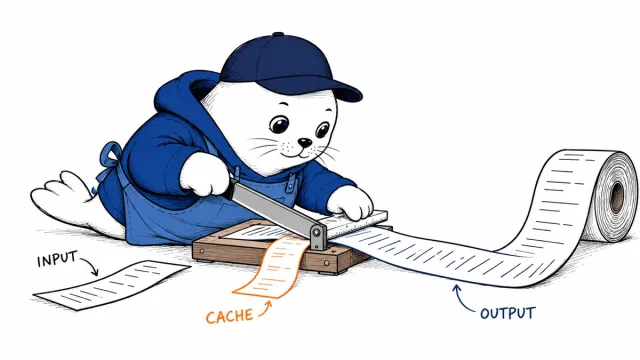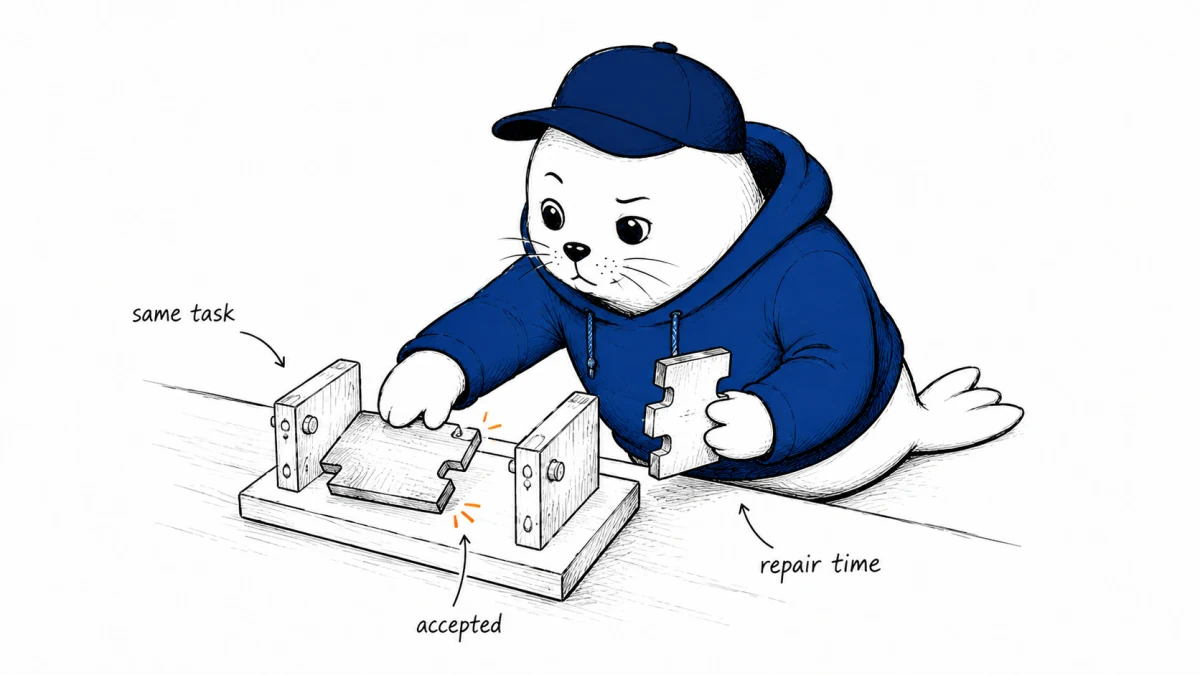
You can give two coding agents the same repository, pay the same headline token price, and still get very different bills and review workloads. Codex with GPT-6 Astra and Claude Code with Fable 5.1 make that distinction worth checking before you move your projects.
September 20 update: portable instructions and auto mode
Claude Code 2.1.277 now reads AGENTS.md when a repository has no CLAUDE.md. This is a fallback rule, not a promise that both files merge or that every project-instruction behavior now matches Codex. Anthropic also changed eligible auto-mode sessions in version 2.1.278 to use a server-side classifier with no separate classifier overhead; unsupported gateway or provider routes can fall back to billed classifier requests. See our focused Claude Code AGENTS.md and auto mode billing guide for the precedence table, provider limits and verification steps. Primary source: Anthropic’s Claude Code releases.
The short answer: choose the workflow, then qualify the model
My starting recommendation is simple. Shortlist Codex if you want coding, browser work and other project tasks in one desktop workspace. Shortlist Claude Code if your team already depends on its terminal workflows, hooks and reusable project automation. Both extend beyond those starting points. Neither should win your whole codebase without a trial.
The model economics are more specific. GPT-6 Astra and Claude Fable 5.1 both list $10 per million uncached input tokens and $50 per million output tokens. Fable has the lower cache-read rate. Astra applies a higher rate to the entire request once input exceeds 272,000 tokens. Those are documented API differences, not proof that Fable will cost less for every finished task. OpenAI model specifications, Claude model specifications.
This is a researched buying and workflow guide, checked September 5, 2026. We did not run a controlled coding benchmark, install extensions for this comparison, or measure either product’s speed. Recommendations below are editorial judgment based on documented capabilities. Calculations are labeled examples, not invoices.
ChatGPT, Codex, Astra and Claude Code are different layers
Codex is a coding-agent environment. Astra is a model it can use where available. OpenAI’s current documentation describes a ChatGPT desktop app with ChatGPT and Codex experiences, while the coding tools also have CLI, IDE and cloud surfaces. A feature in the desktop app does not automatically exist in the CLI. OpenAI desktop documentation.
Claude Code is Anthropic’s coding agent, available through terminal, supported IDE integrations, desktop and web. Fable 5.1 is one model choice, not a synonym for Claude Code. Ordinary Claude chat, a Claude Code terminal session and an API application can have different controls and billing. Claude Code overview.
| Layer | OpenAI route | Anthropic route | What to verify |
|---|---|---|---|
| Coding environment | Codex app, CLI, IDE or cloud | Claude Code terminal, IDE, desktop or web | The exact client and execution location |
| Requested model | GPT-6 Astra | Claude Fable 5.1 | Actual selected model, not the account default |
| Direct API identifier | gpt-6-astra | claude-fable-5-1 | Model returned in usage records |
| Billing | Subscription allowance or API route | Included allowance, usage credits or API route | Which account pays for this run |
| External capabilities | Approved tools and extensions | Approved tools and extensions | Credentials and permitted actions |
This layered view prevents a common purchasing mistake: buying access to an agent and assuming every model, integration and execution mode is included.
Check access before comparing subscriptions
OpenAI lists Plus at $20 monthly and Pro from $100 monthly. Its Astra estimates for local messages per five-hour period are 5–45 on Plus, 25–225 on Pro 5x and 100–900 on Pro 20x. These are estimates, not guaranteed message quotas. Local and cloud usage share allowance, and weekly limits may apply. Codex pricing and limits.
There is a consequential footnote: that same page says cloud chats on ChatGPT plans use GPT-5.6 Sol. It does not establish Astra availability across every Codex surface. Verify the model picker for the actual task rather than assuming a desktop Astra conversation and a cloud job are equivalent.
Claude Pro is $20 monthly or $200 annually; Max starts at $100 monthly. Those plan prices alone do not answer the Fable question. Claude subscription prices.
| Claude plan or seat | How Fable 5.1 usage is paid |
|---|---|
| Pro and standard Team seats | Usage credits from the start; not included in regular plan limits |
| Max and eligible premium Team or legacy seat-based Enterprise seats | Up to 50% of the regular shared weekly allowance can be used on Fable; then credits or another model |
| API or usage-based Enterprise | Usage-based billing under the applicable account terms |
The 50% figure is a cap within a shared allowance, not an extra half-plan. Anthropic also requires Claude Code 2.1.255 or later for Fable 5.1. Availability on a paid plan and inclusion in its base allowance are different promises. Fable plan rules.
Before paying, record the plan, billing identity, selected model, weekly limit and overage setting. If an employer pays for one route and your personal API key pays for the other, the comparison has already drifted.
What the model specifications actually tell you
| Direct API specification | GPT-6 Astra | Claude Fable 5.1 |
|---|---|---|
| Advertised context window | 1,050,000 tokens | 1,000,000 tokens |
| Maximum output | 128,000 tokens | 128,000 tokens |
| Model input and output | Text/images in; text out | Text/images in; text out |
| Reasoning controls | API effort from low through max; no none mode | Always-on adaptive thinking; high default |
| Uncached input / output per million | $10 / $50 | $10 / $50 |
| Cache read per million | $1 | $0.25 |
Sources: Astra model contract, Fable model contract, Astra model guidance.
The context window is capacity, not a promise that every file will receive equal attention. Tools, instructions, conversation history and outputs also need room. Your client can impose a smaller working context or compact history. A large limit does not remove the need for repository search and a clear task brief.
Nor are tokens a shared unit of useful work. Tokenizers differ. One agent may search three files while another rereads a directory. One may finish with a small patch while another spends output tokens explaining a failed approach. Use the table for capacity planning, then measure completed work.
Same base price, different bill: three useful examples
For Astra Standard API requests above 272,000 input tokens, the rates become $20 uncached input, $2 cached input, $25 cache writes and $75 output per million. The multiplier applies to the full request. Anthropic documents standard per-token pricing across the full 1M window for its current models. OpenAI API pricing, Claude long-context pricing.
| Illustrative single request | Astra Standard API | Fable 5.1 Standard API |
|---|---|---|
| 100K uncached input + 20K billed output | $2.00 | $2.00 |
| 300K uncached input + 20K billed output | $7.50 | $4.00 |
| 100K already-cached input + 20K billed output | $1.10 | $1.025 |
These are Musthave calculations using identical hypothetical token quantities. Billed output includes any billable reasoning tokens. The cached example excludes the earlier cache write. All examples exclude tool charges, taxes, regional premiums, retries and subscription accounting. Equal token quantities do not imply equal task quality.
At 300K input, Astra’s input costs $6 and its output costs $1.50. Fable’s input costs $3 and output costs $1. That $3.50 difference is worth knowing, but it is also the value of only 3.5 minutes of developer time at an assumed $60 hourly rate. A model that saves more repair time can justify a higher bill. A model that creates more review work can lose despite cheaper tokens.
For a closer look at the threshold, use our Astra pricing guide. In your own application, log the threshold crossing explicitly rather than discovering it from the monthly total.
Cheap cache reads do not mean a 75% cheaper project
Fable’s cache-read rate is 75% below Astra’s short-context rate. That percentage describes one billing category. It does not describe your whole workflow.
Consider a stable 100K-token prefix written once and successfully reused nine times. Use Astra’s $12.50-per-million write rate and Fable’s $12.50 five-minute write rate. Assume every read is eligible within the relevant provider’s cache rules. Fable also offers a one-hour cache write at $20 per million. OpenAI caching documentation, Claude caching documentation.
| Ten-call illustration | Astra | Fable 5.1 |
|---|---|---|
| One 100K-token cache write | $1.25 | $1.25 |
| Nine 100K-token cache reads | $0.90 | $0.225 |
| Cached-prefix subtotal | $2.15 | $1.475 |
| Add 20K billed output on each of ten calls | $10.00 | $10.00 |
| Total of these components | $12.15 | $11.475 |
Fable is about 31.4% cheaper on the prefix subtotal in this example, but only 5.6% cheaper after the modeled output is included. That is why I want cache-hit counts and output usage next to any savings claim.
A practical design follows: keep reusable instructions stable, put changing task details later, and inspect actual cache usage. Do not contort a prompt to preserve a cache hit if it makes the task ambiguous. A cheap repeated misunderstanding is still expensive.
Codex and Claude Code compared by daily workflow
| Workflow | Codex | Claude Code | My selection test |
|---|---|---|---|
| Repository work in a terminal | CLI edits, commands and review | Terminal edits, commands and project tools | Which produces an easier patch to inspect? |
| Desktop project management | Integrated project workspace and broader work tools | Desktop coding experience alongside other surfaces | Which reduces switching during your actual job? |
| IDE workflow | IDE extension with its own feature boundaries | VS Code and JetBrains integrations | Check the exact editor and enabled features |
| Cloud delegation | Isolated cloud tasks with repository integration | Web/cloud tasks with supported environments | Confirm model, branch and network policy |
| Parallel work | Subagents and separate worktrees | Subagents; optional experimental agent teams | Compare coordination cost and conflicting edits |
This is a documented capability comparison, not a scorecard. Sources: Codex CLI, Codex cloud, Claude Code overview, Claude Code web.
For a frontend build, supply the same screenshots, responsive breakpoints and accessibility requirements. Require a runnable result and inspect keyboard behavior, loading states and mobile layout. A persuasive screenshot can hide a broken form.
For a backend refactor, give both agents the same failing test and public interface constraint. Require a small diff and a regression test. I would reward an agent that leaves unrelated code alone over one that tidies the whole repository without being asked.
For unfamiliar legacy code, ask for a read-only map first: entry points, state changes, external dependencies and test commands. Score that map against the code before authorizing edits. This gives you an inexpensive way to discover whether the agent understands the system.
Browser work and remote work need separate checks
Codex’s built-in browser is documented for desktop and ChatGPT web, not its CLI or IDE extension. Existing regular-browser sessions use a separate extension route; the built-in browser has its own profile. A CLI browser integration through MCP is another setup, not the same feature. Codex browser documentation.
Claude Code Remote Control is a view into a running local process. The computer and process must remain available. A Claude Code cloud session runs elsewhere and can continue after the browser closes. Those are different operational choices. Claude Remote Control, Claude cloud sessions.
Before delegating a long job, answer four questions: where are the files, where do commands run, which branch is present, and what happens if your laptop sleeps? Include dependency setup and uncommitted changes in that check. A remote task cannot fix a local file it never received.
Skills, MCP, hooks and plugins: what to extend first
An extension should remove a recurring bottleneck. Installing a long list before testing the base agent makes failures harder to diagnose.
| Mechanism | Purpose | Useful first use | Main review question |
|---|---|---|---|
| Repository instructions | Persistent project guidance | Build commands, architecture boundaries, definition of done | Is the guidance current and scoped? |
| Skill | Reusable task procedure | Release checklist or migration workflow | Does it assume tools you do not have? |
| MCP server | Access to an external tool or service | Read-only documentation or issue lookup | What data and actions does its credential allow? |
| Hook | Event-triggered executable automation | Formatting or a validation check | What command actually executes? |
| Plugin | Installable bundle of capabilities | A reviewed team workflow package | Which skills, hooks and services does it add? |
Codex supports standalone skills across desktop, CLI and IDE. Its plugin documentation supports desktop and CLI but explicitly excludes the IDE extension; direct MCP and standalone skills remain separate options there. Build Codex skills, Codex plugins.
Claude Code groups reusable workflows, external connections and event automation through skills, MCP and hooks; plugins can package those with subagents. Its extension guide also distinguishes persistent context from material loaded only when needed. Extend Claude Code.
My suggested order is a short repository instruction file, one repeatable skill, then a read-only service connection. Add write-capable integrations only when you can describe the exact benefit and test their failure mode. Useful official starting points are Codex MCP configuration and Anthropic’s skills repository.
Shared Markdown or MCP support does not make every package interchangeable. Tool names, credentials, hooks and path assumptions still need inspection. Our Claude integrations guide covers the broader design and tool ecosystem; this comparison focuses on coding-agent fit.
Parallel agents help when their work can be separated
Codex documents subagents with distinct instructions or model choices, and worktrees for isolated working files. Claude Code supports custom subagents with tool restrictions and worktree isolation. Claude’s agent teams are a separate experimental feature, disabled by default. Codex subagents, Codex worktrees, Claude subagents, Claude agent teams.
A useful split is one worker tracing the code path while another checks existing tests. An awkward split is two workers editing the same module with different assumptions. Keep one owner for the final patch and require each worker to return evidence, not just conclusions.
Worktrees isolate files, not every side effect. Two branches can still talk to the same database, cloud account or deployment target. Give test workers isolated services as well as isolated directories.
Permissions matter more than a confident explanation
Codex separates technical sandbox restrictions from the approval policy. Its documentation offers workspace-write with on-request approvals as a lower-risk local setup; full access removes those boundaries. Automatic approval review does not create a stronger sandbox. Codex sandbox controls.
Claude Code has permission modes and allow/ask/deny rules. Instructions in CLAUDE.md do not enforce those boundaries. Its sandboxed Bash support also differs by operating system: macOS, Linux and WSL2 are documented, while native Windows and WSL1 do not have the same support. Claude permissions, Claude sandbox.
For either tool, start with a disposable branch and test credentials. Keep production deployment, destructive migrations, secret export and customer messaging behind explicit approval. Review shell hooks and third-party tool access before enabling them.
A file that says "never touch production" is useful guidance. A credential that cannot touch production is an enforceable restriction. Use both, and test the restriction with a harmless denied action before trusting unattended work.
Privacy: local execution is not local inference
Editing files on your laptop does not mean the model runs there. Review what code and tool output leave the machine, where transcripts remain, and which external services receive data.
Codex authentication determines the policy route: ChatGPT sign-in follows workspace controls, while API-key work follows the API organization’s settings. MCP servers have their own data policies. A provider’s policy does not automatically cover a third-party integration. Codex authentication, OpenAI data controls.
Claude Code’s data documentation distinguishes consumer model-improvement settings from commercial no-training defaults. Fable adds a model-specific issue: its documented 30-day retention requirement remains unless Anthropic expressly authorizes zero data retention. Do not assume an Enterprise label alone resolves that requirement. Claude Code data usage, Fable data retention.
Claude’s zero-retention documentation also restricts cloud/web and Remote Control features that need stored conversations. The approved model, execution surface and account policy must all fit together. Claude Code zero data retention.
For a client project, ask the owner to approve the actual data route before uploading code. Keep private keys, production exports and customer records outside the trial. This is a deployment decision, not a setting to improvise after the agent has read everything.
Migrating projects without carrying over hidden assumptions
Codex uses AGENTS.md guidance; Claude Code uses CLAUDE.md for persistent project context. Move the useful instructions, but audit commands, directory paths and tool references rather than simply renaming a file. Codex project instructions, Claude extension guidance.
My migration checklist starts with the repository’s test command, protected files, allowed network destinations and definition of done. Then I move one skill, validate one service connection and run a read-only task. Only after that would I try a small patch.
If you maintain your own API-backed agent, the migration is deeper. Astra tool calling requires the Responses API, and its migration guide removes unsupported sampling parameters. Fable 5.1 rejects forced tool_choice values of any or tool; earlier models cannot reuse its thinking blocks, and changes to earlier history can invalidate bound thinking. These are integration issues, not reasons to paste API configuration into a desktop chat. Astra migration guidance, Fable migration guide.
Our Fable 5.1 migration article examines those API changes in more detail. Preserve your earlier working route until the replacement passes regression tests.
How to run a fair Codex versus Claude Code trial
I would use ten tasks from your real backlog and run each twice per tool. That gives forty runs, enough to expose repeated failures without pretending to establish a universal ranking. This is a proposed method; we have not run it for this article.
| Task type | Example | Acceptance evidence |
|---|---|---|
| Bug repair | Fix a reproducible checkout validation error | Failing test becomes green without weakened assertions |
| Multi-file change | Add a field through API, validation and UI | Contract, migration and integration tests pass |
| Refactor | Remove duplicated service logic | Public behavior and error handling preserved |
| Frontend implementation | Build from a supplied design | Responsive and keyboard checks plus visual inspection |
| Repository investigation | Explain an unfamiliar failure path | Correct file references and reproducible explanation |
| Test improvement | Cover an untested edge case | New test fails on the original defect |
| Dependency update | Update a scoped package | Build, compatibility checks and rollback notes |
| Performance task | Reduce a measured bottleneck | Same benchmark conditions before and after |
| Security repair | Fix an authorized, known weakness | Regression test and no new permission expansion |
| Documentation | Explain the changed API for users | Examples match actual behavior |
Use fresh copies of the same starting commit, identical fixtures and the same written requirements. Record client version, selected model, reasoning setting, tools and execution location. Give both comparable task budgets, but do not assume that two settings named "high" consume equal compute.
Log actual model changes. Claude Code documents automatic Fable fallback for some requests, and the session can remain on the fallback model. If a run changes model, report it as a mixed-model run. Likewise, a Codex cloud job using Sol is not an Astra run. Claude model configuration, Codex cloud billing note.
Keep acceptance tests outside the agent’s writable scope where practical. Otherwise, an agent can make the dashboard green by changing what is tested. Review diffs without the model name visible when possible, and record failures as carefully as successes.
Measure cost per accepted task, not lines generated
Use this worksheet for every run:
- Task ID, starting commit, client version, requested model and actual model.
- Acceptance result and regression-test evidence.
- Billed model/tool expense or recorded subscription usage.
- Elapsed time, developer review minutes and repair minutes.
- Retries, fallback, cache hits and context-limit events.
- Permission violations or unauthorized changes, even when the code works.
For an API trial, calculate cost per accepted task as total model and tool expense plus valued review and repair time, divided by accepted tasks. Include failed-run expense in the numerator. For subscriptions, show the monthly seat commitment and allowance consumption separately; inventing a per-message dollar price can mislead.
Suppose Tool A costs $4 and needs twelve minutes of human repair. Tool B costs $7 and needs four minutes. At an assumed $60 per hour, their task costs become $16 and $11. This is illustrative arithmetic, not an Astra or Fable result. It explains why the cheaper model bill can produce the more expensive workflow.
Treat unauthorized production access or secret exposure as a failed safety gate, not a small deduction that good code can offset. Keep median and worst-case repair times alongside averages so one expensive failure cannot disappear inside a pleasant-looking total.
Which one would I put on which job?
| Your situation | Sensible starting route | What could change the decision |
|---|---|---|
| You want one desktop place for code, browser work and project artifacts | Trial Codex with Astra where available | Missing integrations, allowance pressure or better Claude patches |
| Your team already maintains Claude Code hooks and skills | Trial Fable 5.1 inside that established workflow | Fable entitlement, retention rules or poor cost per accepted task |
| You repeatedly reuse large stable API prefixes | Model Fable’s cache advantage first | Low cache hits or higher output/retry cost |
| Your direct API prompts regularly exceed 272K | Include Astra’s full-request premium explicitly | Better Astra completion quality could still repay it |
| Your organization requires zero retention | Start with a policy and surface review | Written provider authorization and approved configuration |
| You need unattended cloud coding | Test the cloud product independently | Available model, repository state and network restrictions |
These are trial priorities, not performance awards. My preference is to keep a cheaper routine route and use either premium model where the work justifies it. A difficult cross-file change and a one-line copy edit do not need the same model budget.
Using one tool to draft and another to review can be useful, but the second model is not an independent test suite. Give it the requirements, diff and test evidence, ask for specific defects, then validate its claims. Two confident agents can agree on the same mistake.
Questions worth answering before you switch
Is Codex the same as ChatGPT?
No. Codex is the coding-agent experience available through specific OpenAI surfaces. ChatGPT can be the account and host application, but coding tools, execution location and model access depend on the surface. Treat the product and model as separate entries in your setup checklist.
Does Claude Pro include Fable 5.1 coding usage?
Fable 5.1 runs on usage credits from the start for Pro under the checked plan rules. Do not buy Pro on the assumption that its regular allowance includes Fable. Max has different rules, including the shared weekly Fable cap described above.
Is Fable 5.1 cheaper than Astra?
Its direct API cache reads are cheaper, and the documented long-context pricing differs. Base uncached input and output rates match. The cheaper finished task depends on token usage, retries and human repair time.
Which one writes better code?
This research does not establish a universal coding winner. A useful answer requires the exact agent version, model, tools, task sample and acceptance criteria. Use the trial above on the code you maintain.
Can I move the same skills and MCP servers between them?
Some reusable instructions and services can be adapted, but inspect each package. Shared formats do not guarantee identical tool names, permissions or execution behavior. Start with a read-only test before enabling writes.
My verdict: buy the workflow that leaves less repair work
Codex with Astra deserves a serious trial for builders who want an integrated work environment. Claude Code with Fable 5.1 deserves the same for teams with established Claude automation and workloads that can benefit from repeated cached context. The first decision is whether the account, client and data policy let you run the intended comparison at all.
Then give each tool a fair assignment. Keep the one that produces accepted changes with less total expense and supervision. Keep both only if they earn different jobs.
Start with one repository
- Check Codex pricing and access and Fable plan eligibility.
- Review Codex permissions and Claude Code permissions.
- Select ten real tasks and use the acceptance worksheet above.
Which part of your current coding workflow costs more time: getting the first patch, reviewing it, or repairing what it missed?
Anthropic has added a lower-cost daily-driver option above the original comparison: Claude Opus 5.5 targets Fable-level work with cheaper tokens and cache reads.
Research checked September 5, 2026. Product features, prices and limits are provider-documented and can change. Recommendations and example arithmetic are Musthave analysis. No hands-on performance winner is claimed.