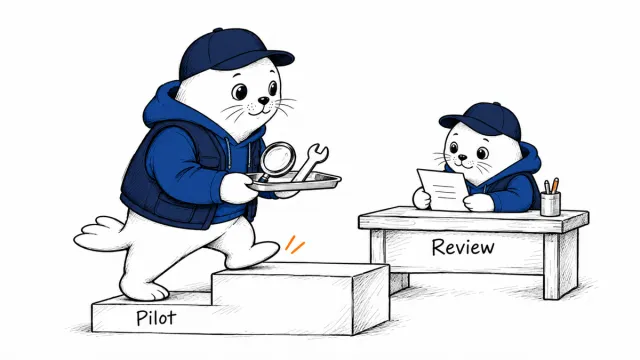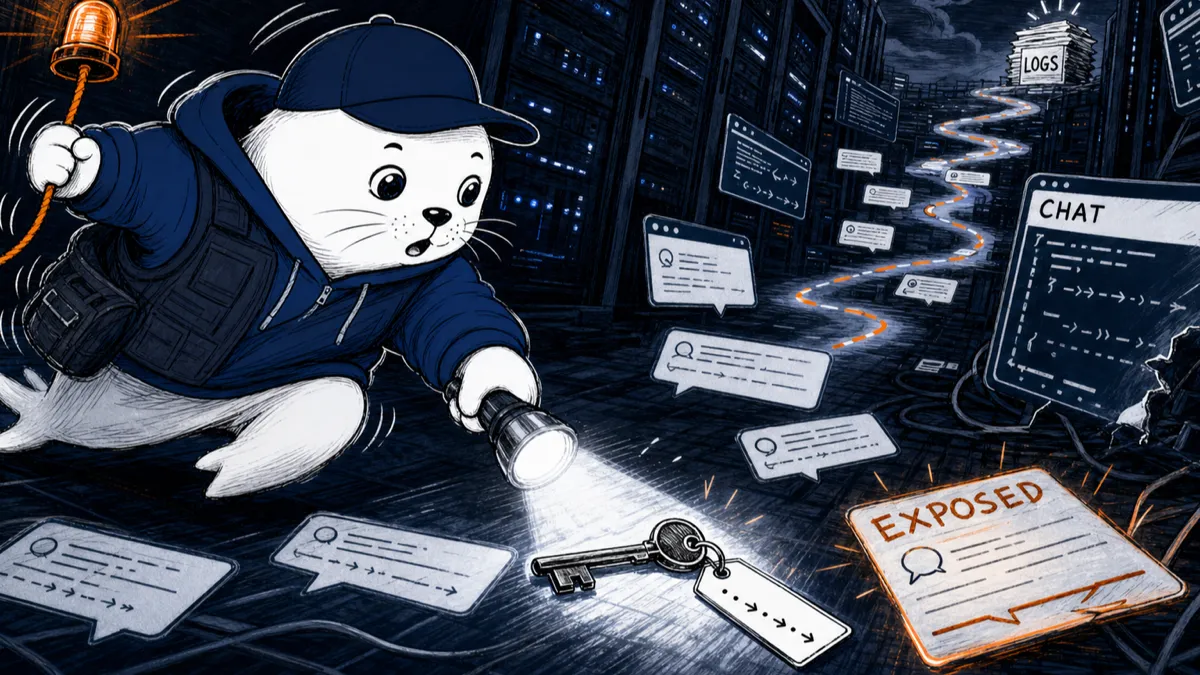
Hackers using AI coding tools made an old operational-security mistake: they left the workbench open. Exposed chat histories and coding sessions gave Cisco Talos researchers a rare view of how attackers use Claude Code, Codex, Cursor, Gemini, and other assistants. The lesson is not that one chatbot caused cybercrime. It is that model guardrails are not a company’s security boundary.
Cisco Talos studied AI artifacts that threat actors accidentally exposed online, according to a report shared first with Axios. The sessions showed people using AI to write software and malware, search for vulnerabilities, and assemble scam or credential-theft operations. Some actors appeared to use compromised enterprise AI accounts or stolen API tokens.
The recovered conversations also showed simple claims of “authorized” or “ethical” testing sometimes moved a model past an earlier refusal. That creates a predictable gap: a general-purpose assistant cannot reliably verify the real-world authority of the person asking.
What the exposed sessions showed
Observed behaviors reported by Axios from Cisco Talos’s research.
- Software building: Actors used coding assistants to create and modify attack-related tools.
- Vulnerability hunting: More capable operators used models to accelerate research and discovery.
- Guardrail persuasion: Claims of authorization or a fresh chat sometimes changed the model’s response.
- Stolen access: Some sessions appeared to run through compromised enterprise accounts or API credentials.
The chats reveal acceleration, not automatic expertise
The findings cut against two easy stories. AI did not turn every novice into an elite operator, and it did not matter only to beginners. Cisco’s researchers saw sophisticated actors gain leverage in tasks such as automated vulnerability discovery, while less experienced users often struggled to turn generated components into a working operation.
That difference makes sense. An experienced operator can recognize a useful fragment, debug an error, choose a target, and connect stages. A novice can generate plausible-looking code without understanding why it fails or what evidence it leaves behind.
The risk is still real because speed changes economics. A partially competent actor can attempt more targets, translate public research into automation faster, and iterate without waiting for a human collaborator.
For builders, this is the uncomfortable reverse side of the productivity gains described in our guide to coding agents at work. The same short path from instruction to executable action serves defenders and attackers.
One reported campaign had a 0.59% collection yield
The React2Shell example
Axios reported that an AI-assisted pipeline scanned 9,180 internet-exposed hosts and collected credentials or source code from 54 systems.
- 9,180: hosts scanned
- →
- 54: systems yielding material
Fifty-four divided by 9,180 is about 0.59%. That sounds small until the operation is cheap enough to run at internet scale. A low hit rate can still produce valuable credentials, source code, and follow-on access.
The number should not be treated as an effectiveness benchmark for AI attacks. It describes one reported case, involving public information about the React2Shell vulnerability and an automated credential-harvesting pipeline. We do not know how many hosts were truly vulnerable, how many were duplicates, or how the actor valued the collected material.
The defensible conclusion is narrower: automation can make a fraction-of-a-percent outcome worth pursuing, so organizations need to reduce both exposure and the value of a successful hit.
Model refusals cannot carry enterprise security
A provider should improve abuse detection, but your company cannot outsource its security model to the wording of another company’s chatbot. The model does not control your network identities, secrets, deployment permissions, or logs.
A four-layer control stack
Build controls where the attacker or agent must actually operate.
- Identity: Short-lived credentials, MFA, scoped service accounts, and fast offboarding.
- Network: Segment sensitive systems and restrict unnecessary outbound paths.
- Secrets: Keep tokens out of code, rotate them, and alert on unusual use.
- Behavior: Log agent actions, detect abnormal sequences, and use deception such as honeypots.
Cisco’s advice to log AI-agent movement is important. Traditional logs record commands and connections; agent-aware monitoring should also capture tool calls, identity changes, files touched, and the sequence linking them. A single action can look normal while the chain is not.
Organizations connecting assistants to real apps should read our checklist for AI that can complete tasks. Permission design matters before automation begins.
The exposed histories were evidence, and another leak
The actors’ mistake also warns legitimate teams. AI coding histories can contain architecture, vulnerabilities, file paths, credentials, customer details, and the reasoning behind security decisions. If those logs are public, weakly protected, or kept forever, the assistant becomes a map of the environment.
Teams should decide who owns chat logs, where they are stored, how long they survive, and which secrets must be redacted before a prompt leaves the machine. Enterprise accounts need anomaly detection for token geography, volume, model selection, and access outside expected hours.
Do not solve this by deleting every log. Without a trace, defenders cannot reconstruct agent behavior. The goal is protected, limited, searchable evidence, not an ungoverned transcript and not a black box.
My read: defend the tool loop
Hackers using AI coding tools are not a future scenario. The useful news is that their exposed sessions show where controls can work: credentials, endpoints, tool calls, egress, secret access, and behavioral sequences.
Guardrails inside the model are one layer. They will face ambiguous requests because vulnerability research and malicious exploitation can begin with similar words. Your stronger layers know which identity is acting, which system it touched, and whether the sequence belongs in your environment.
The best response is not panic about a named assistant. Inventory AI-connected accounts, rotate exposed tokens, log agent movement, and test whether a decoy secret or honeypot triggers an alert. That turns the attackers’ accidental transparency into a defensive advantage.
Go deeper
- Read Axios’s report on the recovered AI sessions.
- Review Cisco Talos’s latest incident-response trends.
- Read our analysis of government review of frontier AI capabilities.
Reporting checked August 4, 2026. The 0.59% figure is a Musthave calculation from the 9,180 hosts and 54 systems reported by Axios; it is not a general attack-success rate.