
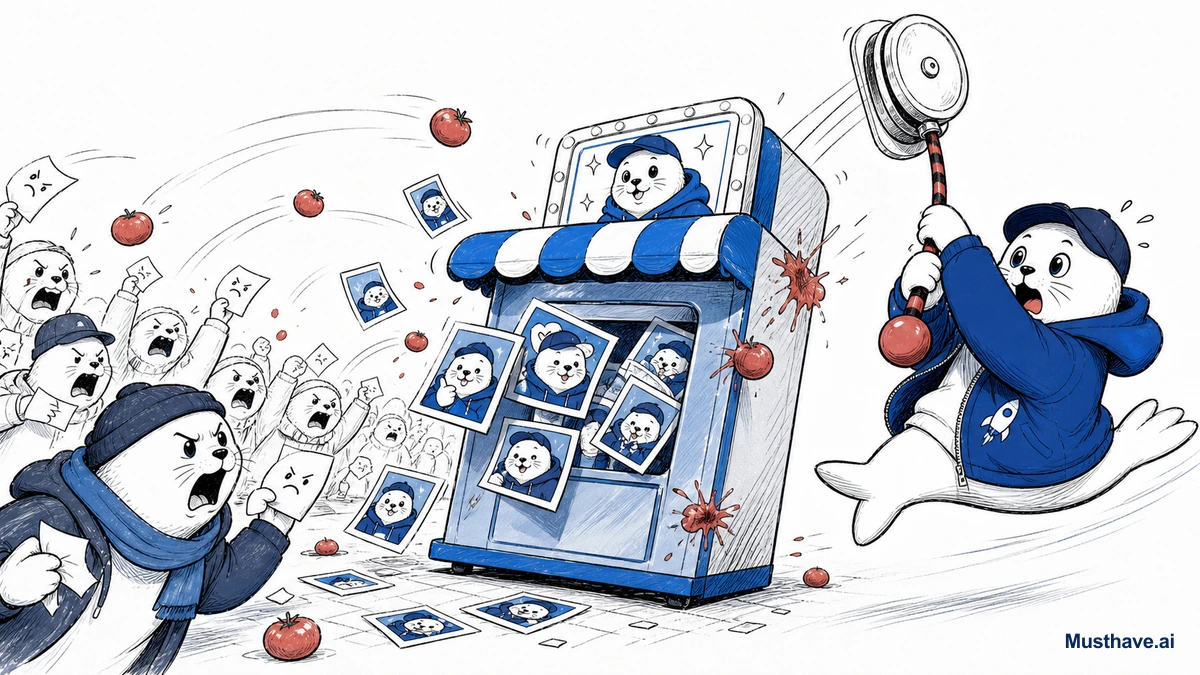
Here’s a story every creator using AI should file away. In July 2026, Meta launched an image feature, got hit with immediate backlash, and killed it within days. What went wrong is a perfect illustration of a rule you ignore at your peril: on social platforms, consent isn’t a nice-to-have. It’s the whole game.
What actually happened
Meta rolled out a feature called Muse Image, built by its Superintelligence Labs, that let people generate and modify images by @-mentioning public Instagram accounts they wanted to reference. In plain terms: you could pull someone’s public photos into an AI image generator and remix them, and the feature wasn’t designed to alert the person whose images were being used.
The detail that lit the fuse was the opt-out design. Adults with public accounts were included by default and had to actively go disable the feature to keep their images out of it. That’s the opposite of how consent should work, and people noticed instantly.
The backlash and the retreat
The pushback was swift. Everyday users were alarmed that their photos could be fed into an image generator without their knowledge, and it wasn’t just individuals, a major talent agency (representing household-name actors) raised concerns directly with Meta and pushed for a more reasonable approach.
Within days, Meta pulled it. In a short statement, the company said the feature “missed the mark, so it’s no longer available.” A feature built by a well-resourced lab, launched with fanfare, gone in about a week.
The “social media tax” on generative AI
This is the pattern I want you to internalize, because it’s bigger than one feature. Consumer social platforms ship AI under a much harsher spotlight than quiet developer APIs. When you have billions of users and you touch people’s faces, their photos, and their identities, the trust bar is enormous, and the backlash, when you cross it, is instant and public.
Call it the social media tax on generative AI. The same capability that would be a shrug in a niche developer tool becomes a scandal at platform scale. Consent, likeness rights, and “did you ask the person in the photo?” stop being edge cases and become the entire story.
What this means for you as a creator
You’re not Meta, but the lesson scales straight down to your work. If a billion-dollar company can’t get away with using people’s likenesses without clear consent, neither can you.
- Never build on other people’s faces without permission. Don’t feed someone’s photos into an AI tool to remix, “improve,” or repurpose their likeness. Not for a meme, not for an ad.
- Default to opt-in, not opt-out. If a workflow assumes consent unless someone objects, that’s a red flag, for platforms and for you.
- Watch what you build your funnel on. Platform AI features can vanish overnight, whether from backlash or policy. Don’t make an unstable feature the foundation of your business.
- Disclose and get consent for real people in any content you produce. Transparency is cheaper than an angry audience or a legal email.
The bottom line
Generative AI is powerful, but on anything involving real people’s images, the technology is the easy part, the consent is the hard part, and it’s the part that actually matters. Meta learned that in a week of headlines. You can learn it for free by watching. Build with people’s permission, keep your own house honest, and don’t anchor your work to features that can disappear the moment the public decides they crossed a line.
A consent checklist for using anyone’s image
Turn the Muse lesson into a rule you can actually follow. Before any real person’s likeness goes into an AI tool or a piece of content, run four checks: Did they explicitly say yes to this use (not just exist publicly)? Would they be comfortable seeing the result? Does it avoid putting words or actions on them they never said or did? And could you prove the permission if asked? If any answer is shaky, don’t. “Their account was public” is not consent, Meta learned that the hard way, and it’s a far cheaper lesson to borrow than to repeat.
Where do you draw your line on using real people’s images in AI content? Tell me in the comments, this one’s worth a real conversation.
Verification sources and related guides
Primary reference: Meta policy for labeling AI-generated content. This is the controlling platform or government guidance. Recheck it before publishing, deploying, or selling because rules and eligibility can change.