Most “SEO with AI” advice is either “automate everything and get rich” or “AI content is dead.” Both are wrong. The truth is narrower and more useful: AI is a phenomenal SEO assistant for the boring parts, and a fast way to get penalized if you let it do the part that actually matters. Here’s exactly where that line sits.
What AI is genuinely great at in SEO
Let’s start with the wins, because they’re real. AI has quietly become excellent at the unglamorous, time-eating middle of the SEO workflow, the stuff that used to burn your afternoons.
- Keyword research and clustering: dump a messy list of terms and let AI group them by intent and topic. What took an hour in a spreadsheet takes minutes.
- Content briefs: turn a target keyword into a structured brief, search intent, angle, headings, questions to answer, entities to mention.
- Internal linking: map which of your existing pages should link to a new one, and with what anchor.
- First-draft scaffolding: get an outline and a rough draft so you’re editing, not staring at a blank page.
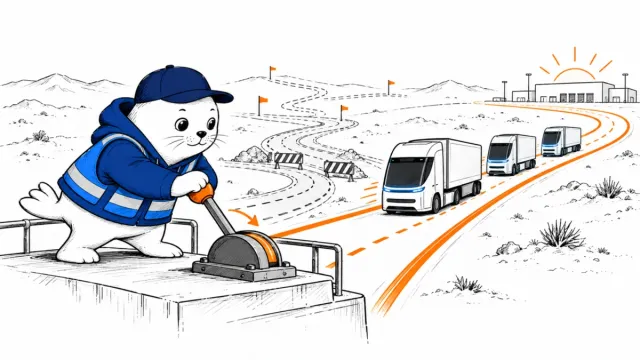
Notice the pattern: AI accelerates the preparation. It doesn’t replace the judgment.
Briefs beat prompts
Here’s the single biggest upgrade to your AI-SEO workflow: stop typing “write an article about [keyword].” That’s how you get generic slop that reads like everyone else’s generic slop.
Instead, feed the model a real brief. Tell it the search intent, the specific angle you’re taking, the points it must cover, the questions real people ask, and the things to avoid. A good brief is the difference between a draft you can shape and a draft you have to delete. Think of the AI as a fast junior writer, it’s only as good as the direction you give it.
What Google still punishes (and is getting better at catching)
Now the part that keeps you out of trouble. Google’s recent updates aren’t anti-AI, exactly. They’re anti “scaled content abuse”, mass-produced pages built to game rankings with no real value behind them. And the systems for detecting that are getting sharper every cycle.
So the fast path to a penalty looks like this: generate 300 near-identical articles, publish them with no human experience, and wait for traffic. What you get instead is a site that quietly stops ranking. If your content has no lived experience, no original examples, and nothing a reader couldn’t get from any other AI page, it will rot the moment the algorithm (or the reader) gets a little smarter.
E-E-A-T is the moat AI can’t cross
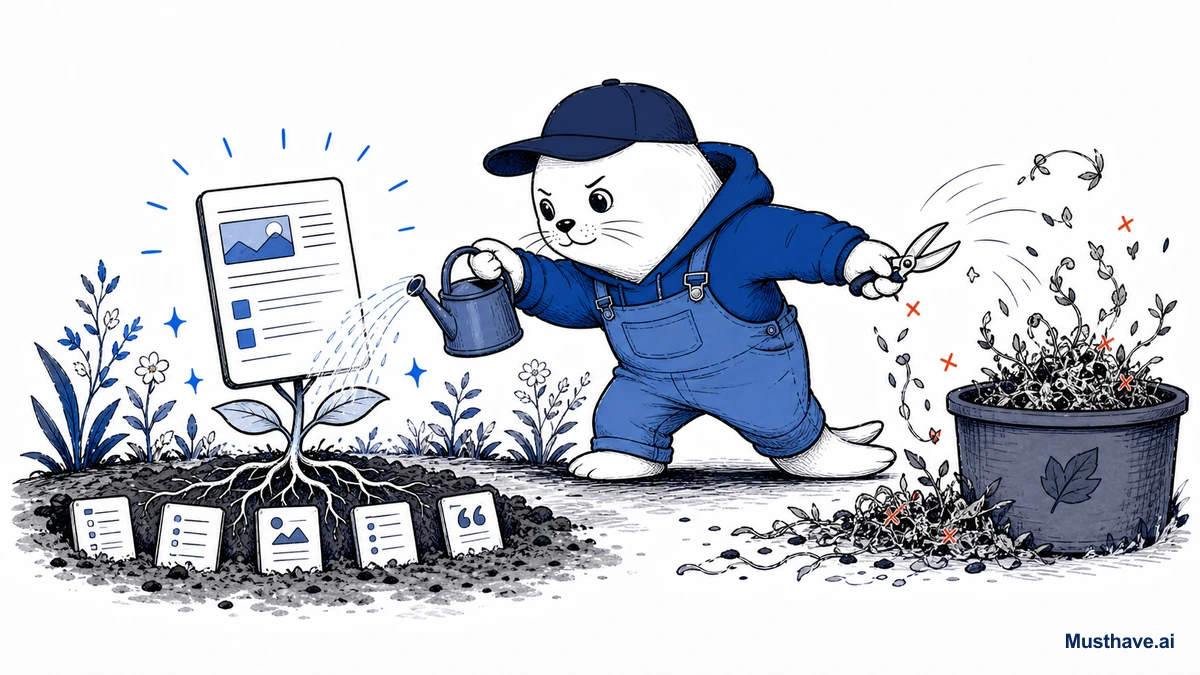
The counter to all of this has a clunky acronym: E-E-A-T, Experience, Expertise, Authoritativeness, Trust. It’s exactly the stuff AI can’t manufacture. A real result you got. A mistake you made and what it taught you. A screenshot from your own account. A named author with actual credentials standing behind the page.
That’s your moat. The more the web fills with interchangeable AI content, the more a page with genuine experience stands out, to readers and to ranking systems that increasingly reward it.
The workflow that stays safe and fast
Put it together and here’s the loop I’d run for every piece.
- AI clusters keywords and drafts the brief.
- You approve the angle and add the must-win points only you know.
- AI produces the first-draft scaffold.
- You add the experience layer: examples, opinions, real data, a human voice.
- AI helps with internal links, meta description, and a final polish pass.
Speed on the mechanical parts, human on the parts that earn trust. That’s the whole game. Do it this way and AI makes you faster without making you generic, which is exactly the combination Google is trying to reward.
Four ways to inject the experience Google rewards
“Add experience” is vague advice, so here’s the concrete version. Before you publish any AI-assisted piece, make sure it contains at least: one first-hand result or number you actually got, one dated and specific example (not a generic hypothetical), one original asset a competitor can’t copy (your screenshot, your data, your photo), and a real named author with a genuine bio. Those four are exactly what E-E-A-T means in practice, and precisely what a scaled AI content farm can’t fake. Miss them and the page reads, and ranks, like everyone else’s.
Where are you using AI in your SEO process right now, and where has it burned you? Tell me in the comments; I’ll share the brief template I start every piece with.
Verification sources and related guides
Primary reference: Google Search guidance about AI-generated content. This is the controlling platform or government guidance. Recheck it before publishing, deploying, or selling because rules and eligibility can change.